Overnight in the Museum: Revisiting E.L. Konigsburg’s Mixed-Up Files
By Marcie McCauley | On February 4, 2026 | Updated February 7, 2026 | Comments (0)
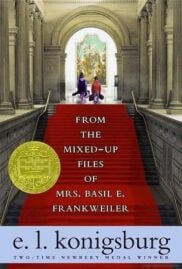
E.L. Konigsburg summed up her stories as being about the “everyday, corn-flakes, worn-out-sneakers way of life” when she won the Newbery Award for her children’s novel From the Mixed-Up Files of Mrs. Basil E. Frankweiler in 1968.
This prize-winning novel was a favorite of mine from the first reading—the first sentence, even — because it begins with Claudia’s failure.
She knows she’s never going to be able to run away in “the old-fashioned way”— in the “heat of anger with a knapsack on her back.” She reflects on her situation and makes a plan: she learns to rise to meet challenges in her own way.
Claudia’s organization skills are top-notch: from accumulating weeks of allowance, gathering essential supplies, brainstorming an exit strategy, to maintaining secrecy. And, above all, selecting the perfect destination: someplace comfortable, indoors, and beautiful. “Planning long and well was one of her special talents.” She selects The Metropolitan Museum of Art in New York City.
Because she is one month away from turning twelve, she will still qualify for children’s fare and thus cut her transportation cost in half. Same for her brother Jamie, who is only nine years old. Although he’s not running away to protest “a lot of injustice” or a lack of “Claudia appreciation” at home, he’s up for what Claudia terms “the greatest adventure of our mutual lives.”
. . . . . . . . . .
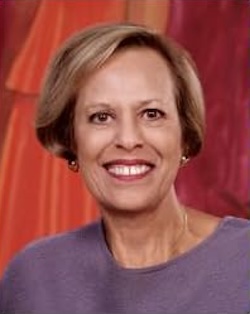
Learn more about E.L. Konigsburg
. . . . . . . . . .
This kind of detail — the negotiation process, the dollars and cents of it all—captivated me, convinced me it was not only possible but real. And I knew about museums, because I’d been to the Royal Ontario Museum (commonly called the ROM) in Toronto.
For a small-town girl like me, Toronto equaled New York City; Claudia’s father worked in what everyone called the city, but the other adults (that she knew, that I knew) considered it “exhausting” and it “made them nervous.” But, like Claudia, I thought the city was elegant, important, and busy; like her, I thought a museum would be an excellent refuge.
Also like Claudia, I had a “concern for delicate details” and an abundance of caution: Claudia is “cautious (about everything but money)” and Jamie is “adventurous (about everything but money).”
I understood her outrage over having domestic chores to complete daily, while her brothers escaped all that; it rang true for me in an inexpressible way that had nothing to do with chores — I didn’t want to be a nurse, a secretary, or a teacher, but … something else, something exciting. If Claudia could figure out how to live inside a museum, I could figure out … other things, important things. Like … the city.
Relating to thrills and fears
Unlike Claudia, however, I had no siblings, no allowance, no supplies, and no inter-city train system. And there was one part of the museum (as I knew it) that both thrilled and frightened me; in a pie-chart of my childhood thoughts, the bat cave in the ROM occupied as vibrant and sizable a space as Saturday morning cartoons.
And it was an unavoidable horror for me, because it was situated at the end of the dinosaur gallery — my favorite place in the whole museum. I was like a kid in an advertisement, grabbing whichever adult’s hand I could reach, tugging in the direction of those skeletal figures; but the bat cave loomed at the end of it all.
The fear in Mixed-Up Files isn’t rooted in jump-scares: it’s the ordinary kind of fear when one is required to do a thing they’ve not successfully done before. Indeed, the first fearful moment for Claudia and James is a familiar part of their ordinary routine, when they are sitting in their usual seats on the school bus. Except that morning, they do not leave: they stay.
After the children have reached their destination and the others have exited, Claudia and Jamie hunch down in their seats, awaiting the bus’s next stop: its return to the city depot. They await the driver’s inspection — a daily routine they don’t normally observe, which might capture any belongings left behind, or two children who dare to depart from their familiar routine. In synch with them, I held my breath.
. . . . . . . . . .
. . . . . . . . . .
Recognizing universal childhood experiences
When Konigsburg taught at a private girls’ school before she was married, she recognized some universal childhood experiences that affected children from lower, middle, and upper-class families; she witnessed many children struggle to adjust to new situations.
She also noticed that children’s books did not reflect a variety of upbringings; she couldn’t see herself even in some of her favorites, like Mary Poppins and The Secret Garden, couldn’t see the kind of modest upbringing that she had, her ordinary (though strictly religious) girlhood in a Pennsylvania mill town. “So I need words for this reason,” she says: “to make a record of a place, suburban America, and a time, early autumn of the twentieth century.”
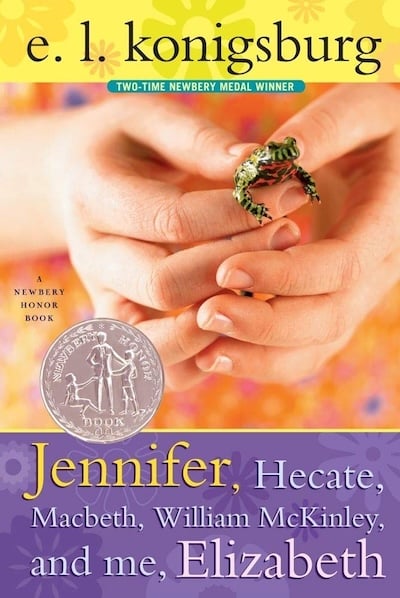
Konigsburg also witnessed her own three children’s experiences and noted their absence in children’s stories of their day. For instance, her first book — Jennifer, Hecate, Macbeth, William McKinley and Me, Elizabeth, also published in 1967 — was inspired by her daughter Laurie’s experience of being the new kid at school in Port Chester, New York. Konigsburg wanted to “tell how it is normal to be very comfortable on the outside but very uncomfortable on the inside. Tell how funny it all is.” This juxtaposition was something else I wouldn’t have been able to articulate, but which I yearned to have validated.
From the Mixed-Up Files of Mrs. Basil E. Frankweiler was inspired by her children’s discomfort with being uncomfortable at a picnic, and her son Paul and daughter Laurie modeled for the illustrations (other books were inspired by the experiences of her youngest son and, later, her grandchildren).
You can see both Claudia and James appearing very comfortable on the outside, while feeling very uncomfortable on the inside, even on their first night in the museum. “Five-thirty in winter is dark, but nowhere seems as dark as the Metropolitan Museum of Art,” Konigsburg writes.
There’s part of me that’s still afraid of the dark, inside and outside the museums of our everyday lives. It was dark in the ROM’s bat cave, but the dinosaurs were well lit. My favorite was the stegosaurus, and I lingered with it as long as I could: partly because I was so impressed by the sunrise swell of its massive plates, partly because there were only three more dinosaurs between the stegosaurus and the overarching terror at the other end of the wing.
Where the cave was curtained and only dimly lit in amber-colored recesses, with highly strung netting that resembled cobwebs above the suspended bats, and an unpredictable, screechy soundtrack emerging from seemingly every inch of the dusky display. (And, I swear, it was windy: but, how?)
. . . . . . . . . .

. . . . . . . . . .
Following their first night in the darkened museum, Claudia and Jamie awaken with their stomachs feeling “like tubes of toothpaste that had been all squeezed out.” They are “unaccustomed to getting up so early, to feeling so unwashed, or feeling so hungry.”
Their discomfort has been limited, however. They were able to spend the night in the hall of the English Renaissance, where they were secreted from the night watchman’s view by the heavy curtains surrounding the bed. Thereafter, I routinely sought out and noted the best place to sleep in any museum I toured.
The displays of historical furnishings in the ROM, however, were all behind glass. And I didn’t care much about them anyway, except for one room from a later era, in which children had begun to inhabit their own separate spaces in the family home, with books and toys and a most sublime rocking horse.
There was no way to enter that walled-in space; I imagined people constructing it the way that I had constructed my project for the science fair — though it was small enough to fit atop my slanted wooden desk—backing themselves out as their work was completed, sealing the last pane of glass as they removed the leg last inside their diorama. What I couldn’t see — the hallways behind those exhibits, for instance—was neither a source of comfort nor fear. And the bat cave was nobody’s science project: it was real.
My father was puzzled by my simultaneous resistance of and obsession with the bat cave; he strained to convey that the cave was home to the bats (realizing, of course, that the world contained things far more frightening than bats).
My mother endured my unceasing chatter about the bat cave when I was nowhere near it, between museum visits, as I persisted in the idea that, on the next visit, I would remain wholly unmoved. In the future, I could look back on the preceding visit as a failure, but from a comfortable place in the present, I could make a plan.
. . . . . . . . . .
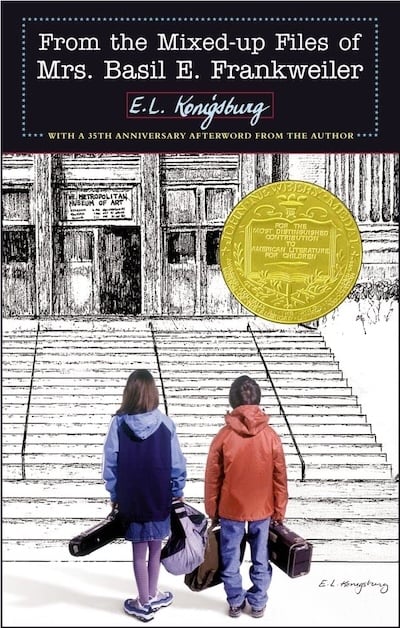
The 35th anniversary edition
. . . . . . . . . .
E.L. Konigsburg looks back on Mixed-Up-Files
Looking back on Mixed-Up Files, introducing the 35th-anniversary edition published in 2002, Konigsburg itemizes what has changed since it won the Newbery. She considers the economic details particularly, and how many readers have complained that the sum of money on which Claudia and Jamie depended could not actually sustain them very long.
Demonstrating the suspended-in-time-ness of a good children’s book, even decades later; Mixed-Up Files wasn’t an object affixed with a publisher’s imprint and a copyright of 1967, but an enduring story about the importance—and comfort—of a well-executed plan that made the impossible possible.
She also explains that the bed in which Claudia and Jamie slept, enclosed in drapery, had been dismantled and removed. Much of the original setting and many circumstances had changed in the intervening years; regular adjustments — by visitors and runaways alike — would be required.
Konigsburg also highlights the 1965 New York Times’ article which contributed another part of the plot in Mixed-Up Files. One of ELK’s responsibilities in an early job obtained after she completed her science degree at what’s now Carnegie Mellon University, was to maintain files of articles clipped from newspapers and other publications: a habit she retained, a real-world habit that informed her fiction throughout her lifetime.
Konigsburg underscores, however, that the core of the story is not about any particular object housed in the museum; it’s clear that the “greatest discovery is not in finding out who made a statue but in finding out what makes you.” Anytime I needed to be reminded of that, I could reread Mixed-Up Files. Which I often did after my parents divorced.
After that, all my routines changed, and I no longer went regularly to the museum. I could count each visit on the fingertips of one hand, as I grew older and stopped holding other people’s hands, but still went, reliably, to the dinosaur gallery first. I grew older yet again, and I held my husband’s hand, and then the hands of my stepchildren, who never even flinched when it came to the bat cave.
Reflections following E.L. Konigsburg’s death
I was disproportionately sad when Konigsburg died, given that I’d never even seen her in person; she had passed through the whole gallery and, finally, reached the final exhibit. And, so, I reread Mixed-Up Files, prepared to feel that sort of distanced disappointment when the younger-you who once loved a book so completely has been subsumed by older-you who rates things differently.
I started rereading it on a Toronto streetcar and continued on the subway, not far from the ROM— moving towards the home I made in the city where the bat cave made its home. Feeling as though I had, at last, left behind that scared little girl, but not so far behind that I couldn’t still enjoy Mixed-Up Files just as much.
In her 2013 obituary in the New York Times, Paul Vitello writes that Konigsburg’s “upbringing in small-town Pennsylvania, where she did not have great expectations, helped her as a writer.” As a small-town girl who saw just enough of her childhood outside the city in Claudia, I was old enough to realize how Konigsburg had helped me as a writer too — by suggesting that real-world events from your everyday life could fill up a storybook. That they could be “enough.”
Yes, there are, literally, corn-flakes in Mixed-Up Files: Claudia collects the box tops and returns them by mail for a rebate. And there’s a corner in the museum, where you can kick off your sneakers and pull the drapes and not be surrounded by darkness and fear, but sleep soundly through the night.
. . . . . . . . . . .
Contributed by Marcie McCauley, a graduate of the University of Western Ontario and the Humber College Creative Writing Program. She writes and reads (mostly women writers!) in Toronto, Canada. And she chats about it on Buried In Print and @buriedinprint.
More by Marcie McCauley on Literary Ladies Guide
- Lois Duncan, Author of I Know What You Did Last Summer
- Reading and Revisiting Beverly Cleary’s Ramona Quimby Stories
- Fact and Fiction in All This, and Heaven Too
- Sometimes You Have to Lie: The Life and Times of Louise Fitzhugh
- Revisiting Anna and the King of Siam
- Margaret Landon, Author of Anna and the King of Siam
- On Rereading Daddy-Long-Legs
- Jean Webster, Author of Daddy-Long-Legs
- The Betsy-Tacy Books by Maud Hart Lovelace
- Winifred Holtby, Author of South Riding
- Elizabeth Taylor, English Novelist
- Elizabeth Taylor’s Novels: Where to Begin
- Quotes from Elizabeth Taylor’s Fiction
- Quotes by English Novelist Elizabeth Taylor on Love & Loneliness
- Selma Lagerlöf, First Woman Nobelist in Literature
- Natalie Babbitt, Author of Tuck Everlasting
- On Rereading Tuck Everlasting by Natalie Babbitt
- Barbara Pym, English Author of Comedies of Manner
- Making Room to Grow in The Long Secret by Louise Fitzhugh
- Revisiting Louise Fitzhugh’s Harriet the Spy
Leave a Reply