10 Must-Read Novellas by Classic Women Authors
By Nava Atlas | On April 1, 2018 | Updated July 5, 2026 | Comments (0)
If you’d like a taste of a classic author’s work but don’t have the time or patience to read a tome, consider the novella form. Here we’ll look at novellas by classic women authors that make great introductions to to their work.
What defines a novella? It’s generally based on word count of between 17,000 and 40,000, though it isn’t always so cut and dry. The Awakening by Kate Chopin is often described as a novella, though as far as word count, it’s slightly outside that parameter.
The Yellow Wallpaper by Charlotte Perkins Gilman is about 6,000 words, yet has often been published as a stand-alone book (as well as in collections of this author’s stories). In terms of some standard definitions, that doesn’t even qualify as a novelette, generally defined as having between 7,500 and 20,000 words. Yet it somehow seems like it belongs on this list.
. . . . . . . . . .

Photo by Anna Fiore
. . . . . . . . . .
As far as page count, in a paper edition, depends on the size the font is set in, and the trim size of the paper. I personally view a novella as a work that’s under 200 pages in printed form — enough to sink your teeth into, yet never overwhelming.
In the hands of a skillful writer, much can be packed into a novella. Let’s go with a simple dictionary definition of the novella: “a work of fiction intermediate in length and complexity between a short story and a novel.” If you have any other suggestions for novellas by women authors of the past, comment below and we’ll add them to this post.
. . . . . . . . . .
The Lifted Veil by George Eliot (1859)
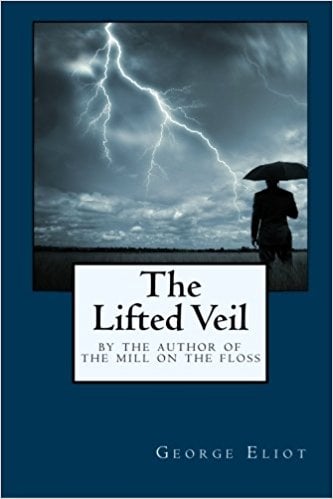
The Lifted Veil (full text) by George Eliot is a shorter work by the esteemed British author best known for weighty books like Middlemarch. She interrupted her work on The Mill on the Floss to work on this novella.
Latimer, the book’s unreliable narrator, is a sensitive intellectual who believes that he can see into the future and read the thoughts of others. These clairvoyant powers, in his mind, are a curse.
The Lifted Veil was the only one of George Eliot’s works to delve into the then-fairly recent genre of science fiction; this novella might also be considered an early entry into horror and makes much use of suspense. It’s also a sharp departure from the realism that’s a hallmark of her fiction. She was interested in the pseudosciences of her time, including clairvoyance (AKA extrasensory perception), mesmerism, and phrenology. She seems to have poured all of those interests into this slim volume.
. . . . . . . . . .
Transcendental Wild Oats
by Louisa May Alcott (1873)
Transcendental Wild Oats (full text) by Louisa May Alcott is a satire, somewhere in length between a novelette and novella, about her family’s misadventures as part of the Fruitlands community in the 1840s.
Alcott thinly disguised the members of the Transcendentalist community, which consisted of her family and their friends. Her father, Amos Bronson Alcott, a co-founder of the community, became “Abel Lamb.” Her mother, Abigail May Alcott, is presented as “Sister Hope.”
Louisa makes no attempt to soften the truth in her satire, portraying Abel is an impractical dreamer; Sister Hope actually feels hopeless —overworked and frustrated by the hapless men. You can read this work in its entirety on this site.
. . . . . . . . . .
The Yellow Wallpaper
by Charlotte Perkins Gilman (1892)

The Yellow Wallpaper(full text) by Charlotte Perkins Gilman remains a classic in feminist literature. Some might consider it a longer short story rather than a novella, but as mentioned earlier, it feels like it belongs on this list.
In her 1913 essay, “Why I Wrote the Yellow Wallpaper,” Gilman revealed that the story was a reflection of the postpartum depression she suffered from, and her hopes that it would enlighten other women who experienced it. It was also a warning against the harmful effects that sexist attitudes of the medical establishment inflicted on women.
Just as important, it’s a story of a woman whose creativity and freedom are thwarted by the strict gender roles proscribed by her time, culture, and class.
. . . . . . . . . .
The Awakening by Kate Chopin (1899)
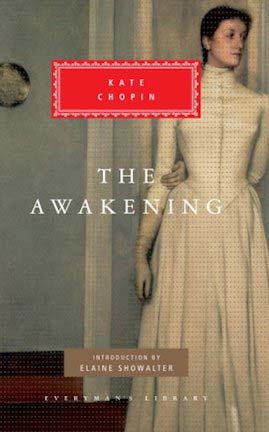
The Awakening (full text) is a short novel by Kate Chopin, published in 1899. It’s the story of Edna Pontellier, who struggles with her role as wife and mother in the stratified social milieu of New Orleans in the late 1800s. Edna Pontellier is a woman with unfulfilled desires — sexual and otherwise — who questions the sanctity of marriage and motherhood. The theme of marital infidelity is approached from the unique perspective of a young wife.
The Awakening was silenced by brutal reviews in newspapers and literary publications from coast to coast. Chopin was disheartened by its reception and her writings dwindled after its publication. Just a few years after publication, it fell out of print. It didn’t help that she died prematurely in 1905.
The Awakening was out of print for several decades before being rediscovered in the late 1960s. It’s now considered a classic of American literature and a staple of feminist fiction. And rather absurdly, it made the list of the American Library Association’s 100 most banned books for the years 2010–2019.
. . . . . . . . . .
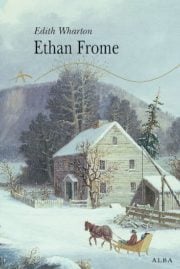
Ethan Frome by Edith Wharton (1911)
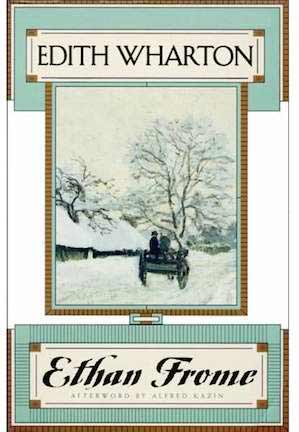
Ethan Frome by Edith Wharton is admittedly depressing, but so beautifully told that many readers return to it again and again. An original 1911 review sketches the outline of the story:
“Twenty years before the tale opens we learn that Ethan Frome has been crippled in a terrible accident … Ethan had his old parents to take care of and after their death he married the young woman who had helped him to nurse them … In a few years she needed assistance, so a young poor relation, Mattie Silver, came to live with them. Slowly she and Ethan fell in love. What happens next isn’t happily ever after.”
Original reviewers were generally full of praise for this exquisitely told tale. Another wrote:
“While it will not be possible to bestow too much praise on Edith Wharton’s latest story, Ethan Frome, it is one of those stories which absolutely defies an adequate description. It is so short, a long short story, and not one word can be skipped in the reading. It is such a complete and perfect piece of work that the reviewer can only say — read it.”
. . . . . . . . . .
Passing by Nella Larsen (1929)
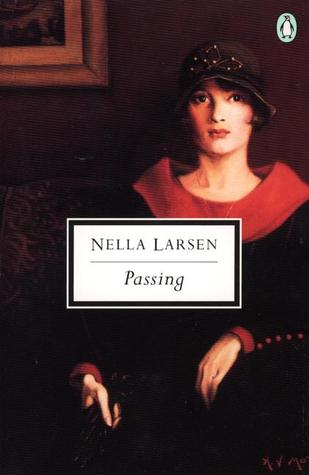
Passing by Nella Larsen (1891 – 1964) is one of the most iconic literary works of the Harlem Renaissance era, the movement that celebrated the ascendence of Black writers, artists, and performers in the 1920s. As the daughter of a white Danish immigrant mother and a mixed-race father from the Danish West Indies, the theme of Nella Larsen’s life, and in effect, her work, was that of a sense of non-belonging — not to any community, nor even to her immediate family.
Though her first novel, Quicksand (1928), contained more obviously autobiographical elements, Passing also reflected Larsen’s lifelong sense of alienation and search for identity.Within its spare prose lies deep ideas and much to ponder. The 2001 Griot Edition describes it succinctly:
“In Passing, Clare Kendry, a fair-skinned woman, passes for white and marries a wealthy white man. Seeking to fulfill a need for the company of Black folks, she renews a friendship with Irene Redfield, who has married a physician and becomes a member of Harlem’s Black elite. ‘Passing’ is not only a direct reference to Clare’s decision to live as a white woman but also her suppression of her sexuality. It also calls attention to the other kinds of ‘passing’ women do in relationships romantic and otherwise, and the adoption by the Black middle class of the actions and values of the dominant culture.”
. . . . . . . . . .
The Ballad of the Sad Café
by Carson McCullers (1951)
The Ballad of the Sad Café by Carson McCullers was originally presented as part of a collection that included six short stories. The title story, written in the genre of Southern Gothic, concerns Miss Amelia, a masculine and eccentric woman (who is also a moonshiner), her purported cousin Lymon (a hunchback), and Marvin Macy, a recently released convict two whom Miss Amelia was briefly married.
Gaining Lymon’s trust and admiration, Macy uses him to take revenge on Miss Amelia, who had broken his heart before he was incarcerated. When Macy and Miss Amelia come to physical blows, Lymon jumps her, allowing Macy to gain the advantage. The two men ransack the café, steal all the money and valuables, and flee.
And so goes another strange Southern Gothic tale by Carson McCullers. Bizarre as this plot line might seem, the story was made into a stage play by noted playwright Edward Albee (1963). It was also adapted to a 1991 film of the same name starring Vanessa Redgrave and Keith Carradine.
. . . . . . . . . .
Maud Martha (1951)
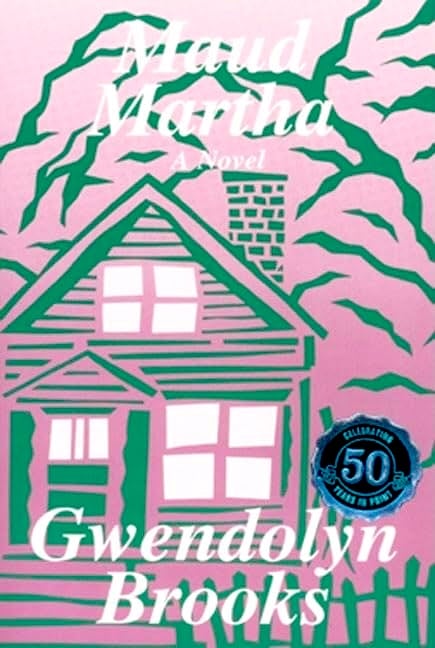
Maud Martha by Gwendolyn Brooks is the only novel by this esteemed and much honored American poet. Published in 1951, its language is both spare and profound; it reads beautifully and poetically without seeming affected. It’s the story of a middle-class, mid-twentieth century black woman leading an ordinary, extraordinary life.
The story opens when Maud Martha is seven, observing the adults around her with wonder and bafflement. The story begins to grip as she enters adulthood, with its dating rituals, love, jealousy, marriage, motherhood, disappointment, loss, contentment and joy.
It skims the surface of segregation and bias, and explores familial and neighborly bonds — all within a surprisingly short novel. This mesmerizing novella is one that deserves to be rediscovered and treasured.
. . . . . . . . . .
The Ponder Heart by Eudora Welty (1954)

The Ponder Heart by Eudora Welty is a 1954 novella originally published in The New Yorker magazine the year before it appeared in book form. Narrated by Edna Earle Ponder, it’s the story of her uncle, Daniel Ponder, a sweet man who is considered a bit “slow.”
He has inherited a hefty fortune from his father and wants to give it away. Not surprisingly, his plan is opposed by the extended family. The Ponder Heart was staged as a Broadway play in 1956; In 2001, it was also adapted into a made-for-television film for PBS.
The book was widely praised when released. In a typical review, W.G. Rogers of the syndicated Literary Guideposts column wrote: “Though it’s a short book, it has an immeasurable fund of good nature, of joviality and amiability, the very qualities that are rarest in today’s fiction. Only the shrewdest novelist can bare for us the unshrewd human heart.”
. . . . . . . . . .
Wide Sargasso Sea by Jean Rhys (1966)
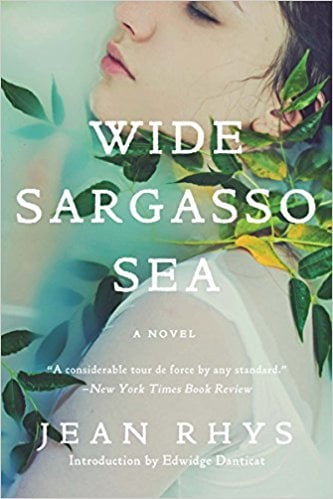
Wide Sargasso Sea by Jean Rhys is the last work by this Dominican-British author. Considered a prequel and response to Jane Eyre by Charlotte Brontë, the novella presents the perspective of Antoinette Cosway, the sensual Creole heiress who wound up as Bertha Mason, the “madwoman in the attic.”
When this novella was published in 1966, Rhys had all but disappeared from the literary scene; her previous novel, Good Morning, Midnight, was published in 1939. Wide Sargasso Sea became her most successful novel, praised for its spare yet evocative language and its exploration of the power imbalance between men in women, between patriarchal colonizers and the original inhabitants of the Caribbean in the 1830s. It was the novel that rescued Rhys’s flagging reputation.
The W.W. Norton edition describes the heart of the story — how Antoinette “is sold into marriage to the coldhearted and prideful Rochester, succumbs to his need for money and his lust. Yet he will make her pay for her ancestors’ sins of slaveholding, excessive drinking, and nihilistic despair by enslaving her as a prisoner in his bleak British home.” You’ll never look at this character the same way again!
Leave a Reply