Dear Literary Ladies,
So many creative people are afraid to share their work with the world because they can’t risk failing. What words of wisdom can you offer to those of us who are willing to take that risk, and to bear inevitable failures with as much grace as possible?
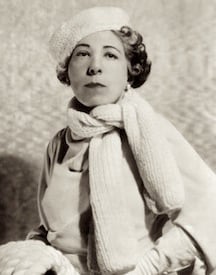
In the working-day life of a professional writer success or failure is very likely to sum up much the same at the end. I don’t mean that failure is as pleasant as success. I’ve known both. Success stimulates the glands, revivifies the spirits, feeds the ego, fills the purse.
Failure is a depressing thing to face. The critics rip your play to ribbons, audiences refuse to come to it; reviewers say your book is dull, or trite, readers will not buy it. You read these things, you hear them, you face them as you would face any misfortune, with as good grace as you can summon. Read More→
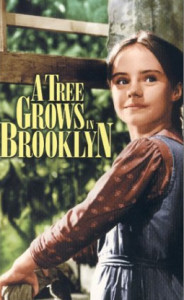
The 1945 film version of A Tree Grows in Brooklyn, adapted from the beloved, bestselling novel by Betty Smith, was widely acclaimed both by audiences and critics and won a number of awards.
However, contemporary readers who adore the book should note that the storyline in the book covers about six years in the lives of the Nolans, while the film’s actions take place within a much shorter span of time — compressed into not much more than a year.
As such, this is a film that is an interpretation of the book rather than a faithful adaptation. Despite the artistic license taken, this Elia Kazan-directed movie was nearly universally well received. Read More→
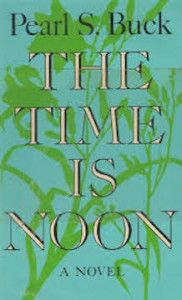
From the 1966 John Day edition: The Time is Noon by Pearl S. Buck is the richly hued portrait of a woman as a daughter, sister, wife, and mother. It is the story of Joan Richards in quest of herself as she grows into womanhood in an American town, between the two world wars.
As a girl she shields her individuality not only from the world but from herself, behind the protective walls of a mother’s love, of home and family. But the family slips away, first one, then another, and slowly Joan discovers that the walls of home are but a shell.
She seeks another haven in marriage, moving in with her husband Bart’s family, but this is more like a prison. She places her hopes in motherhood, but her child as the months pass becomes a riddle and then a source of grief. Read More→
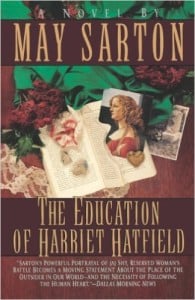
From the 1989 W.W. Norton edition of The Education of Harriet Hatfield by May Sarton: In this novel by Mary Sarton, Harriet Hatfield at sixty begins a new adventure. Her friend of thirty years has died and left her enough money to fund her dream of running a women’s bookstore.
But when Hatfield House: A Bookstore for Women opens in a blue-collar neighborhood near Boston, Harriet is bombarded by anonymous threats, and obscenities are written on the windows.
Then a Boston Globe reporter headlines her interview, “Lesbian Bookstore Owner Threatened” and the education of Harriet begins. Never before has she thought of herself as a member of a persecuted minority. Read More→
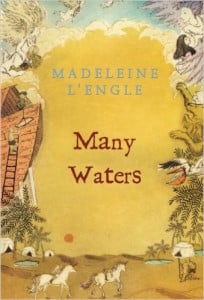
From the 1986 Farrar, Straus and Giroux edition of Many Waters by Madeleine L’Engle: Many Waters continues the distinguished and popular Time Trilogy, made up of Newbery winner A Wrinkle in Time, A Wind in the Door, and A Swiftly Tilting Plant.
Nothing especially interesting has ever happened to Sandy and Dennys, the run-of-the-mill twins in the extraordinary Murry family.
Nothing, that is, until the bitter cold afternoon when, fooling around in their parents’ lab, they type on the new computer: TAKE ME SOMEPLACE WARM … SOMEPLACE WARM AND SPARSELY POPULATED … Read More→
Here’s a gallery of portraits of some of our favorite classic women authors as children, proving that they started out life just like the rest of us mere mortals! First up, Edith Wharton (1867 – 1937) in a painting (at right) done when she was around 8 years old, by Edward Harrison May.
Despite the world of wealth and privilege in which she grew up, she didn’t come into her own until she started to have her writings published. Read More→
Dear Literary Ladies,
Every time I finish a piece of work, I feel so depleted. It feels like I’ll never be able to write another word, let alone complete anything. Is this common, and do accomplished authors ever feel this way?
This fear is one of the horrors of an author’s life. Where does work come from? What chance, what small episode will start the chain of creation? I once wrote a story about a writer who could not write anymore, and my friend Tennessee Williams said, ‘How could you dare write that story, it’s the most frightening work I have ever read.’ I was pretty well sunk while I was writing it.
— Carson McCullers, 1917 – 1967 Read More→
Eleanor Estes (May 9, 1906 – July 15, 1988), born Eleanor Ruth Rosenfield in West Haven, Connecticut was best known for her award-winning children’s books, notably Ginger Pye, The Hundred Dresses, and The Moffats series.
The town of “Cranbury” in which the Moffat books were set was based on her real life hometown of West Haven.
Upon graduating from high school, she joined the staff of the New Haven Free Public Library. Within a few years, she was promoted to Head of Children’s Services there. Read More→