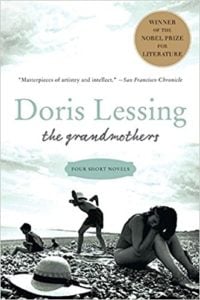
From the 2004 HarperCollins edition of The Grandmothers by Doris Lessing: With the four short novels in this collection, Doris Lessing once again proves that she is unrivaled in her ability to capture the truth of the human condition.
The Grandmothers
Two women, close friends, fall in love with each other’s teenage sons, and these passions last for years, until the women end them, promising a respectable old age. Read More→
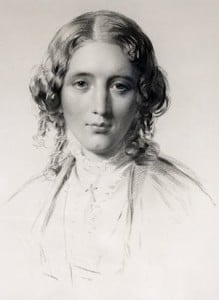
Harriet Beecher Stowe, (1811 –1896) author of the iconic anti-slavery novel Uncle Tom’s Cabin (1852), supported herself, her children and her husband with her literary talent. Following is a selection of quotes from the novels of Harriet Beecher Stowe, a modest author who changed the world with her words.
Stowe came from the Beecher family, a progressive group of siblings who supported her efforts. She was also blessed with the privilege of education, a rarity for women of her time.
At age 39, still in the midst of tending to her large family, Stowe found a way to disseminate the story she had long wanted to tell. She hoped that though storytelling, public awareness of the horrors of slavery would grow and shift national consciousness. Read More→
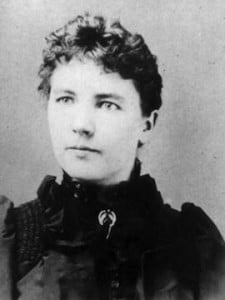
You may know the fictional version of Laura Ingalls Wilder from the Little House books, that bumper crop of novels for young readers brought out by Harper & Brothers in the 1930s and ‘40s.
Or from the NBC television adaption first aired in the 1970s and ‘80s, starring Melissa Gilbert as Laura and Michael Landon as a heartthrob version of Charles “Pa” Ingalls.
Behind the fictional Laura was the author, Laura Ingalls Wilder (1867 – 1957), a late bloomer in terms of her literary life. She was well into her forties before she was ever paid for a piece of writing, and sixty-five when the first Little House book was published. So those of you who are just getting started at whatever age, take heart. Read More→
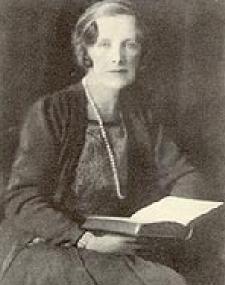
Elizabeth von Arnim (1866 – 1941) produced a wealth of quietly (and sometimes subversively) feminist novels and memoirs. She was best known for The Enchanted April (1922), which many decades later became the 1992 film Enchanted April).
During her lifetime, she usually published under simply “Elizabeth.” She had a wry, dry sense of humor, but also displayed a passion for beauty, especially the beauty of gardens. Here are some passionate and pensive quotes by Elizabeth von Arnim: Read More→
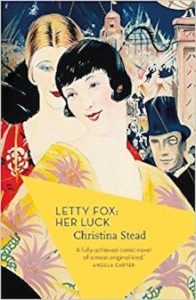
The Australian government refuse to import Letty Fox: Her Luck by native Aussie Christina Stead (the talented and complicated author best known for The Man Who Loved Children) after this novel’s 1947 publication. It was declared “salacious” and “obscene,” and was even occasionally banned.
A frank and witty coming of age story set between the Great Depression and World War II, this banned book didn’t meet much favor in the Australian press, either. Here’s one such review, which panned the novel thoroughly. Read More→
Each year in late September, Banned Books Week highlights books — usually critically acclaimed and beloved by readers — that have been frequently challenged or banned outright. Read on to find out why some classic books by women authors have been challenged or banned in times past and into the present.
Some books have been challenged from the time they were first in print; others banned outright by certain schools, parents groups, and religious organizations. Read More→
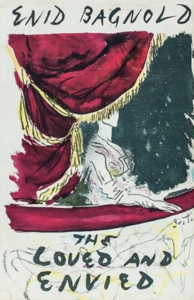
It’s widely believed that Lady Ruby MacLean, the protagonist of The Loved and Envied by Enid Bagnold was based on real-life Lady Diana Cooper, a famous socialite of the early 20th century. Bagnold’s fellow British writer Nancy Mitford also drew inspiration from Lady Cooper for Don’t Tell Alfred.
Though the book doesn’t much resonate with contemporary readers, it was apparently enjoyed by a previous generation, and stands firmly in Bagnold’s modest canon.
Lady Maclean is the character through which the theme of aging is explored, in particular, how it affects a beauty who is, as the title implies, loved and envied. Read More→
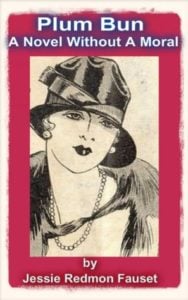
Jessie Redmon Fauset (1882 – 1961) was an American editor, poet, essayist, and novelist associated with the Harlem Renaissance. Plum Bun (1928) was one of four novels Fauset produced, along with There is Confusion (1924), The Chinaberry Tree (1931), and Comedy, American Style (1933).
In addition to the novels, Fauset’s output of shorter works was quite prodigious. And her eight-year tenure as the literary editor of the influential Crisis magazine was impressively productive, helping to launch the careers of a number of iconic writers of the era. Read More→