Plum Bun by Jessie Redmon Fauset (1928): An analysis
By Nava Atlas | On September 18, 2017 | Updated September 14, 2026 | Comments (0)
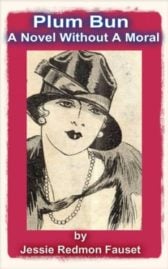
Jessie Redmon Fauset (1882 – 1961) was an American editor, poet, essayist, and novelist associated with the Harlem Renaissance. Plum Bun (1928) was one of four novels Fauset produced, along with There is Confusion (1924), The Chinaberry Tree (1931), and Comedy, American Style (1933).
In addition to the novels, Fauset’s output of shorter works was quite prodigious. And her eight-year tenure as the literary editor of the influential Crisis magazine was impressively productive, helping to launch the careers of a number of iconic writers of the era.
An exploration of power in Plum Bun
Plum Bun: A Novel Without a Moral is the story of Angela Murray, a young mixed-race woman who moves to New York City after her parents’ death. The book was an important addition to the small but persistent canon of “passing” novels of the era.
Angela decides to try to live as a white woman, only to discover that life on the other side of what was then called “the color line” also had its share of pitfalls. Creativity ultimately becomes the greater source of satisfaction for her.
In the introduction to the 1985 edition of Plum Bun, Deborah E. McDowell wrote:
“The questions which Plum Bun raises about power, about fulfilled and unfulfilled expectations, extend well beyond the novel to comment pointedly on the literary world of the 1920s and Fauset’s negotiations as a Black female writer in that world. Her exploration of power poses specific implications for her experience as a Black writer during the Harlem Renaissance, a movement dependent on the power of a patronage system and publishing industry controlled by whites.”
. . . . . . . . . .
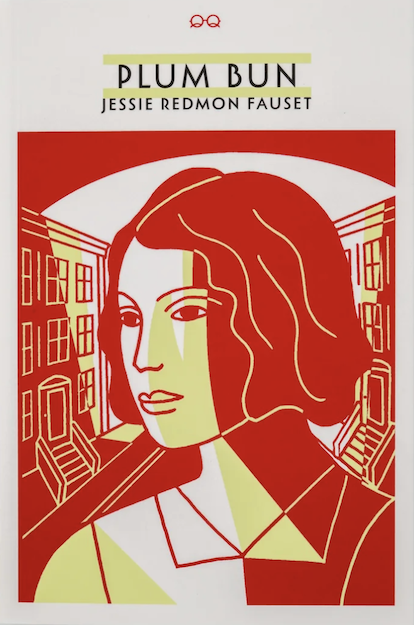
A beautiful new edition of Plum Bun
is available through Quite Literally Books
. . . . . . . . . .
A 1929 review of Plum Bun
Following is a rare original 1929 review of Plum Bun from a “white” newspaper, the Oakland Tribune. It has been slightly modified to replace archaic terms used to refer to Black people in the parlance of that time:
Plum Bun, a novel by a Black woman, is not to be approached as a literary curiosity; it is not to be met with condescension. As a story it stands on its own merits, well told, dramatic, and, often poetic.
If there is in it the argument of races, it is not that propaganda or that argument which in those stories in which white men and women write of Black folks.
A gifted artists discovers that she can “pass”
Angela is near-white, a girl with a gift toward art. When she discovers that she can “pass” as white and thus achieve a change in the world which is denied to her people, she makes the experiment, sacrificing her sister, and, for a time, turning away from her own. There are reasons she should do this, obvious ones, and Angela in her youth and beauty, considers them sufficient.
A white writer would have given us a heroine persecuted and exposed, would have made her a defiant pretender. Jessie Redmon Fauset exalts no qualities in Angela but puts into her story a rare combination of realism and poignant romance.
Angela moves with the whites and learns to love a few. She makes her mark as an artist, and, with a fine gesture, announces her color. She goes back to her people having learned bitter lessons. “Life is more important than color,” and this girl lived.
. . . . . . . . . .

Quotes by Jessie Redmon Fauset
. . . . . . . . . .
A poetic view of character
In the early chapters of the family life, the writer is truly poetic. It is there that the reader meets the Black father, man among men, and the mother who, because of her creamy skin, used to slip away to mingle with the whites, not seeking privilege but to look in on a life of many attractions.
This writer makes those of her own race live in her book as persons, in contrast to the Black men and women who are used by white writers for comedy and tragedy effects.
The departure from the pattern comes when Angela reaches New York. There is no effort to make this heroine surmount all difficulties and thus prove the qualities in her race, nor is there intent to show that such an experiment must inevitably prove a failure.
Fear of discovery, a fine restraint
Angela is an attractive young woman in Greenwich village, her life three is much that of many others. But there is ever the fear of discovery, ever the pretense and the struggle.
There is one love affair, with a very rich young man, and with it disillusion and ironic conclusions to be drawn by the reader. A colored girl in the art school, fighting her way frankly, stands for what Angela would have been had she faced the facts bravely; a Jewish girl separated from a lover because he was of another religion brings her story to Angela.
Plum Bun, from any writer would be a notable book but it is doubtful if anyone but one from the inside could have written it. It stamps that author as an accomplished artist to be reckoned with among novelists, as one who possesses with her skill a depth of feeling, a fine restraint.
. . . . . . . . . .
. . . . . . . . . .
A contemporary perspective on Plum Bun
For a more contemporary perspective with a longer view, we return to the introduction by Deborah E. McDowell to the 1985 Pandora Press edition:
Plum Bun is a compendium of Jessie Fauset’s central concerns with race and gender. And except for its strained coincidences, aggravating foreign phrases, and excessive literary and artistic allusions, Plum Bun is Fauset’s best and most aesthetically mature novel.
It illustrates the falsity of critics’ habitual tendency to read her novels as “vapidly genteel lace-curtain romances” … Rather, as is certainly clear in Plum Bun, Fauset uses romance to criticize it, particularly to criticize the way in which it idealizes love and marriage, solidifies traditional sex-gender arrangements, and thereby effectively limits women’s goals and possibilities for fulfillment in non-traditional roles …
On its face, Plum Bun is just another novel of racial passing. It has all the generic features of the passing novel: Angela Murray is the typical protagonist who, seeking to avoid the constraints of color prejudice in America, decides to cross the color line and pass for white, a deceptions fraught with anxieties and frequently discovered.
. . . . . . . . . .
Further reading
- Literary Midwife of the Harlem Renaissance: Jessie Redmon Fauset
- Renaissance Women: 13 Female Writers of the Harlem Renaissance
Other novels by Jessie Redmon Fauset
- There Is Confusion (1924)
- The Chinaberry Tree (1931)
- Comedy, American Style (1933)
Leave a Reply