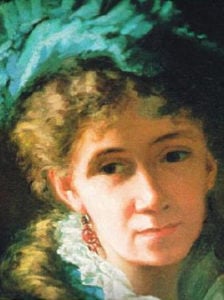
Susan Bailey of Louisa May Alcott is My Passion introduces Literary Ladies readers to May Alcott Nieriker, the youngest sister of Louisa May Alcott (“Amy” in Little Women, the autobiographical but idealized version of the Alcott family’s life).
An immensely talented visual artist, May’s education was made possible by Louisa’s literary success.
While researching May and Ernest’s home in Meudon, France (see previous post), I had a chance to read May’s thoughts in her letters home from Caroline Ticknor’s book, May Alcott: A Memoir. Read More→
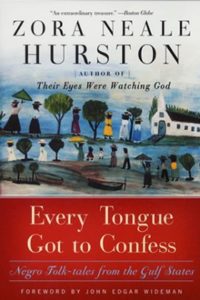
From the 2001 HarperCollins edition of Every Tongue Got to Confess: Negro Folk-Tales from the Gulf States by Zora Neale Hurston. African-American folklore was Zora Neale Hurston’s first love.
Collected in the late 1920s, Every Tongue Got to Confess is the third volume of folk-tales from the celebrated author of Their Eyes Were Watching God.
These hilarious, bittersweet, often saucy folk-tales — some of which date back to the Civil War — provide a fascinating, verdant slice of African-American Life in the rural South at the turn of the twentieth century. Read More→
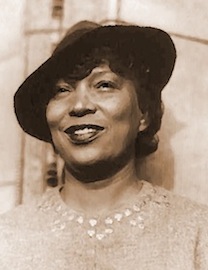
Zora Neale Hurston (1891 – 1960), the American novelist, essayist, anthropologist, and folklorist, was a well known figure in the Harlem Renaissance era. With much to say about life, love, and writing, we’ll explore some typically exuberant and wise Zora Neale Hurston quotes and life lessons.
In her fiction and nonfiction she spun out a plethora of inspiring, quotable text that belied the hardships she endured throughout the course of her career.
Her most influential work is Their Eyes Were Watching God (1937), though most all of her other works have been revived after having been virtually forgotten.
Read More→
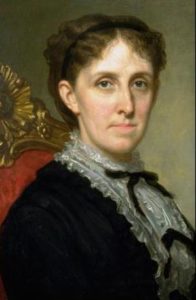
It’s interesting to ponder which of Louisa May Alcott’s core beliefs most motivated her feminism, and why she was so effective in imparting it.
My conclusion? Louisa’s feminism was based on autonomy – the right of every woman to be autonomous, the freedom for each woman to realize her true potential as a whole person.
And even as I write this, I reflect back on Sarah Elbert’s essay on Moods where she incorporated Louisa’s transcendental upbringing into the mix. Read More→
Lots of us know that the film version of Gone with the Wind was based on the epic novel of the same title by Margaret Mitchell, and that To Kill a Mockingbird was a faithful rendition of Harper Lee’s classic.
Little Women has been the subject of a number of film versions, and most of us, at least us book nerds, know Louisa May Alcott by name quite well. And will there never be an end to filmed versions of the Brontë sisters’ novels, or those of Jane Austen?
There are many other classic films based on classic novels by women, whose titles are firmly planted in cultural history. But the connection to the authors who created them is often lost. See if you know who wrote the novels upon which these twelve classic films were based — you’ll find the answers at the very end. Read More→
Lillian Hellman (1905 – 1984) the renowned and sometimes controversial American playwright and memoirist wrote plays that dealt with difficult subject matter. The pinnacle of her creative endeavors was in the mid-20th century, yet evan at this late date in theatre history, she was considered a pioneering female playwright.
The Children’s Hour (1934) was the play that launched Hellman’s career in theater. This was followed by number of other successful productions, including The Little Foxes, Watch on the Rhine, and Toys in the Attic. Read More→
Grace Metalious (September 8, 1924 – February 25, 1964) was an American author best remembered for her sensational novel Peyton Place. It caused an incredible scandal when first published in 1956, but quickly one of the bestselling books of the twentieth century.
Of French-Canadian ancestry, she was born Marie Grace De Repentigny in Manchester, New Hampshire. Her parents separated when she was ten years old.
At the age of eighteen she married George Metalious (1925-2015) who came from a Greek family. The couple had three children. After World War II army service, George became a teacher, but Grace was far from the ideal 1950s wife, with her rebellious nature and burning ambition to write.
Read More→
Sometimes it’s best for an author to introduce his or her own story; sometimes it isn’t. Is it better to have a dispassionate eye trained on the story to unearth hidden meanings and perspectives, or is it the author who knows the tale best? Here is Edith Wharton’s own introduction to Ethan Frome, her 1911 classic short novel.
A reviewer from the time when the book was published observed of its spare language and brevity: ” It is so short, a long short story, and not one word can be skipped in the reading. It is such a complete and perfect piece of work that the reviewer can only say — read it.”
In her introduction, has Edith Wharton enlightened her readers, or complicated the haunting tale? An argument can be made for either side. Read More→