You know an author has become a cultural icon when they’re depicted on a postage stamp (or set of stamps). Here’s a selection of beautiful Agatha Christie postage stamps from around the world.
Stamps about Christie, alternately known as the “Queen of Crime” or “Queen of Mystery,” are the subject of a triple-honor treatment, with her portrait gracing a number of stamps from various countries, along with her iconic characters and even her books. Let’s take a look: Read More→
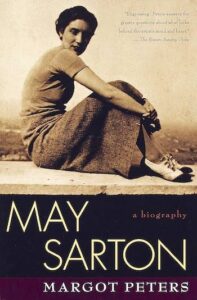
May Sarton was a highly respected American poet, novelist, and memoirist. Her literature encompasses themes of aging, solitude, and family and romantic relationships. Presented here is a selection of introspective quotes by May Sarton, a most thoughtful writer.
Self-identified as a lesbian and regarded as a feminist, she preferred that her work found a place in a broad humanitarian connection rather than within the identities she embodied.
Her memoir, Journal of a Solitude (1973) was her most popular work, and “Now I Become Myself” is one of her most beloved poems. She was also the author of numerous novels. Read More→
It may be surprising that the iconic poet Sylvia Plath, who wrote extensively and evocatively of death and suicide in her poetry, left a note of only four words before taking her own life. A debate has stirred ever since — was Sylvia Plath’s suicide note a death knell, or a cry for help?
Sylvia Plath’s note simply said “Please call Dr. Horder” — along with this doctor’s phone number. Could a slip of paper bearing these four words even be considered a suicide note at all? For whose eyes was it intended?
When Sylvia Plath committed suicide in February of 1963, it wasn’t the first time she had tried to take her own life. Read More→
Marjorie Kinnan Rawlings was best known for her Pulitzer Prize-winning novel, The Yearling (1939), the story of a boy who adopts an orphaned fawn. The jewel in the crown of her writing career, it won the Pulitzer Prize for fiction in 1939 and was subsequently made into a successful movie.
Early in her career, while attempting to get her fiction published in magazines, Rawlings supporting herself through newspaper work. She honed her craft as a newspaper reporter.
And like other authors who started out this way (including Willa Cather, Edna Ferber, and L.M. Montgomery), she longed to take her writing in a more artistic direction. At first, all she collected were rejection slips. Read More→
Vita Sackville-West (1892 – 1962) the British novelist, poet, and garden writer, was best known for All Passion Spent and The Edwardians. Presented here are quotes by Vita Sackville-West that are a testament to her as a thinker and writer.
Where passion was concerned, she was involved in a number of intense affairs with both men and women (including, famously, Virginia Woolf).
All the while, she was in a loving open marriage with diplomat Harold Nicolson, with whom she had two sons. She was also devoted to the gardens at her ancestral home, Sissinghurst. Read More→
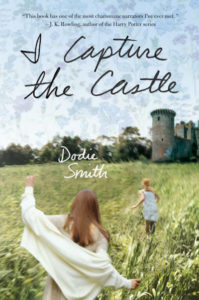
Dodie Smith (1896 – 1990), the British novelist playwright, was best known for The Hundred and One Dalmatians (1956) and her young adult novel I Capture the Castle. Following is a selection of colorful quotes from I Capture the Castle (1948).
I Capture the Castle features sisters Rose and Cassandra Mortmain, members of an eccentric family living in genteel poverty in a crumbling castle in the 1930s. This coming-of-age story has been beloved by readers of all ages ever since it was published in 1948. Critics were kind as well, as in the words of this original 1948 review:
“Finding out what happens makes rewarding reading. This is a captivating — an enchanting story, bit it is also shrewd commentary on life and art and the complexity of the human heart.” Read More→
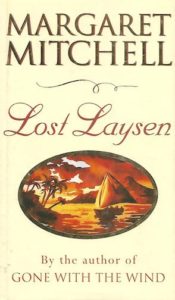
For many years, Gone With the Wind was recognized as Margaret Mitchell‘s (1900 – 1949) only novel. And could be argued that this is still the case, even after the discovery of Lost Laysen, a novella she wrote when she was just sixteen.
It could be argued that it’s a long short story, truth be told. The story takes up less than half of the 128 pages of this slim volume, set in narrow columns with wide margins.
Still, its discovery was met with excitement as a significant literary event, and it was published for the first time in 1996 by Scribner’s. Here’s the beginning of the Preface to this edition: Read More→
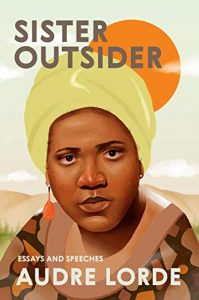
Sister Outsider is collection of essays and speeches by Audre Lorde (1934 – 1992), the highly influential writer, speaker, and teacher, self-identified as a Black lesbian poet, and feminist. The thought-provoking quotes from Sister Outsider presented here bear witness to the depth of Lorde’s commitment to feminism and justice.
This posthumously published compilation features fifteen essential essays and speeches in which Lorde delves into sexism, racism, homophobia, and other oppressions. As demonstrated by the quotes from Sister Outsider that follow, Lorde provides a roadmap for social transformation that begins with change within the individual.
Though most of the essays in were written in the 1970s and 1980s, the struggles are all too much with us, making her writing and thinking as relevant as ever. Read More→