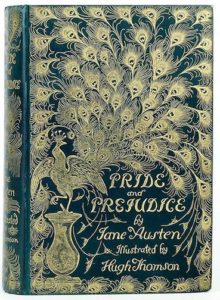
Contributed by James Gaynor, author of Pride and Prejudice in 61 Haiku: Emily Dickinson once famously remarked that if she felt as though the top of her head were taken off, she knew she was reading poetry. And who among us did not read, “It is a truth universally acknowledged …” and feel our heads explode?
So, if Jane Austen has been hiding her poet self in prose, how better to acknowledge the power of her collective one-line poetry than by translating all of Pride and Prejudice’s 61 opening-sentence poems into contemporary twists on the classic Japanese 17-syllable haiku? Read More→
This selection of quotes from Black Beauty, one of the best-selling children’s books of all time, reflect its author’s belief in the inherent rights and dignity of all animals.
Anna Sewell (1820 – 1878) inherited her talent from her mother, Mary Wright Sewell, who was a writer of poetry and novels.
Anna’s inspiration for her only novel, Black Beauty (1877) came from personal experience. She fell while walking home from school and broke both of her ankles at the age of fourteen. Read More→
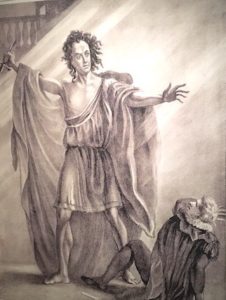
Mary Wollstonecraft Shelley (1797 – 1851) was a British author whose work crossed several genres (essays, biographies, novels, short stories, and dramas), though the book she’s best remembered for is Frankenstein, or the Modern Prometheus, one of the most remarkable works in English literature.
Read a detailed synopsis of this unforgettable story, and keep reading for a selection of memorable quotes from Frankenstein.
When she was seventeen years old, Mary she eloped from England to Italy with the poet Percy Bysshe Shelley, setting off a life of upheaval and tragedy. One of the results was the creation of If you love this book, make sure to read in Mary Shelley’s own words how she came to write Frankenstein while still in her teens. Read More→
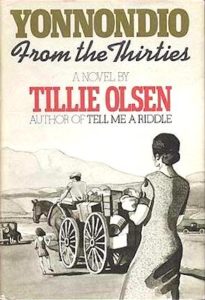
Yonnondio: From the Thirties is a fragment of a novel that Tillie Olsen (best known for Tell Me a Riddle) began at age nineteen, in the 1930s, and then abandoned for decades as she worked to earn a living and raised four daughters.
In 1974, it was published as an unfinished work. It’s the story of the Holbrooks, a struggling working-class family, moving about the western and middle western U.S. in search of a living.
This novel is considered experimental and somewhat autobiographical, and explores themes of class and family (specifically motherhood). It also nods to the socialist views of Olsen and her family of origin. Read More→
Tillie Olsen (1912 – 2007) was born in Nebraska to Russian-Jewish immigrants whose socialist politics and activism inspired her work. Following is a selection of quotes by Tillie Olsen.
Olsen wrote her first novel, Yonnondio: From the Thirties, at the age of 19 while she was helping support her family, though it wasn’t published until some years later.
Olsen felt she didn’t fulfill her potential as a writer, spending many years raising four daughters. She poured some of that frustration into what’s now considered a feminist nonfiction classic, Silences (1978). Perhaps her best known work is the short story Tell Me a Riddle. Read More→
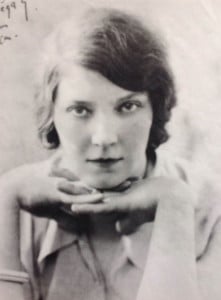
Ann Petry (1908 – 1997) is known as the first African American woman who wrote a book that sold a million copies. The Street (1946) ultimately sold a million and a half copies. Following are some fascinating facts about Ann Petry, a classic American author who deserves to be more widely read.
Her writing career began in earnest in 1938 when she moved from her native Connecticut to Harlem. There she worked as a journalist, columnist, and editor.
She also participated in Harlem’s American Negro Theatre. Subsquently, she published three novels, a collection of short stories, and several children’s books. Read More→
Jean Rhys is best known for her last novel, Wide Sargasso Sea, what modern critics consider a post-colonial response to Charlotte Brontë’s Jane Eyre. Rhys’ novels are characterized by reoccurring themes of exile, loss, alienation, sexual inequality, and enslavement influenced by her identity as a Dominican woman.
Jean found writing difficult and expressed that she would rather be happy than be a writer. She returned to Dominica only once, in 1936, visiting her grandfather’s plantation.
The estate and his possessions destroyed during the 1844 “Census Riots” / ”La Guerre Negre.” The house itself had been burned down by arsonists in 1930, a tragedy Jean integrated into Wide Sargasso Sea. Read More→
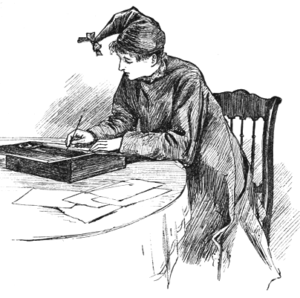
Presented here is a selection of illustrations by Frank T. Merrill from the 1896 edition Little Women (first published in 1868). These are but a fraction of the 200 illustrations in total. You can see this edition in its entirety on Project Gutenberg.
Louisa May Alcott’s best known novel, Little Women, was seemed to be an overnight success for its author. In truth, she had years of writing behind her before this success seemed to arrive so suddenly.
She cranked out thrillers, gothic novels, plays, sketches, and more than eighty articles before penning the somewhat autobiographical (if highly idealized) novel that cemented her name and reputation for time immemorial. Read More→