By Nava Atlas | On September 25, 2017 | Updated December 11, 2022 | Comments (0)
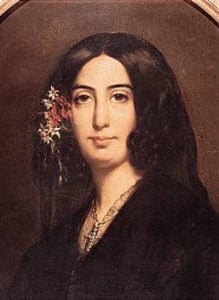
George Sand’s first novel, Indiana (1832), argued for the freedom of young women to follow their hearts, make their own terrible mistakes, and learn from them in order to grow and be true to themselves. Only then could they become equal partners to their husbands.
Indiana is a young woman married to a much older man. She falls in love with a rake who has seduced her own maid. Indiana’s passion is nonetheless awakened by her perfidious lover.
The restrictive French marriage laws of the time and double standards of the time created a perilous path for Indiana’s passage to womanhood. Read More→
By Emma Ward | On September 24, 2017 | Updated December 11, 2022 | Comments (0)
P.L. Travers (1899 – 1966) found inspiration for her writing as an avid reader of fairy tales and mythology. It’s no surprise, then, that she created the magical nanny, Mary Poppins (1934). Here’s a selection of quotes by P.L. Travers, a complicated woman and talented writer:
After the original Mary Poppins book (always the most successful), there were several sequels, and of course, the famous 1964 Disney musical film.
The original Mary Poppins books were darker and more subversive than the Disney-fied version. And the film Saving Mr. Banks, depicting the making of Mary Poppins, starred Emma Thompson as the prickly author who fought Disney on every detail. And that still didn’t tell the whole story of just what a curmudgeon Travers could be. Read More→
By Emma Ward | On September 23, 2017 | Updated May 2, 2023 | Comments (0)
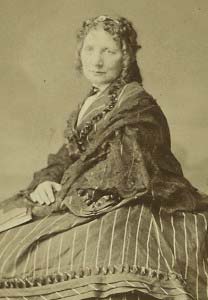
Harriet Beecher Stowe (1811 – 1896) was the ultimate working mother, obliged to supplement her husband’s meager income to support their large family. Consciously using storytelling as social commentary, Stowe’s overarching theme is of writing passionately for a cause.
Though the literary merits of her work have long been debated, there’s little dispute that Uncle Tom’s Cabin caused a major shift in public perception of slavery. Read More→
By Taylor Jasmine | On September 22, 2017 | Updated December 18, 2022 | Comments (0)
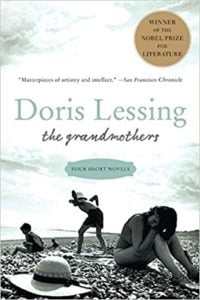
From the 2004 HarperCollins edition of The Grandmothers by Doris Lessing: With the four short novels in this collection, Doris Lessing once again proves that she is unrivaled in her ability to capture the truth of the human condition.
The Grandmothers
Two women, close friends, fall in love with each other’s teenage sons, and these passions last for years, until the women end them, promising a respectable old age. Read More→
By Emma Ward | On September 22, 2017 | Updated December 18, 2022 | Comments (0)
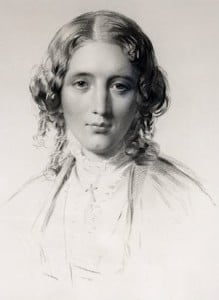
Harriet Beecher Stowe, (1811 –1896) author of the iconic anti-slavery novel Uncle Tom’s Cabin (1852), supported herself, her children and her husband with her literary talent. Following is a selection of quotes from the novels of Harriet Beecher Stowe, a modest author who changed the world with her words.
Stowe came from the Beecher family, a progressive group of siblings who supported her efforts. She was also blessed with the privilege of education, a rarity for women of her time.
At age 39, still in the midst of tending to her large family, Stowe found a way to disseminate the story she had long wanted to tell. She hoped that though storytelling, public awareness of the horrors of slavery would grow and shift national consciousness. Read More→
By Marta McDowell | On September 22, 2017 | Updated December 18, 2022 | Comments (0)
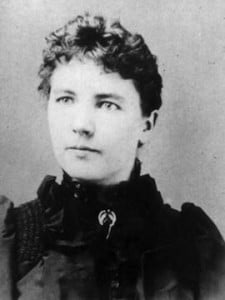
You may know the fictional version of Laura Ingalls Wilder from the Little House books, that bumper crop of novels for young readers brought out by Harper & Brothers in the 1930s and ‘40s.
Or from the NBC television adaption first aired in the 1970s and ‘80s, starring Melissa Gilbert as Laura and Michael Landon as a heartthrob version of Charles “Pa” Ingalls.
Behind the fictional Laura was the author, Laura Ingalls Wilder (1867 – 1957), a late bloomer in terms of her literary life. She was well into her forties before she was ever paid for a piece of writing, and sixty-five when the first Little House book was published. So those of you who are just getting started at whatever age, take heart. Read More→
By Emma Ward | On September 21, 2017 | Updated December 18, 2022 | Comments (2)
Elizabeth von Arnim (1866 – 1941) produced a wealth of quietly (and sometimes subversively) feminist novels and memoirs. She was best known for The Enchanted April (1922), which many decades later became the 1992 film Enchanted April).
During her lifetime, she usually published under simply “Elizabeth.” She had a wry, dry sense of humor, but also displayed a passion for beauty, especially the beauty of gardens. Here are some passionate and pensive quotes by Elizabeth von Arnim: Read More→
By Taylor Jasmine | On September 21, 2017 | Updated November 18, 2022 | Comments (0)
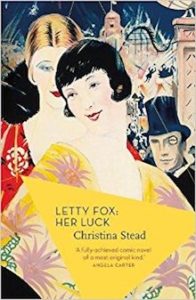
The Australian government refuse to import Letty Fox: Her Luck by native Aussie Christina Stead (the talented and complicated author best known for The Man Who Loved Children) after this novel’s 1947 publication. It was declared “salacious” and “obscene,” and was even occasionally banned.
A frank and witty coming of age story set between the Great Depression and World War II, this banned book didn’t meet much favor in the Australian press, either. Here’s one such review, which panned the novel thoroughly. Read More→