By Nava Atlas | On September 20, 2017 | Updated October 7, 2025 | Comments (2)
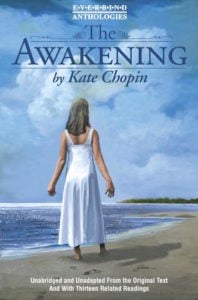
Each year in late September, Banned Books Week highlights books — usually critically acclaimed and beloved by readers — that have been frequently challenged or banned outright. Read on to find out why some classic books by women authors have been challenged or banned in times past and into the present.
Some books have been challenged from the time they were first in print; others banned outright by certain schools, parents groups, and religious organizations. Read More→
By Taylor Jasmine | On September 19, 2017 | Updated September 21, 2026 | Comments (0)
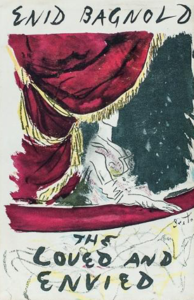
It’s widely believed that Lady Ruby MacLean, the protagonist of The Loved and Envied by Enid Bagnold was based on real-life Lady Diana Cooper, a famous socialite of the early 20th century. Bagnold’s fellow British writer Nancy Mitford also drew inspiration from Lady Cooper for Don’t Tell Alfred.
Though the book doesn’t much resonate with contemporary readers, it was apparently enjoyed by a previous generation, and stands firmly in Bagnold’s modest canon.
Lady Maclean is the character through which the theme of aging is explored, in particular, how it affects a beauty who is, as the title implies, loved and envied. Read More→
By Nava Atlas | On September 18, 2017 | Updated September 14, 2026 | Comments (0)
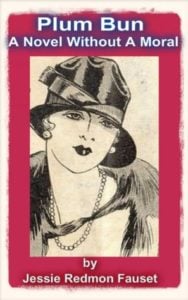
Jessie Redmon Fauset (1882 – 1961) was an American editor, poet, essayist, and novelist associated with the Harlem Renaissance. Plum Bun (1928) was one of four novels Fauset produced, along with There is Confusion (1924), The Chinaberry Tree (1931), and Comedy, American Style (1933).
In addition to the novels, Fauset’s output of shorter works was quite prodigious. And her eight-year tenure as the literary editor of the influential Crisis magazine was impressively productive, helping to launch the careers of a number of iconic writers of the era. Read More→
By Skyler Gomez | On September 16, 2017 | Updated November 18, 2022 | Comments (0)
Grace Paley‘s literary career encompassed writing about the experiences of women, Jewish life, and teaching at various universities. She was also a poet and received multiple honors for her artistic talent despite not having a college degree. presented here is a selection of quotes by Grace Paley on reading, writing, and living.
Grace Paley: The Collected Stories (2007) encapsulates her style, noting her “quirky, boisterous characters and rich use of language,” and goes on to say:
“Grace Paley’s stories are united by her signature interweaving of personal and political truths, by her extraordinary capacity for empathy, and by her pointed, funny depiction of the small and large events that make up city life.” Read More→
By Taylor Jasmine | On September 15, 2017 | Updated January 28, 2024 | Comments (6)
A number of classic women authors were known for their penchant for wearing men’s clothing. And in some, if not most of the instances presented here, it’s not merely cross-dressing for fun and comfort, but an expression of the duality of the writer’s nature.
It’s no longer unusual for women to wear pants or man-tailored jackets,. But in the context of the time and place in which the following authors lived, it was an act of rebellion and occasionally a statement of more fluid identity.
Read More→
By Nava Atlas | On September 14, 2017 | Updated November 22, 2022 | Comments (0)
When Darryl Zanuck was considering making Laura Z. Hobson’s 1947 best-seller about “genteel” anti-Semitism, Gentleman’s Agreement, he faced a common dilemma: At the time, there were significant number of powerful Jews in Hollywood.
As studio heads, they were reluctant to plead for Jewish causes. They even avoided the topic of what had happened with the genocide of European Jews, before, during, and just after the war. Serious social issues were generally avoided because they weren’t good box office business. In tough times, especially, audiences wanted an escape. Read More→
By Taylor Jasmine | On September 13, 2017 | Updated March 18, 2026 | Comments (0)
Gentleman’s Agreement, the classic 1947 film, was based on the novel of the same name by Laura Z. Hobson, which was published the same year. Hobson doubted any publisher would want to take it on, let alone that it would become an award-winning film.
It’s the story of Philip Schuyler Green, a journalist who poses as a Jew in order to investigate antisemitism in post-World War II New York City and environs.
Though it showed only a narrow slice of antisemitism centered in New York City’s upper class, the film sensitively explores the topic and is quite true to the book. Read More→
By Emma Ward | On September 12, 2017 | Updated September 18, 2025 | Comments (0)
Edith Wharton (1862 – 1937), the esteemed American author, grew up in a wealthy family that didn’t think it was proper for a young woman of their society to be writer. Here’s a collection of perceptive quotes by Edith Wharton, who was ever observant about human nature and honest about the challenges of the writing life.
Though she initially lacked confidence, her first published works were steps to self-acceptance. Wharton lived a full life, building herself a mansion in Lenox, Massachusetts, living in France, aiding war refugees, and winning a Pulitzer Prize for her novel, The Age of Innocence (1921). Read More→