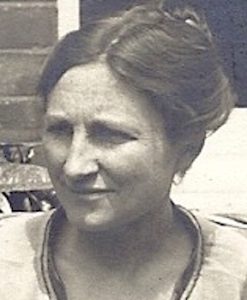
I first heard about Helen Tracy Lowe-Porter (1876 – 1963) when I fell in love with her grandson, a visiting American graduate student at my university in New Zealand.
I knew of the great German novelist Thomas Mann but had not read his novels, and certainly had never wondered about how they came to appear in English.
“My grandmother was Mann’s translator,” my new boyfriend informed me. I was mildly impressed. He told me a little about her: how forbiddingly intellectual she was, how un-grandmotherly. Read More→
If you want to delve into the novels of Daphne du Maurier (1907 – 1989), where should you begin? Presented here are six essential books that give readers a place to start with the works of the prolific British novelist, playwright, and short-story writer.
Du Maurier launched her publishing career at age twenty-two with The Loving Spirit (1931), her first novel. She went on to publish numerous works of full-length and short fiction as well as nonfiction and plays.
Arguably, Rebecca (1938) is du Maurier’s masterwork and best-known work. And there’s a group of novels among her canon that approach it in terms of quality and longevity. Here we’ll list the books that Dame Daphne is best remembered for. Read More→
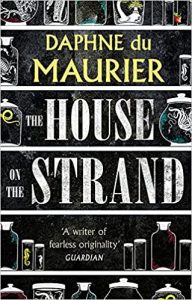
The House on the Strand (1969) is one of prolific British author Daphne du Maurier’s later novels, and perhaps one of those less widely read and not as critically acclaimed.
The story, set in her own beloved Cornwall, is one of time travel, with elements of the gothic and supernatural.
The narrator, Richard (Dick) Young, gains access to a drug that transports him from the present day (and a life he finds rather dreary) to the 14th century. There, he becomes involved in the lives of those he meets, and his two worlds collide. Read More→
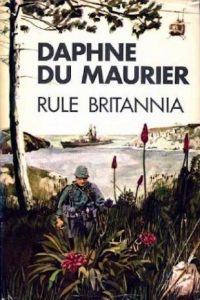
Rule Britannia (1972) was the last novel written by Daphne du Maurier, who was known for her tightly plotted, exquisitely crafted thrillers, including the iconic Rebecca (1938).
The story, set in a future version of England, envisioned the withdrawal of the United Kingdom from the EEC (European Economic Community), a body that was incorporated into the European Union in 1993, well after du Maurier’s time. It was almost as if she was envisioning Brexit.
In fact, the Times of London called it a “Brexit novel,” placing it among others that envisioned Britain striking off on its own in an April 2019 article by Lucy Scholes: Read More→
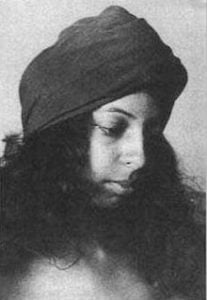
Angelina Weld Grimké (February 27, 1880 – June 10, 1958) was an American playwright, poet, and educator. She rose to prominence as a figure in the Harlem Renaissance movement of the 1920s, though most of her major works were created before that era.
As a writer and woman of color, she was deeply concerned about pervasive racism and other issues of African American lif . Themes of racial bias and danger played a prominent role in her poetry and plays. Read More→
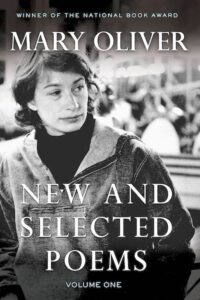
Mary Oliver (September 10, 1935 – January 17, 2019) was an American poet whose work reflects a deeply rooted harmony with the natural world. No Voyage and Other Poems, her first collection, was published in 1963. Since then, books and numerous collections of her poems were published.
Born in Maple Heights, Ohio, a suburb of Cleveland, Mary’s parents were Edward and Helen Oliver. Her father worked in the Cleveland public school system as an athletic coach and social studies teacher. Read More→
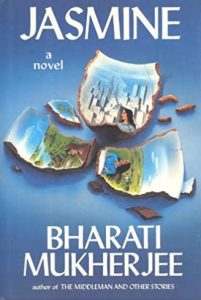
Bharati Mukherjee (1940 – 2017), who made her life in America, has written many books about the immigrant experience. Jasmine, published in 1989, is probably among the best as it picks up on the transition in a very nuanced fashion, not sparing us the horrors, either.
It is quite likely that the author’s personal experiences have contributed to the deep insights that can grab readers and keep them riveted.
Mukherjee was born in what is now called Kolkata (Calcutta at the time she was born when under Indian rule). In the course of her prolific career, she wrote many works of fiction and nonfiction and taught at a number of American universities. Read More→
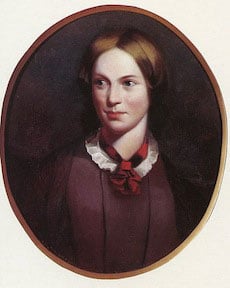
The Brontë sisters — Charlotte, Emily, and Anne — literary geniuses all, are best known for their classic novels. Each was also a poet in her own right. Though Emily Brontë’s poetry is considered the best among the sisters’ poetic works, poems by Charlotte Brontë are more than meriting of a consideration.
All three sisters longed to be novelists, though before attempting to publish full-length works, Charlotte undertook the task of finding a home for a collaborative book of poems. Her thinking was that it would be a good stepping stone (it wasn’t, as it turned out).
The sisters took masculine, or at least indeterminate, noms de plume. In Charlotte’s words:
“We had very early cherished the dream of one day becoming authors. This dream, never relinquished even when distance divided and absorbing tasks occupied us, now suddenly acquired strength and consistency: it took the character of a resolve. We agreed to arrange a small section of our poems, and, if possible, get them printed. Read More→