Though popular Modernist works that have endured to this day tend to gravitate toward male writers, there is no shortage of Modernist women writers who were well known in their day.
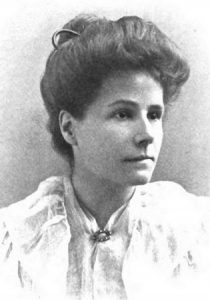
Their names appeared regularly on bestseller lists in the early 20th century, as readers embraced their works. Some of their work has fallen into a literary abyss, with little attention given to their work a century later. At right, May Sinclair.
Most of these women listed here were connected to one another in some way, either through schooling, a crossing of literary paths, or in reviewing another’s work. Read More→
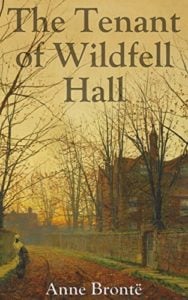
The Tenant of Wildfell Hall was published in 1848 under Anne Brontë ’s pseudonym, Acton Bell. It’s now considered one of the earliest feminist novels. Following you’ll find an original review of The Tenant of Wildfell Hall, first published under Anne’s pseudonym, Acton Bell.
More so than Anne’s quieter first novel, Agnes Grey (1847), The Tenant of Wildfell Hall was an immediate success. That was despite its being considered shocking by some readers and critics for its unflinching look at alcohol abuse and the domestic violence that arose from it.
The novel tells the story of the mysterious Helen Graham, and her arrival at Wildfell Hall with her young son and a servant. Through a series of letters from another character, we learn of Helen’s troubled past. Read More→
Julia Ward Howe (1819 – 1910) was an American poet, essayist, editor, speaker, and activist extraordinaire, especially in the causes of abolition, suffrage, and the advancement of women everywhere.
Although her iconic “Battle Hymn of the Republic” is ubiquitous in patriotic, inspirational, and popular settings, its author is far less known. Let’s look at 10 fascinating facts about the woman behind the verses.
Howe was born on Bond Street and Broadway in New York City to an affluent, Calvinist family; when she was five, her mother died in childbirth. She was educated in a home with its own library and art gallery and well-propertied for a secure future. Her heroic but controlling husband stymied her spirit and mishandled her land holdings. Read More→
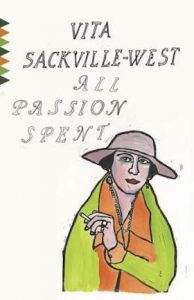
All Passion Spent by Vita Sackville-West, a 1931 novel, was one of this British author’s most popular works. Its major theme is that of gaining control over one’s own life, and it also addresses the constrictions of class and gender.
We meet Lady Slane, who has lived her adult life as the dutiful wife of a powerful politician and a respectable mother. Her husband having just passed away, she’s already well into in her eighties but determined to live out her remaining days to their fullest. Read More→
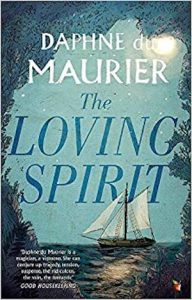
Daphne du Maurier (1907 – 1989), the prolific British novelist, playwright, and short story writer started her publishing career at age twenty-two with her first novel, The Loving Spirit (1931).
The title was inspired by the name of a poem by Emily Brontë. It’s well known that du Maurier was greatly inspired by the Brontë sisters; her masterwork, Rebecca (1938), has echoes of Jane Eyre.
Beginning in the early 1800s, The Loving Spirit tells the story of the Coombes family, and is mainly set in Cornwall, a part of England in which the author spent much of her life. Janet Coombes marries her cousin, Thomas Coombes, who is a shipbuilder. The novel follows the adventures and trials of this family for four generations. Read More→
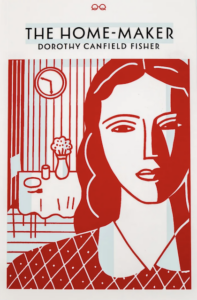
A way ahead-of-its-time novel, The Home-Maker by Dorothy Canfield Fisher (at the time known as Dorothy Canfield), published in 1924 by Harcourt, Brace & Co., imagined a domestic role-reversal.
A reversal of gender roles in the home was quite a bold idea to consider in the 1920s. As parents, the protagonists Evangeline (Eva) and Lester Knapp were unhappily going through the motions of their traditional roles. An accident forced them to reverse roles, and from that adversity, their family found strength and satisfaction.
Dorothy Canfield Fisher (1879 – 1958) was an American author, educational reformer, and social activist based in New England and identified most closely with Vermont. She earned a Ph.D in 1905, was able to speak five languages, and worked for the cause of refugees in Europe. Read More→
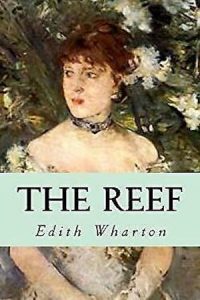
The Reef by Edith Wharton, published in 1912, came more or less in the middle of her novel-writing career. It came after the triumph of The House of Mirth and before her Pulitzer Prize-winning turn with The Age of Innocence.
The author herself wasn’t pleased with this book, writing her regrets over it to a friend not long after its publication, describing it as a “poor miserable lifeless lump,” and vowed that next time she was “going to do something worthwhile!”
Some critics tended to agree with Wharton’s self-assessment. The New York Sun’s review called The Reef “a bitter, disheartening, sordid story and we could wish that Mrs. Wharton would look on brighter and nobler aspects of life.”
Read More→