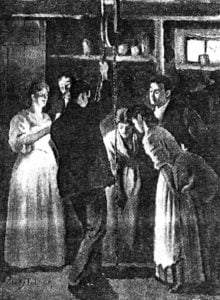
Charlotte Perkins Gilman‘s short story The Giant Wistaria (1891) is less known than her classic, The Yellow Wallpaper. “Wistaria” has in common with “Wallpaper” the underlying themes of patriarchal repression of women’s sexuality and control of the realm of motherhood. What results is a chilling ghost story.
Presented here is the full text of The Giant Wistaria, written in 1891 under the name she was going by, Charlotte P. Stetson, just a year prior to the publication of The Yellow Wallpaper.
In analysis of The Giant Wistaria from Feminist Short Stories: Horror & Sci-Fi (Part 1), Jillian McKeown writes: Read More→
“How it Feels to Be Colored Me” is a brief essay by Zora Neale Hurston originally published in the 1928 edition of The World Tomorrow. In it, she explores her own experience with race, in her customary brash manner. She makes clear that she speaks only for herself.
Raised in the all-Black community of Eatonville, FL, Hurston first encountered what was universally called “the race problem” as a young adult striving to gain an education in the north.
The tone of this essay doesn’t reflect the kind of intellectual propagandist Black pride displayed in the Harlem Renaissance (also known as New Negro movement) of the 1920s; yet it unabashedly pokes holes in the rampant segregation and bias that were woven into the fabric of American life, North or South. Read More→
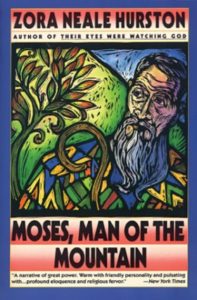
Zora Neale Hurston reveals her strength as a writer through character development and use of narration. Her 1939 novel, Moses, Man of the Mountain, tells the story of Moses and the Book of Exodus from an African-American perspective.
The Zora Neale Hurston Digital archive describes the book:
“Moses, Man of the Mountain is Zora Neale Hurston’s attempt at re-writing (or re-righting) the Bible from an Afro-American perspective. She retells the story of the Exodus, which is the triumphant tale of Moses and the Israelites’ escape from Egyptian slavery.” Read More→
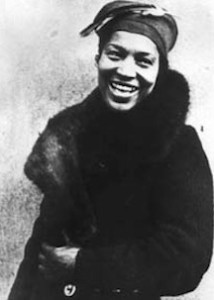
Having been forgotten, then rediscovered in a major way, it’s rare to find interviews with Zora Neale Hurston written in her time.
Here’s a newspaper article in which she was interviewed as she burst on the literary scene in the 1934, when her first novel, Jonah’s Gourd Vine, was published.
This article was published in The Richmond Item, Nov. 14, 1934. Of course, it contains some of the parlance and attitudes of that time. Read More→
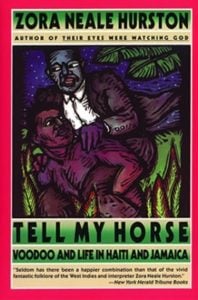
Tell My Horse by Zora Neale Hurston (1938), is based on her firsthand research of Voodoo practices in Haiti and Jamaica.
The esteemed twentieth century author is best known for the 1937 novel Their Eyes Were Watching God; what’s less well known about about her is that she was a trained anthropologist.
Zora was the first black student at Barnard College, the women’s college connected with Columbia. She studied with the noted anthropologist Franz Boas, who recognized her talent for storytelling and abiding interest in black cultures of the American South and Caribbean. Read More→
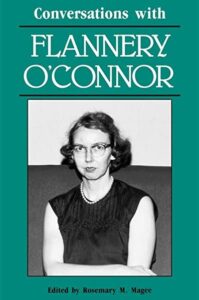
Flannery O’Connor (1925 – 1964) was best known for her short stories that were in the genre of Southern Gothic. She enjoyed imparting wisdom on her craft, as you’ll find in the following selection of Flannery O’Connor quotes on writing and literature.
Despite poor health she wrote every day, eventually producing two novels and more than thirty short stories in an all-too-brief life. She always stood somewhat apart, an observer; there was nothing she wanted to do other than write.
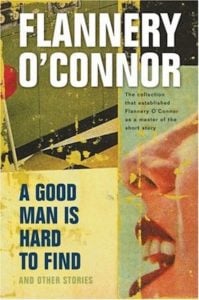
At the age of 24, she was ready to begin her writing career in earnest and produced iconic stories like A Good Man is Hard to Find. She had a lot to say about the writing life, which you’ll find ahead. She was only 39 when she died. Read More→
This analysis of The Giant Wistaria (1891) — a chilling short ghost story by classic feminist author Charlotte Perkins Gilman was contributed by Jillian McKeown, excerpted from Feminist Short Stories: Horror & Sci-Fi (Part 1).
It’s shocking once you’ve finished “The Giant Wistaria” to realize that it was published in 1891, when it seems as if it were written not so long ago.
The story takes place during two time periods, the 1700s and the 1800s. The former century begins with an English family and we’re dropped into the middle of the most scandalous of family dramas — their daughter has just given birth out of wedlock, and the parents are fleeing to England to escape any disgrace to their family name. Read More→
“A Good Man is Hard to Find,” a 1953 short story by Flannery O’Connor, remains one of this author’s most controversial works.
This story by author of modern Southern gothic was first published in 1953 in an anthology of modern writing, and in 1960, it was the eponymous title of O’Connor’s own anthology of her collected short stories. Because it has appeared in many anthologies, this story is one of her best known, if not necessarily her best.
The story begins as a man named Bailey wishes to take his family on a road trip from Georgia to Florida. His mother, who is simply called “the grandmother” argues that they should go to East Tennessee instead. She has seen a news article in the Atlanta Journal-Constitution that escaped murderer called “The Misfit” was spotted in Florida. Read More→