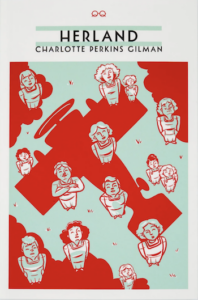
This analysis of Herland, the 1915 utopian novel by Charlotte Perkins Gilman is excerpted from an in-depth review from Exploring Feminisms by Jillian McKeown.
Years ago, I bought Herland after reading The Awakening by Kate Chopin, craving that same satisfied woman-centered feeling that I was left with as I closed Chopin’s book. As I read the first few pages of Gilman’s Utopian text about a land of only women, I noticed that it was from a man’s point of view and immediately lost interest.
I had very little interest in a man’s perspective, even if it was written by a woman. Recently, Herland has been on my mind and decided to pick it up again. Read More→
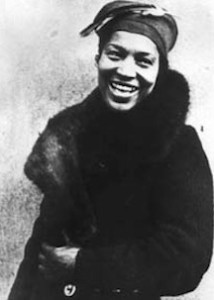
Mules and Men is a 1935 ethnographical collection by Zora Neale Hurston, one of the most celebrated writers to come out of the Harlem Renaissance.
It’s well known that Zora was an incredible storyteller, evidenced by novels including Their Eyes Were Watching God, as well as numerous short stories. She was an accomplished ethnographer as well.
Zora was the first black student at Barnard College, the women’s college connected with Columbia. She studied with the noted anthropologist Franz Boas, who recognized her talent and abiding interest in the black cultures of the American South and Caribbean. Boas urged her to pursue more research, something that Zora loved to do. Read More→
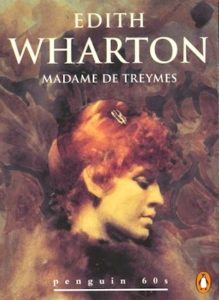
From the 1970 Scribner’s edition of Madame de Treymes: Four Novelettes by Edith Wharton: The four novellas by Edith Wharton in this volume are Madame de Treymes, The Touchstone, Sanctuary, and Bunner Sisters, written between 1900 and 1916. Read More→
“Crazy for this Democracy” is a biting, trenchant essay by Zora Neale Hurston, first published in The Negro Digest in December, 1945. Following is a sampling of quotes from this wonderful piece of writing.
It was published when, after having served the country overseas to fight tyranny, Black servicemen and women returned to find that they still didn’t have the basic rights at home that they had fought for abroad. Segregation was still the rule rather than the exception in education, employment, housing, and more.
Though this essay speaks directly to that era’s Jim Crow laws in the U.S., it is still, sadly, applicable in many ways to today’s climate in America, where “othering” is growing more acceptable.
Read More→
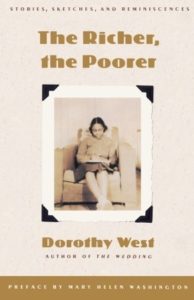
Dorothy West (1907 – 1998) was the last surviving member of the Harlem Renaissance movement of the 1920s. The Richer, The Poorer, published in 1995, is collection of her short stories and essays spanning nearly seventy years of West’s writing.
Though she didn’t produce a large body of work, West’s writing is admired for its nuanced views of middle and upper middle-class African-American communities and its examinations of gender, class, and social structure.
Her first novel, The Living is Easy (1948), depicts the life of an upper-class black family. It remained her only novel for decades, until The Wedding was published in 1995, the same year that The Richer, The Poorer was published.
Read More→
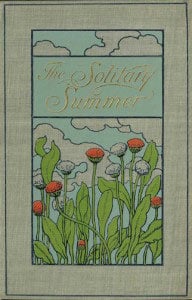
“I want to be alone for a whole summer, and get to the very dregs of life. I want to be as idle as I can, so that my soul may have time to grow. Nobody shall be invited to stay with me, and if anyone calls they will be told that I am out, or away, or sick . . . Wouldn’t a whole lovely summer, quite alone, be delightful?”
That is what the narrator of The Solitary Summer wants, she being the fictional alter ego of the author Elizabeth von Arnim (who at the time of publication was known only as the anonymous “author of Elizabeth and Her German Garden.” Read More→
Dear Literary Ladies,
How can a writer balance the need for quiet and solitude, with the desire for camaraderie? When I’m alone working, I feel the need for feedback; and when I’m in the company of other writers and talk about my work, I feel I’m seeking too much outside validation.
If you don’t keep and guard and mature your force and above all, have time and quiet to perfect your work, you will be writing things not much better than you did five years ago.
You must find a quiet place near the best companions (not those who admire and wonder at everything one does, but those who know the good things with delight!). Read More→
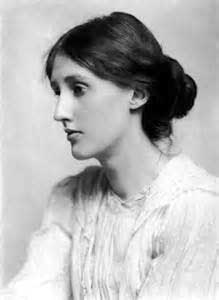
Virginia Woolf famously wrote, “A woman must have money and a room of her own if she is to write fiction.” Leaving aside the question of what a woman writes—fiction or nonfiction, prose or poetry, journalism or blog posts, just how important is solitude for writers? How critical is it to have a room of one’s own?
In learning about the writing lives of classic women authors, the universality of the issues and struggles all writers experience is striking. Finding quiet time to write and a modicum of privacy was as great a challenge in the 19th century as it is for today’s women—writers, creators, workers, mothers …
Read More→