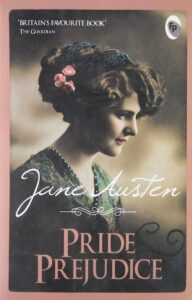
Jane Austen and Charlotte Brontë might be linked by their early 19th-century British backgrounds and legions of devotees. They had some similarities in their backgrounds and paths to publication, yet many differences. This isn’t a Jane Austen vs Charlotte Brontë competition; they were both brilliant writers!
Perhaps they’re often compared because they were among the group of British women writers who made an immense contribution to literature in the first part of the 1800s. Read More→
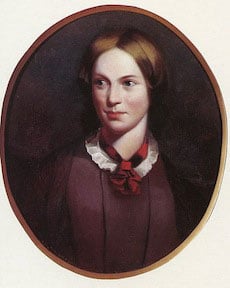
The story of Charlotte Brontë‘s writing life is one of sheer genius meeting tireless determination. She and her brilliant sisters Emily Brontë and Anne Brontë took pseudonyms to improve their chances of finding publishers.
The challenges and prejudices they faced in their literary pursuit is described in The Brontë’s Sisters Path To Publication. Following is a sampling of passages and quotes by Charlotte Brontë (1816 – 1855) on her writing life, starting with an 1846 query letter. Read More→
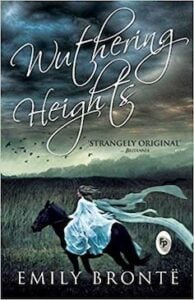
Though Emily Brontë (1818 – 1848), sister of Charlotte and Anne Brontë barely lived to age thirty, she produced one of the most beloved novels in the English canon — Wuthering Heights (1847). Following is a selection of quotes from Wuthering Heights that reflect the passionate and tumultuous nature of its characters.
One of the most influential of romantic novels, it touches on economic, social, and psychological issues. Then, of course, there is the obsessive love between Heathcliff and Cathy.
The brooding and complex story follows the intersection of two families — the Earnshaws and the Lintons. The passionate, almost otherworldly connection of Catherine Earnshaw and Heathcliff have sparked romantic imaginations as star-crossed lovers whose dramas and tragedies reverberate into the next generation. Read More→
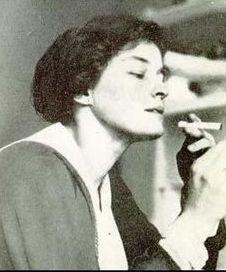
Enid Bagnold, the British author and playwright is best known for the classic 1935 children’s novel National Velvet and The Chalk Garden, a dramatic play that opened on Broadway in 1955.
Regarded as prickly and perplexing, she left behind a modest yet significant body of work. Here we’ll look at a selection of quotes by Enid Bagnold, a complicated and perplexing woman.
Bagnold at first pursued her studies in art, but then changed direction when she went to work as a journalist for a magazine in 1911. Read More→
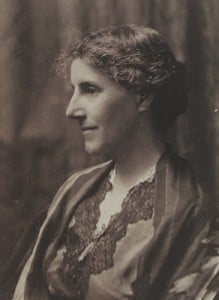
Charlotte Perkins Gilman (1860 – 1935), an American author of fiction and nonfiction, is considered ahead of her time for her feminist works that pushed for women’s social and economic independence. Here is a selection of quotes by Charlotte Perkins Gilman on human nature.
Best known for the 1892 semi-autobiographical work of short fiction, The Yellow Wallpaper, Gilman was one of the leading voices of the late 19th and early 20th century American women’s movement.
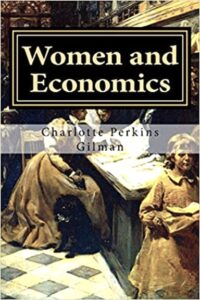
Her nonfiction works, including Women and Economics (1898) and The Man-Made World (1911) detail how women’s lives were impacted by social and economic bias. Sadly they’re still relevant, which is why they’re still read and studied. Read More→
Women and Economics: A Study of the Economic Relation Between Men and Women as a Factor in Social Evolution by Charlotte Perkins Gilman was published in 1898.
A visionary work, Women and Economics held the position that humans are the only species in which the female depends on the male for her survival.
It’s considered one of Gilman’s finest works, though perhaps not as widely known and read as her semi-autobiographical short story, The Yellow Wallpaper. Read More→
Should a writer read reviews of her work, whether by actual critics, or reader reviewers? Back in the day, when book reviews resided quietly in print media, an author could consciously avoid reading reviews of her work.
Unless a loud-mouthed aunt or neighbor broadcast the verdict, one could remain blissfully unaware of others’ opinions, if one had that sort of discipline.
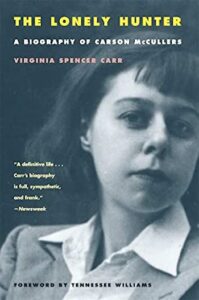
Carson McCullers said: “I never read my reviews. If they’re good, they might give me the big-head, and if they are unfavorable, I would be depressed. So why bother?”
Read More→
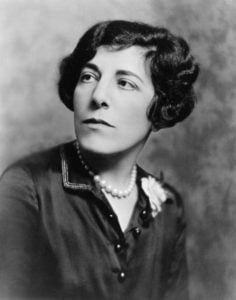
Have you ever heard of Edna Ferber? For most contemporary readers, the answer will be no. Her work was apparently of its time and place. Yet in that time and place (her prodigious output was concentrated mainly from the 1920s to the 1950s) her works were hugely popular, and financial gold mines.
Ferber was born in Kalamazoo, Michigan in 1885. Her family moved around the midwest before settling in Appleton, Wisconsin, where she spent her teen years.
Her senior essays so impressed the editor of the Appleton Daily Crescent that he offered the 17-year-old Ferber a reporting job. And so, a career was born. Read More→