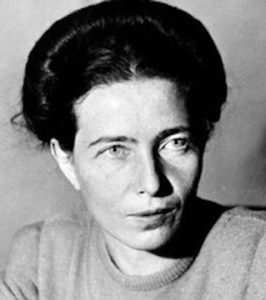
Simone de Beauvoir (1908 – 1986) was a philosopher, political activist, novelist, and social theorist who grew up in France during the 20th century. Following are some philosophical quotes by Simone de Beauvoir to muse over.
She studied mathematics and philosophy at the Institut Catholique and the Sorbonne, becoming the youngest philosophy teacher in France at age twenty-one.
Her most impactful work, The Second Sex, was published in 1949 and made its mark as a manifesto for second wave feminism. Read More→
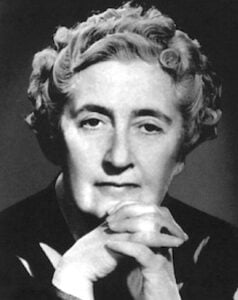
British author Agatha Christie (1890 – 1976) used her observations of people to construct her characters and stories, drawing inspiration from eavesdropping on conversations, her experiences as a nurse with the Red Cross, and her interest in archeaology.
Following is a selection of quotes by Agatha Christie, best known for the entertaining mysteries that earned her the title Queen of Mystery and “Queen of Crime.” (photo at right courtesy of Wikimedia Commons)
Christie saw incredible success during her lifetime. At the time of her death, her books had sold hundreds of millions of copies worldwide, and the number has only grown since then. Both before and after her death, a number of her books have been made into feature films. Read More→
Audre Lorde, self-identified as a Black lesbian feminist, used literature to spread ideas of intersectionality during the political movements of the mid-to-late 20th century. Following is a selection of quotes by Audre Lorde that straddle the worlds of poetry and politics.
A child of parents from the West Indies in New York City, Lorde started her writing career young and went on to teach as well as becoming involved in political activism through her work and organizations she helped found.
As the anti-war, feminist, and civil rights movements progressed, Lorde’s writings melded the political and personal. She used her platform as a writer to spread ideas about intersecting oppressions and experiences faced especially by women of color. Read More→
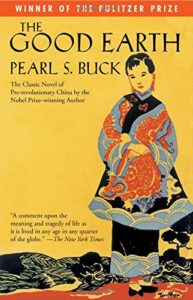
The Good Earth by Pearl S. Buck was the second novel by this iconic American author. Published in 1931, it led the bestseller list for almost two years. The story of a Chinese peasant farmer named Wang Lung and his family, the book was translated more than thirty languages worldwide.
Buck received the Nobel Prize for Literature in 1938 for her body of work, and the impact of The Good Earth surely contributed to this high honor.
Pearl Buck’s perspective provided an anthropological twist as a Western participant in Chinese culture. She was able to highlight cultural traditions that may be taken for granted by a native author: Read More→
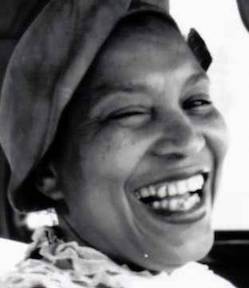
Zora Neale Hurston was a popular figure throughout the era of the Harlem Renaissance as a writer and anthropologist. She made waves as the first Black student at Barnard college and one of the first people to conduct studies with a true folk-lore perspective.
Even as she had many professional connections and had a confident and humorous personality, Hurston struggled with economic stability throughout her life.
“Financial dependency is the thread that sewed a cloud over Hurston’s life, from the time she left home as a maid at 14 to the day of her death” — from Alice Walker’s introduction to I Love Myself When I am Laughing
Read More→
Willa Cather‘s works of fiction and nonfiction represented consummate craftsmanship of the written word, so it’s no surprise that she left a body of insightful quotes. The following sampling of quotes by Willa Cather give a sense of her clean, spare style.
Her college classmates and teachers secretly submitted an essay she wrote to the Nebraska State Journal. Until then, she had planned to study medicine, but seeing her work in print changed her plans: “… What youthful vanity can be unaffected by the sight of itself in print! It was a kind of hypnotic effect.” Read More→
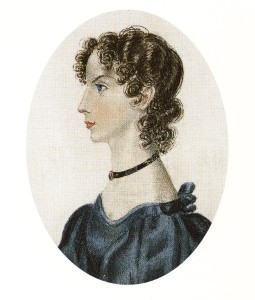
Anne Brontë (1820 – 1849) may be less known to readers than her sisters, Charlotte and Emily, but her contribution to English literature was significant. Following is a sampling of quotes by Anne Brontë from Agnes Grey and The Tenant of Wildfell Hall, the only published novels of this talented novelist and poet who died at age twenty-nine.
Anne was born in Thornton, West Yorkshire, the daughter of Patrick Brontë, a clergyman, and Maria Branwell. Anne grew up in Haworth, an isolated town on the moors of Yorkshire.
She was one of six siblings raised by her father after the death of their mother. The two oldest sisters, Elizabeth and Maria, died of illness at early ages, leaving Anne, the youngest, followed by Branwell, Emily, and Charlotte. Read More→
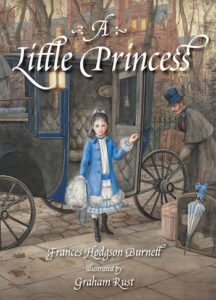
Frances Hodgson Burnett began writing at the young age of sixteen to help the family out with finances after the death of her father. Through depression and illness, Burnett found inspiration for her work and often spent time in her garden.
A Little Princess (1904) is the story of Sara Crewe, a young girl who loses everything dear to her. When she arrives at the private English boarding school as the richest and best-dressed girl, she’s treated like a little princess.
She gets the prettiest room, her own pony, a maid to wait on her, and the cloying attention ofMiss Minchin, the headmistress. Read More→