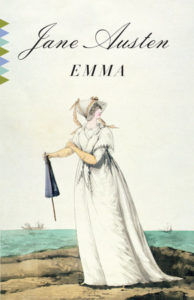
Emma by Jane Austen (1775 – 1817) was first published in December, 1815. Before she began the novel, Austen wrote, “I am going to take a heroine whom no one but myself will much like.”
In the first sentence she introduces the main character as “Emma Woodhouse, handsome, clever, and rich.” Emma is privileged and headstrong, greatly overestimating her matchmaking abilities, her imagination often leading her astray.
Emma was the last novel to be completed and published during Jane Austen’s life, as Persuasion, the last novel Austen wrote, was published posthumously. Emma has been adapted for several films, many television series, multiple stage plays, and has been the inspiration for several novels. Following are a collection of quotes from Emma, a novel that has been said to have “changed the face of fiction”: Read More→
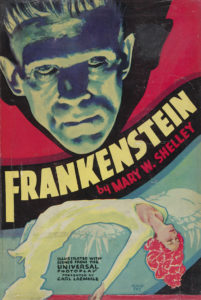
It was with great excitement that Literary Ladies Guide helped spread the exhibition at The Morgan Library & Museum (NYC): It’s Alive! Frankenstein at 200, which was on display from October 12, 2018 to January 27, 2019.
It’s hard to overstate the impact of Mary Shelley’s Frankenstein on literature as well as popular culture. This exhibit celebrated the 200th anniversary of the 1818 classic, published when its author was barely twenty-one. Read More→
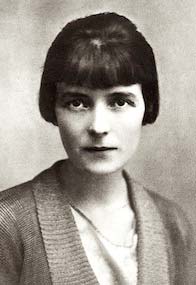
Katherine Mansfield (October 14, 1888 – January 9, 1923), best known for her mastery of the short story form and for revolutionizing the modern English short story.
Born Katherine Mansfield Beauchamp in Wellington, New Zealand, she enjoyed a comfortable childhood as part of a well-to-do family.
A serious student of the cello, she first expected that music would be her career. Still, she found the colonial Edwardian atmosphere stifling and was inspired by rebels like Oscar Wilde. Read More→
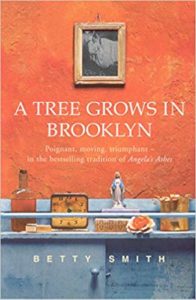
How many of us have read and re-read A Tree Grows in Brooklyn? It’s one of those books that can be revisited at various stages in life and appreciated from a different perspective each time.
After years of aspiring to be a successful novelist (she had already achieved a measure of success as a playwright), Betty Smith struck literary gold, drawing on her own experience as the child of immigrants at the turn of the twentieth century.
Read More→
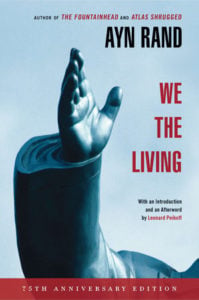
We the Living (1936) was the first published novel by Ayn Rand, the ever-controversial Russian-American novelist. Set in post-revolutionary Russia, it reflected Rand’s opposition to communism and totalitarianism. It was, in her own estimation, her most semi-autobiographical.
Though the reviews the book received upon its initial publication were mixed, it became a bestseller. This set the stage for the popularity of her subsequent novels, especially The Fountainhead and Atlas Shrugged, which sold like gangbusters — even though critics were even less kind to them.
Many reviews of We the Living appreciated the direct look at the effects of Soviet policies on society, but felt the writing was heavy-handed. As the New York Times put it, the book seemed “slavishly warped to the dictates of propaganda.” Read More→
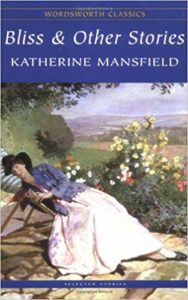
Bliss (1918) is a short story by Katherine Mansfield (1888 – 1923), the New Zealand-born British author recognized for revolutionizing the modern English short story form. This story is one of the works that put Mansfield on the literary map as a master of the genre.
Bertha Young, the main character, is a happy yet somewhat naïve young wife. The story takes place during a dinner party she hosts with her husband Harry.
One of the story’s themes is the classic one self-knowledge. But it was more of a rarity to explore queer themes in early twentieth-century literature. Mansfield herself was bisexual, and perhaps that was subtly alluded to with the character of Pearl Fulton, a guest to whom Bertha is drawn. Read More→
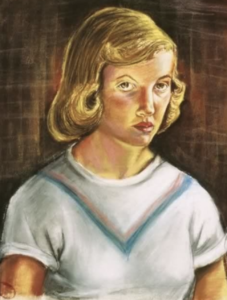
Sylvia Plath’s meteoric posthumous rise as a pre-eminent American poet has eclipsed the fact that she was a talented artist as well. When she initially enrolled at Smith College, her first choice of major was studio art. After discovering her talent for writing, her professors encouraged her to major in English instead.
It took a long time for her visual art to come to light. The Smithsonian National Portrait Gallery mounted a retrospective of her work in 2017, fifty-four years after her death.
A few of the works were self-portraits, including the one at right, and the first one, below. She also enjoyed making collages that were playful and satiric. Read More→
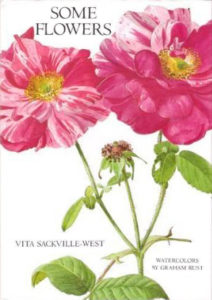
Vita Sackville-West (1892 – 1962), the British author known for All Passion Spent and The Edwardians (as well as for her great friendship with Virginia Woolf) was nearly equally known for her passion for gardening and garden design. Enjoy the selection of quotes by Vita Sackville-West on gardens and gardening in this post — they’re wonderful metaphors for life itself!
The gardens at Sissinghurst, the home she shared with Harold Nicolson, are masterful. Though she considered herself an amateur, she remains a respected name in garden design.
Vita had a voice that was at once authoritative yet never bossy, often acknowledging that the garden can become the master of its caretaker, rather than the other way around. Something that always comes through is her passion for gardens, gardening, and beauty in bloom. According to The Telegraph in a recent appraisal of Vita’s gardening legacy:
Read More→