Virginia Woolf, Iconic British Novelist and Essayist
By Nava Atlas | On May 22, 2018 | Updated July 27, 2026 | Comments (0)
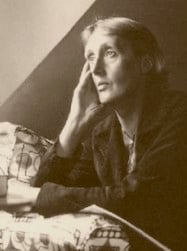
Virginia Woolf (January 25, 1882 – March 28, 1941), born Adeline Virginia Stephen in London, epitomized rare literary genius. Despite debilitating battles with mental illness, Woolf produced a body of work considered among the most groundbreaking in twentieth-century literature.
Virginia Woolf’s father, Leslie Stephen, was a literary critic, and her mother, Julia Prinsep Stephen, was a renowned beauty and artists’ model. Her mother’s sudden death when she was thirteen may have been the catalyst for the first of her recurrent breakdowns.
As a young woman, Woolf developed her writer’s voice with a number of literary pursuits. She reviewed books for the Times Literary Supplement, wrote scores of articles and essays, and for a short time, taught English and history at Morley College in London (she herself had never earned a degree).
She wrote criticism and essays while her literary reputation modestly and steadily increased. Woolf started her first novel, originally titled Melymbrosia, in 1907. After seven and a half years of toil, it was finally published asThe Voyage Out in 1915.
Experiments with stream of consciousness novels
Virginia Woolf was determined to create a new form of literature that was more internal, a savoring of experience, and a departure from traditional storytelling. Yet she was never confident.
She constantly second-guessed herself, her diary filled with lines like this one from a 1919 entry: “Is the time coming when I can endure to read my own writing in print without blushing— shivering and wishing to take cover?” Upon completing works, she was almost always dissatisfied.
And yet, she went on. Night and Day was published in 1919, followed by Jacob’s Room (1922). The latter was a stream of consciousness novel that, according to the Penguin Companion to English Literature, “makes no attempt to preserve the outlines of chronological events, but breaks down experience into a series of rapidly dissolving impressions that merge yet are never drowned in formlessness.”
A succession of novels that would prove to be classics
Jacob’s Room (1922) was the first of Virginia Woolf’s novels to experiment with stream of consciousness.
Mrs. Dalloway (1925), perhaps one of her best-known works, takes place in one day of the main character’s life, fleshing it out in flashbacks taking place within her consciousness.
In To the Lighthouse (1927), Woolf explores the concept of time and change as it relates to personality. Orlando (1928) takes the main character through several lifetimes, changing genders as he/she moves through time. Woolf’s friend and love interest Vita Sackville-West was acknowledged as the inspiration for the character of Orlando.
The Waves (1931) is arguably the most stylized of her novels. With The Years (1937), Woolf adopted a more traditional, less internal structure.
. . . . . . . . . .

Orlando: Gender and Sexuality Through Time
. . . . . . . . . .
Hogarth Press
With her husband Leonard Woolf, she founded Hogarth Press. It started as a hobby, to print fine small editions of literary works. The press gradually grew to accommodate some notable authors from their Bloomsbury circle and beyond, and enjoyed some bestseller successes, notably, the novels of Vita Sackville-West.
Some of Virginia Woolf’s novels were published by the press once it gained prestige—a case of publishing close to the vest, rather than self-publishing. She also acted as editor and sometimes marketer for the press, much to her chagrin.
. . . . . . . . . .
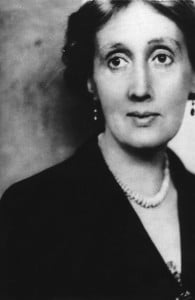
Virginia Woolf wants you to write “for the good of the world”
. . . . . . . . . .
Understanding Virginia Woolf’s literary method and intent
By the mid-1930s, Virginia Woolf became a literary force to be reckoned with on both sides of the Atlantic. The Years (1936) was, in fact, a bestseller in the U.S. It was still an admitted challenge to fully comprehend her method, though her talent was widely appreciated.
An August, 1936 homage to her oeuvre up until that time in the Pittsburgh Press observed that her work delved into the minds of her major characters, and suggested that re-readings would help the reader to greater understanding:
“No reader of modern fiction would deny a general knowledge of Virginia Woolf’s method of writing, yet how many readers will honestly say they understand it? For it is the reveries, not the actions she chooses to record — she observes the stream of their consciousness.
Writing in such a vein, it is almost impossible to appeal to every reader, yet a deep enjoyment may be found in Mrs. Woolf’s novels, and understanding will come in time and with re-readings.
… After all, we can’t really build up the snobbish, graceful, brilliant Mrs. Dalloway by just one reading over of her thoughts. And that’s how Virginia Woolf has built her up.”
Struggles with mental illness
It’s now widely believed that Woolf suffered from bipolar disorder. There were scant options for treatment at this time, and so, during particularly bad bouts of mania or depression, she withdrew, unable to participate in her active social life, and found it nearly impossible, to focus on writing.
In The Marriage of Heaven and Hell: Manic Depression and the Life of Virginia Woolf, author and psychiatrist Peter Dally writes: “Virginia’s need to write was, among other things, to make sense out of mental chaos and gain control of madness. Through her novels, she made her inner world less frightening.
Writing was often agony but it provided the ‘strongest pleasure’ she knew.” Dally discerned a pattern by which Woolf appeared excited yet stable when starting a new book; then, when shaping and revising, her mood gave way to exhaustion and depression.
She referred to herself as “mad,” experiencing hallucinatory voices and visions that hinted at mental illness even above and beyond the cyclical manias and depressions. “My own brain is to me the most unaccountable of machinery — always buzzing, humming, soaring roaring diving, and then buried in mud,” she wrote in a 1932 letter. “And why? What’s this passion for?”
It was also later learned that she had endured sexual abuse at the hands of her step-brothers. More of this is detailed inVirginia Woolf: The Impact of Childhood Sexual Abuse on Her Life and Work by Louise DeSalvo.
Leonard Woolf and the Bloomsbury Circle
Virginia was nurtured by husband Leonard Woolf and beloved by her Bloomsbury colleagues. What has come to be known as the Bloomsbury Circle was a group of British colleagues that included writers, artists, critics, and intellectuals.
In addition to herself and her husband, other members included her artistic sister, Vanessa Bell and her husband Clive Bell, Duncan Grant, Lytton Strachey, E.M. Forester, and others.
Leonard Woolf was ever vigilant of his wife’s mental state; he cared for and protected her as best as anyone could. This was clearly a marriage of minds, if not a typical union, and there’s little doubt that he helped create the best possible scenario for her thrive and produce, under the circumstances.
. . . . . . . . .
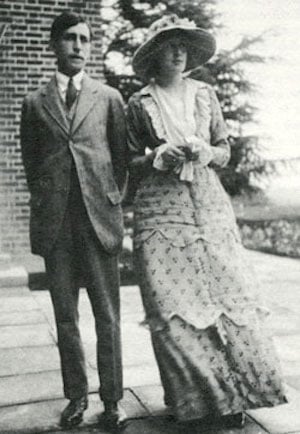
Becoming Virginia Woolf:
How Leonard Woolf Wooed Virginia Stephen
. . . . . . . . .
Insight into the writer’s mind
Woolf left much insight into the writer’s mind as a diarist and essayist, along with her numerous books of fiction and nonfiction. She encouraged women to write about whatever fascinated them and to dare to be creators. This was encapsulated in A Room of One’s Own, one of her best-known works of nonfiction.
Some time after his wife’s death, Leonard Woolf edited her diaries, which offer one of the most intimate glimpses available of the creative process at its finest, despite soaring highs and crashing lows. An edited version of the five-volume diaries, A Writer’s Diary, can serve as a bedside companion to anyone who wishes to witness the unfolding of genius.
Eudora Welty was one of many writers who felt her influence: “Any day you open it to will be tragic, and yet all the marvelous things she says about her work, about working, leave you filled with joy that’s stronger than your misery for her. Remember — ‘I’m not very far along, but I think I have my statues against the sky’? Isn’t that beautiful?”
. . . . . . . . . .

. . . . . . . . . . .
Death
As is well known, Virginia Woolf’s inner demons got the best of her. She walked into the river Ouse with stones in her pockets and took her life by drowning in 1941, at the age of fifty-nine.
. . . . . . . . . . .
Further reading about Virginia Woolf
On Literary Ladies Guide
- Virginia Woolf wants you to write “For the good of the world.”
- Virginia Woolf — the most self-critical author of all time?
- Virginia Woolf’s 1941 suicide note
- Quotes on Living and Writing
- Becoming Virginia Woolf: How Leonard Woolf Wooed Virginia Stephen
- Quotes from Mrs. Dalloway
- Virginia Woolf’s Analysis of Jane Eyre and Wuthering Heights
- Beyond the Legend: Virginia Woolf & Vita Sackville-West’s Love Affair and Friendship
- Envy & Inspiration: The Friendship of Virginia Woolf and Katherine Mansfield
Major Works: Novels & Short Story Collections
- The Voyage Out (1915)
- Night and Day (1919)
- Monday or Tuesday (short stories, 1921)
- Jacob’s Room (1922)
- Mrs. Dalloway (1925)
- To the Lighthouse (1927)
- Orlando (1928)
- The Waves (1931)
- The Years (1936)
- The Haunted House and Other Stories (short stories, posthumous, 1944)
Major Works: Nonfiction
- A Room of One’s Own (1929)
- Flush: A Biography (1933)
- The Moment and other Essays (1947; posthumous)
- The Captain’s death bed: and other essays (1950; posthumous)
Short stories (full texts on this site)
Biography
- A Writer’s Diary (1953; posthumous)
- Virginia Woolf: A Biography by Quentin Bell
- Virginia Woolf: An Inner Life by Dr. Julia Briggs
- Virginia Woolf: The Impact of Childhood Sexual Abuse on Her Life and Work by Louise DeSalvo
More Information
Selected film adaptations of Virginia Woolf’s works
- Orlando (1993)
- Mrs. Dalloway (1998)
Visit
Monk’s House– Lewes, Sussex, UK
Leave a Reply