Discover some of the best-known classic women Pakistani novelists and poets who challenged society’s norms and made invaluable contributions to literature.
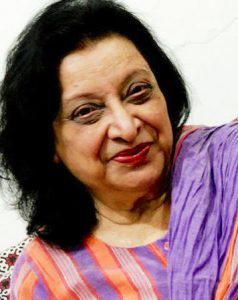
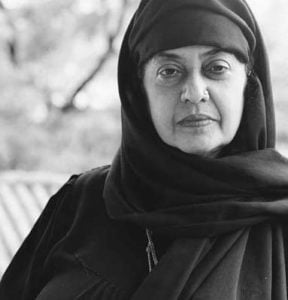
Many classic Pakistani women authors were born before the partition and lived through the horrors of migration. They had to adjust to a new life in the new country, and these extraordinary life experiences seep into their writings. (Pictured here, Fahmida Riaz.)
With their fiery words, they bent social norms and challenged patriarchy and debauchery long before the concept of feminism or human rights became a part of living room discussions. Read More→
Most artists and writers keep their inner space sacred and inviolate. It’s the core from where their creativity springs. Some keep their inner world more private than others.
While plenty of male writers have suffered from (or have preferred) isolation, this musing will focus on well known female writers. Confinement periods can be an advantage for women writers, as their extra-curricular activities may slow down.
Seeking solitude doesn’t make a writer antisocial. Perhaps periods of quarantines made it easier for writers to carve out specific periods of time where they can work in blissful solitude. A brief look at women authors of the past shows that self-imposed sequestration isn’t such a crazy thing to do, after all. Read More→
Though the early through mid-twentieth centuryc lesbian novels surveyed here were groundbreaking in their time, they certainly weren’t the first of this genre of literature.
From the poetry of Sappho to the secret diaries of Anne Lister to queer re-evaluations of many classic women authors, the books listed here had plenty of forerunners.
The difference? Though some were more forthright than others, there was less of the thinly veiled allusions, and more overt same-sex love and romance. Though by no means the only standout examples of the genre, the six novels presented here were hugely impactful. Read More→
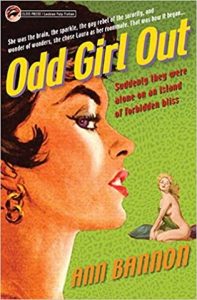
Odd Girl Out by Ann Bannon (the pseudonym of Ann Weldy), was one of several hugely influential lesbian pulp novels of the 1950s.
This appreciation and analysis of Odd Girl Out (1957) is excerpted from Girls in Bloom: Coming of Age in the Mid-20th Century Woman’s Novel by Francis Booth, reprinted by permission.
In the introduction to her anthology Lesbian Pulp Fiction, the author Katherine V. Forrest remembers how a book she found in a bookshop in Detroit in 1957 changed not only her writing but her life: Read More→
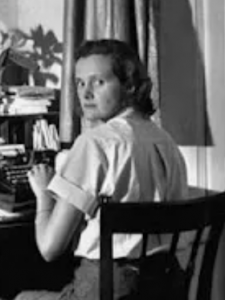
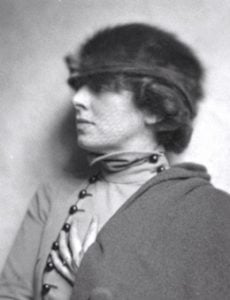
Margaret C. Anderson (November 24, 1886 – October 18, 1973) was a daring, headstrong writer, editor, and founder of the modernist literary magazine, The Little Review. This modernist journal, published from 1914 to 1929, was dedicated to the best writing and art of the early twentieth century.
Margaret was later known as one of “The Women of the Rope,” a group of writers and artists who studied with the famous Russian mystic Gurdjieff, part of a group seeking transformation and possible enlightenment.
Read More→
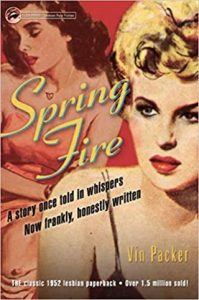
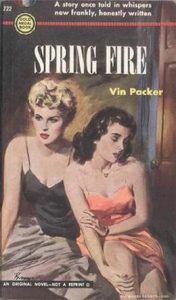
1952 was something of an annus mirabilis for the lesbian coming of age novel, seeing the paperback republication of Diana, the original publication of both Patricia Highsmith’s The Price of Salt and Spring Fire by Vin Packer, a pseudonym used by Marijane Meaker. This analysis and synopsis is excerpted from Girls in Bloom by Francis Booth, reprinted by permission.
Meaker wrote about Highsmith in her late memoir Highsmith of 2003; they were on and off lovers in a stormy relationship for many years; Highsmith was much older and more established when Meaker finally plucked up courage to walk up to her in L’s bar.
“Pat had become my idol. Although we were both reviewed in Anthony Boucher’s mystery column in the New York Times, she was published in hardcover by Harper Brothers. As Vin Packer, I was one of Gold Medal Books’ mystery/suspense paperback ‘tough guys,’ and, as Ann Aldrich, a softcover reporter on lesbian life.” Read More→
Kamala Das (1934 – 2009), the renowned Indian writer, wrote poetry and prose both in her mother tongue, Malayalam, and in English. Here, we’ll explore a sampling of poems by Kamala Das, who became known as a confessional poet.
Born Kamala Surayya, she was also known by her pen name, Madhavikutty, though her widest recognition was achieved as Kamala Das, her married name. She was known in her home state of Kerala for her short stories and autobiography, and in the rest of India, for her English poetry.
Her controversial autobiography, My Story, originally written in Malayalam, gained her much fame and notoriety. Later, it was translated into English. PoemHunter.org observes of her work: “Her open and honest treatment of female sexuality, free from any sense of guilt, infused her writing with power, but also marked her as an iconoclast in her generation.” Read More→
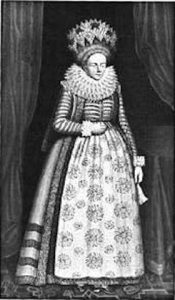
Elizabeth Cary, also known as Viscountess Falkland (1585–1639), was an English poet, dramatist, and scholar. Thought to be the first woman to have written and published a play in English (The Tragedy of Mariam, detailed below), she was acknowledged as an accomplished scholar in her lifetime.
This introduction to Elizabeth Cary’s life and work is excerpted from Killing the Angel: Early Transgressive British Woman Writers by Francis Booth ©2021, reprinted by permission.
According to the biography of Elizabeth Cary (née Tanfield, Viscountess Falkland, written by one of her daughters after her death, was quite highly educated, though largely self-taught. Although she had some distinguished tutors she taught herself mainly from books. Read More→