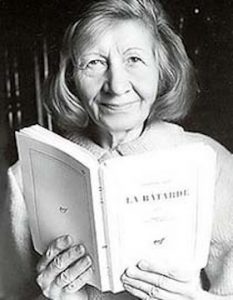
Simone de Beauvoir first met the French author Violette Leduc in 1945. At the time, de Beauvoir and her partner Jean-Paul Sartre were the golden couple of Parisian intellectual circles, while Violette Leduc was a struggling writer mired in poverty.
Their first meeting, in the heady atmosphere of the Café Flore on the Left Bank, came only after Leduc had observed de Beauvoir and Sartre from a distance for several months, gathering the courage to introduce herself.
The resulting friendship seemed unlikely. Yet it lasted for several years, with mutual respect and admiration that survived Leduc’s unrequited attraction to de Beauvoir as well as the differing circumstances of the two women and their wildly diverging experiences of success. Read More→
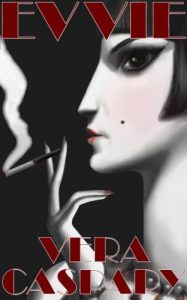
Evvie (1960) is a sophisticated thriller by the remarkably prolific and unfairly forgotten novelist and screenwriter Vera Caspary. This appreciation and analysis of Evvie is excerpted from A Girl Named Vera Can Never Tell a Lie: The Fiction of Vera Caspary by Francis Booth ©2022. Reprinted by permission.
The publisher’s copy described the novel succinctly:
“This big, bursting novel of the roaring Twenties – and of two girls who believed that love and art could save the world, if not themselves – is in our view the best book that Vera Caspary has ever written, not forgetting Laura. Read More→
Jane Austen by Sarah Fanny Malden (1889) is an excellent resource as a 19th-century view of Jane Austen’s works. The publication was part of an Eminent Women series published by W.H. Allen & Co., London.
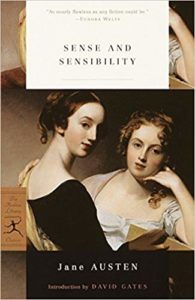
The following analysis and plot summary of Sense and Sensibility (1811) focuses on this work, which was Jane Austen‘s first published novel.
Mrs. Malden said of her sources, “The writer wishes to express her obligations to Lord Brabourne and Mr. C. Austen Leigh for their kind permission to make use of the Memoir and Letters of their gifted relative, which have been her principal authorities for this work.” The following excerpt is in the public domain: Read More→
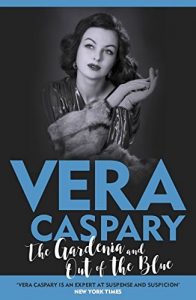
Even by her usual standards, Vera Caspary’s novella The Gardenia had a very quick route to the screen. Published in early 1952, producer Alex Gottlieb bought the film rights on September 3, 1952, and engaged Fritz Lang to direct (Caspary had no input into the script).
This overview of The Gardenia, the basis for the renowned 1953 film The Blue Gardenia, is excerpted from A Girl Named Vera Can Never Tell a Lie: The Fiction of Vera Caspary by Francis Booth ©2022. Reprinted by permission.
By November 24, 1952, the final shooting script was ready, a distribution deal was struck with Warner Brothers on the 27th, Lang began shooting on the 28th, and finished on Christmas Eve. Read More→
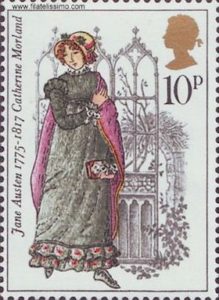
Jane Austen’s love life has long been the subject of conjecture. Her purported romance with Thomas Lefroy, a young Irishman, for example, was the subject of the 2003 book Becoming Jane Austen, which was adapted to the middling 2007 film, Becoming Jane.
Sincere attempts have been made to sort fact from fiction when it comes to Jane Austen’s romances, and this excerpt from Jane Austen by Sarah Fanny Malden (1889) is an excellent endeavor.
This book is focused more on Austen’s work than on her life, with the exception of a handful of chapters, this being one of them. The publication was part of an Eminent Women series published by W.H. Allen & Co., London. Read More→
By 1918, the year Dorothea Lange arrived in San Francisco, trailblazing photographers Imogen Cunningham, Anne Brigman, and Consuelo Kanaga were busy doing phenomenal work there. They were Bohemians, bent on living their lives on their own terms.
San Francisco in the 1920s was a fantastically exciting place for women artists. The 1906 Earthquake and Fires had displaced the photography establishment, which wound up creating opportunities for women. Lange was able to find friends, colleagues, and mentors. This community emboldened and transformed her.
Jasmin Darznik, author of The Bohemians, a novel of Dorothea Lange’s early career (Ballantine Books, 2021), introduces our readers to this trailblazing American documentary photographer of the early 20th century, and those in her circle. Read More→
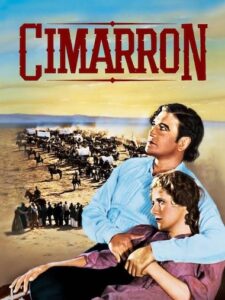
Cimarron by Edna Ferber was a 1930 novel by the prolific American author that was quickly adapted to film, earning accolades and winning 1931’s Academy Award for Best Picture.
Though it wasn’t the first of Ferber’s novels to be adapted to film, it was a far more expansive (and expensive) production. It paved the way for more Hollywood blockbusters based on her books.
Cimarron (from a Spanish derivation meaning “wild” or “unruly”) takes for its subject the Land Run in Oklahoma territory in 1889. A 1930 review described the book in a nutshell:
“It depicts the opening up of that great territory known as the Run of ’89 — the fantastic scramble when oil was discovered. The story is told through the experience of Yancey Cravat and his young wife who went to seek their fortunes in the new territory. Always a mysterious character with a shadowy past, Cravat is one of Miss Ferber’s best creations.” Read More→
I became aware of novelist and poet Ruth Moore (July 21, 1903–December, 1989) while vacationing in Maine. Walking through a parking lot in Acadia National Park, I spotted a bumper sticker: “I Read Ruth Moore.”
That’s how a lotof people learn of Ruth Moore. Like me, they spot one of the three hundred bumper stickers spread around eastern Maine by publisher Gary Lawless and then they begin to investigate.
What they’ll find out is that Moore was a best-selling novelist (her second novel, Spoonhandle, spent 14 weeks on the New York Times bestseller list, along with George Orwell and Somerset Maugham, when it was published in 1946). Read More→