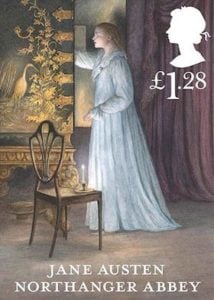
If you’re like me, you’ve many times had to explain what Jane Austen is really about — you might find yourself explaining to friends who just don’t get it, that Austen is not all about finding a man who’s wealthier and more powerful than you are, to marry.
This musing, pondering the question of what Jane Austen’s women want, is excerpted from The Austen Connection, reprinted by permission.
Sure, these novels follow the traditional Marriage Plot. These novels may have invented the plot as we know it today. Read More→
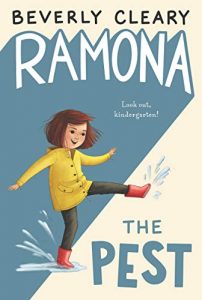
Literary Ladies contributor Marcie McCauley delves into children’s book author Beverly Cleary’s beloved character, Ramona Quimby, with this appreciation.
“The sight of that smooth, faintly patterned cloth fills me with longing,” writes Beverly Cleary, recalling an early childhood memory of Thanksgiving.
At first, a moment of calm for the young girl: anticipating relatives seated around the dining room table. Then, activity: she finds a bottle of blue ink, pours some out, presses her hands into it, then “all around the table I go, inking handprints on that smooth white cloth.” Read More→
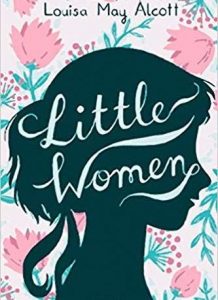
“Some books are so familiar, reading them is like being home again,” says Jo March, to her best friend, Laurie, as she picks up a volume of Shakespeare. That is exactly the kind of feeling that Louisa May Alcott’s Little Women evokes in me — a book that was a steadfast friend in my growing up years — one that I read and reread through my schoolgirl days in India.
Memories come back of lying on my stomach on a cold stone floor, on a hot summer day, with Little Women in one hand and homemade ice cream, tasting mainly of frozen Bournvita (an iconic nutritional beverage in India), in the other.
Once the last cold bit of ice cream slid down the throat, it was time to find a cushion to rest one’s head on and be transported into the magical tale of the March sisters and Marmee, Laurie, the senior Mr. Lawrence, Papa March, Mr. Brooks, Professor Bhaer, Hannah, and the formidable Aunt March. Read More→
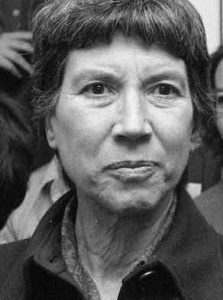
Natalia Ginzburg (July 14, 1916 – October 7, 1991) is considered among the best Italian writers of the post-World War II generation. Her vast literary legacy of novels, essays, plays, and nonfiction captures the devastation endured by war survivors.
In her works, the reader is struck by the imagery and near lyricism as she describes the mundane details and personal catastrophes that define life under political oppression. It has been said of Ginzburg that she “wrote like a man,” given that she was unsentimental in portraying the historic, violent traumas she witnessed. Read More→
After reading a memoir of high-risk pregnancy by a friend (more about that ahead), I got to thinking about the prevalence of pregnancy in classic novels by women authors as a central theme.
Of course, there are many instances of female characters in novels (both by male and female authors) bearing a child or miscarrying, but pregnancy itself is rarely more than quickly touched upon.
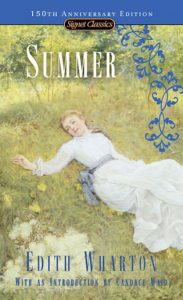
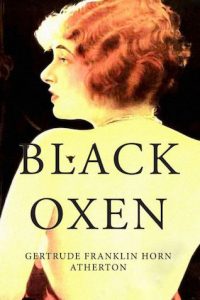
Birth control methods were unreliable until relatively recently in human development; yet novels centering on pregnancy, other than the seduction and abandonment trope, aren’t all that common. Her First Time: Seduction and Loss of Innocence in 1920s Women’s Novels presents several classic titles in which the heroine becomes pregnant (usually outside of marriage), with various outcomes. Read More→
Women’s flapper novels of the 1920s captured the essence of a fleeting era known as the Jazz Age and Roaring Twenties. This look at a largely forgotten genre of fiction, many written by women, is excerpted from A Girl Named Vera Can Never Tell a Lie: The Fiction of Vera Caspary by Francis Booth ©2022. Reprinted by permission.
The 1920s was the age of the flapper — the free, single, modern woman unencumbered by long skirts or long hair who could go anywhere, do anything; she did not have to settle for what her mother had to settle for.
She could change her life and entire social and economic situation, if only through marriage, and even change her physical appearance. The Flapper magazine, with its slogan “not for old fogeys,” was based in Vera Caspary’s hometown of Chicago and started in 1922. The opening issue made its stance clear. Read More→
Alice Guy-Blaché (July 1, 1873 – March 24, 1968) was a pioneering filmmaker of the early days of cinema, and the first woman to direct a film. One of the first filmmakers to make a narrative film, she was the only known female filmmaker in the world from 1896 to 1906.
Guy-Blaché directed, produced, or supervised about a thousand films, many of them short. When she died in 1968, many of her accomplishments had been erased from male-dominated film history books, but recent years have seen a revival of interest in her life and work. Read More→
Vera Caspary (1899– 1987) was a remarkably prolific American novelist, screenwriter, and playwright. Over the course of her long career, she became known as a writer of crime fiction, though she created works in other genres.
With more than twenty novels published (plus others left unpublished), the best known remains Laura (1943). She also wrote long short stories and novellas, not to mention numerous screenplays for Hollywood films, some based on her own works.
Many of her works featured young, forward-thinking women (then called “career girls”) who fought for female autonomy and equality, and refused male protection. Read More→