Biographical Notice of Ellis and Acton Bell

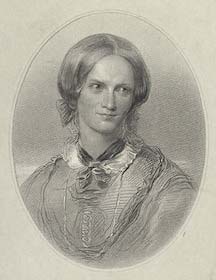
Charlotte Brontë

In The Biographical Notice of Ellis and Acton Bell, Charlotte Brontë pays homage to her sisters, telling the story of how she, Emily, and Anne found their paths to becoming published authors. This was no simple feat for women of their time, particularly those who had no money, status, or contacts.

Written in 1850, after both Emily and Anne had already died tragically young, Charlotte explains their pseudonyms as the “Bells.” She was Currer, Emily was Ellis, and Anne was Acton. She, like her sisters, believed that using ambiguous names would make it easier to interest publishers in their works.

In this essay, she also speaks of the untimely deaths of Emily and Anne. Here, in Charlotte’s own words, is her 1850 biographical sketch of her talented sisters: Read More→


The Yellow Wallpaper by Charlotte Perkins Gilman (1892) – full text

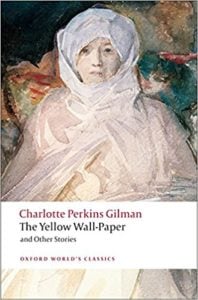
The Yellow Wall-Paper and Other Stories by Charlotte Perkins Gilman

Following is the full text of The Yellow Wallpaper, Charlotte Perkins Gilman‘s most widely known work. This long-form short story is written from the perspective of a depressed young wife and mother who has been confined, with all her creative outlets forbidden to her. 

First published in 1892 in New England Magazine, it’s considered a feminist classic, and is widely studied in women’s studies and literature courses.

The story starts with a mystery: the house seems to have “something queer about it.” It soon becomes clear that the house isn’t the only thing that’s “queer.” The secluded country home and the attic room the narrator inhabits come to represent her tenuous situation and her slippery sense of self. Read More→


Self-Discipline for Writers: Tips from Classic Women Authors

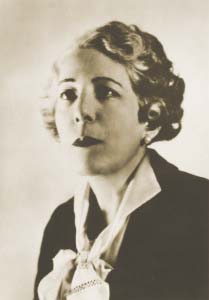
Edna Ferber

Developing the discipline to write regularly is an age-old dilemma. For tips on self-discipline for writers, we’ll turn to some of our classic women authors. A famous writerly quote goes something like: “The art of writing is the art of applying the seat of the pants to the seat of the chair.”

Attributed to Mary Heaton Vorse (1874 – 1966), variations of it have been credited to (mostly male) authors from Ernest Hemingway to Kingsley Amis.

If only it were that simple. Ms. Vorse plied her trade in an era when the only thing between the writer whose seat was on the chair and the typewriter or notebook on the desk was the dreaded blank page. For today’s writers, that dreaded blank page is on the computer screen, and behind it, the entire universe on the web, seducing you with endless distractions. Read More→


Jane Austen’s Literary Ambitions (she really did want to succeed)

Jane Austen

Picture Jane Austen (1775 – 1817) in her country home, wearing her frilly cap, quill in hand. She writes, as accepted myth would have it, because the fires of genius compel her to, and she doesn’t give two cents about twopence, or any other denomination of financial remuneration. She’s too genteel for that. 

Wrong! Jane Austen was keenly interested in the business affairs that pertained to her literary ambitions, and cared deeply about becoming a published author.

Her father and brother, fortunately,  were behind her. That was almost a must for a woman of her time who wished to be published. Jane wasn’t “discovered” in any major way; she and her family opted for some of the venues for publishing available to them, none all that attractive or profitable. Read More→


6 Homes of Classic Women Authors in New England

The Mount-Edith Wharton's home in Lenox, MA

It’s so fascinating to walk in the footsteps of iconic authors, and see where they lived and worked. Presented here are six homes of classic women authors in New England that are open to the public for tours. They preserve the lives and legacies of Harriet Beecher Stowe, Louisa May Alcott, Emily Dickinson, Edith Wharton, Sarah Orne Jewett, and Judith Sargent Murray.

Visit them one at a time, group two on a weekend trip, or do them all on a multi-day loop. Or, if you’re nowhere near New England, armchair travel is the next best thing — link through to these homes and browse all they have to offer. Some even give virtual and hybrid programs.

Literary pilgrimages are inspiring and enlightening. If you can’t get enough of your favorite women authors in print, visiting their homes, preserved for public viewing, is a fantastic way to get to know them better. Getting a glimpse where they lived and worked, and how they extended their creative flair into their homes and gardens is a true privilege.
Read More→


Edith Wharton’s Struggles with Self-Doubt

Edith wharton and pekingese

Edith Wharton and self-doubt aren’t two concepts you’d expect to read in the same phrase. Yet this storied American author (1862 – 1937) struggled to feel worthy of her right to write, let alone to achieve any sort of success at this calling.

Despite her wealthy background and privileged upbringing, Wharton (born Edith Newbold Jones) was no haughty heiress. On the contrary, she felt inferior to those she aspired to become peers —published authors she admired. Read More→


Was Virginia Woolf the Most Self-Critical Author of All Time?

Virginia Woolf

Despite (or because of) her brilliance, Virginia Woolf was continually beset with self-doubt when it came to her writing endeavors.

In The Marriage of Heaven and Hell: Manic Depression and the Life of Virginia Woolf, author and psychiatrist Peter Dally discerned a pattern by which Woolf appeared excited yet stable when starting a new book; then, when shaping and revising, her mood gave way to exhaustion and depression.

It’s now widely believed that she suffered from bipolar disorder. There were scant options for treatment at this time, and so, during particularly bad bouts of mania or depression, she withdrew, unable to participate in her active social life, and found it difficult to focus on writing.

Read More→


Grace Paley, Short Story Writer, Essayist, and Activist

Grace Paley

Grace Paley (December 11, 1922 – August 22, 2007), best known for her short stories depicting the dailiness of women’s lives, was also a poet, teacher, and political activist.

The daughter of Jewish Ukrainian immigrants (who Americanized their surname, Gutseit, to Goodside), she was born and raised in the Bronx.

It’s somewhat ironic that Paley, who dropped in and out of various schools (including Hunter College and The New School for Social Research) and never received a degree, did a lot of teaching in her career. Read More→