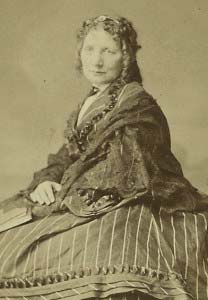
Motherhood and writing aren’t always compatible, but more women are making it work today. In Harriet Beecher Stowe’s time, it was manifold times more difficult.
I wish I had known about Harriet Beecher Stowe’s life of motherhood and writing when my children were growing up. Her experiences of raising a family in the mid-1800s put the usual gamut of mom-ish complaints into perspective, especially as she burned with the desire to write as a means of social protest.
Ultimately, Uncle Tom’s Cabin, the book she’s best known for, was the 19th century’s biggest international bestseller (after the Bible) and actually went a long way to changing public attitudes toward slavery. Read More→
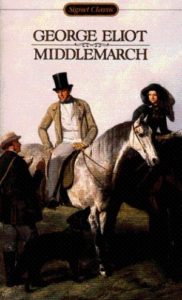
Middlemarch: A Story of Provincial Life by George Eliot is considered by some this esteemed British author’s masterpiece. This is saying a lot, since she produced a number of books that are masterworks in their own right, including The Mill on the Floss, Adam Bede, and Daniel Deronda.
The 1996 Barnes and Noble edition of Middlemarch offered this succinct summary of the novel, which was originally released in volumes spanning 1871 to 1872: Read More→
In Thunder and Lightening: Cracking Open the Writer’s Craft, Natalie Goldberg offers advice on how to find time to write. She suggests structuring your time — strictly! Be precise, set your writing time up in advance, and take that time commitment seriously:
“… Don’t ever say you’ll write every day because when you don’t — and I promise you, there will be days you won’t — you’ll hate yourself. Let’s push it further — where will you write? At the Blue Moon Café? OK, you’ve made a date, and like any other — with the dentist, the accountant, the hairdresser — you have to keep it. You’re committed, it’s in your appointment book.”
Finding time to write has always been a concern, especially for women, who traditionally raised the kids, kept the house, and cared for aging parents. And sometimes, wrote to pay the bills before they allowed themselves to write for self-expression. Read More→
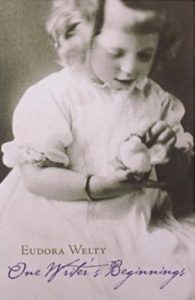
Eudora Welty (1909 – 2001) was just as avid a reader as she was a writer. It isn’t hard to see how reading thoughtfully can make one a better thinker and writer.
Welty won numerous awards for her writing, among them, a Pulitzer Prize (for The Optimist’s Daughter, 1973 — which many critics considered her best novel), an American Book Award, National Medal for Literature, and The Presidential Medal of Freedom. She was a six-time winner of the O. Henry Award for Short Stories.
Welty dispensed gentle wisdom on the subject of how being a good writer is intertwined with the love of reading. Here are several of her ideas on the art of reading gathered from her nonfiction books, notably On Writing and One Writer’s Beginnings. Read More→
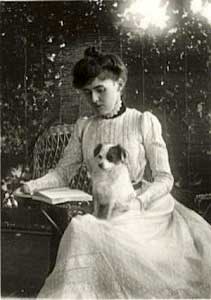
From her disapproving mother and wayward husband to her snooty society friends, Edith Wharton (1862-1937) lived in a social milieu that reinforced her deep insecurity and sense of non-belonging, both as a woman and as a writer.
Her first tentative steps into the literary world, the place she most longed to be, met with steady acceptance and success that took her by surprise. It took quite some doing before Wharton believed she was worthy of it.
The publication of Wharton’s first collection of fictional short stories, The Greater Inclination, seemed to turn the tide as she finally accepted herself as a professional writer and not a dilettante. Read More→
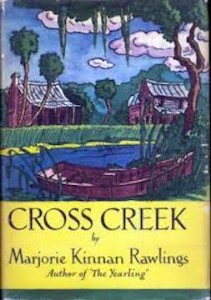
Marjorie Kinnan Rawlings (1896 – 1953), the Pulitzer Prize-winning American novelist and memoirist was known for her writings about her adopted home of Cross Creek, Florida, where she bought an orange grove in the late 1920s and lived for many decades.
She was fascinated by the people and local culture, and gathered her observations into Cross Creek, the memoir discussed here, and a compilation of recipes, Cross Creek Cookery. Both were published in 1942.
Rawlings was attracted to the people of Cross Creek, who were called crackers (though at the time, this wasn’t a disparaging term). At first they were wary of her as an outsider and resisted her eager questions and interest. Eventually they warmed to her, and she began recording detailed descriptions of the people, their dialect, the flora and fauna, and the local food and folkways. Read More→
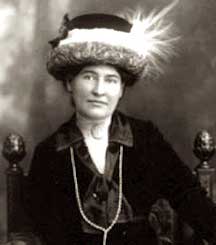
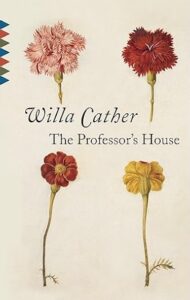
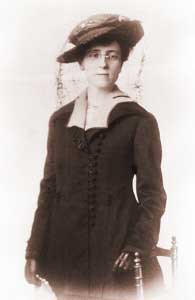
The Professor’s House by Willa Cather, published in 1925, is one of this American master’s mid-career novels. The story of Professor Godfrey St. Peter, one might say it tells of a midlife crisis before the term was coined.
When the professor and his wife move into a new house, he begins questioning the path that his life has taken. His daughters have grown up, and he loses much of his will to live, not finding anything to look forward to.
Though it hasn’t achieved the enduring stature of some of Cather’s better-known works, The Professor’s House, in her skilled hands it becomes a touching story of personal and spiritual self-reflection. Read More→
Lucy Maud (L.M.) Montgomery, author of the ever-popular Anne of Green Gables, was a keen letter-writer. Her letters to George Boyd MacMillan over their thirty-nine year friendship show the full range of her interests, from domestic concerns, her cats, and gardening, to her professional literary career as best-selling author.
When L.M. Montgomery receives the first letter from G.B. MacMillan (in 1903), she is coping with her domestic responsibilities and is struggling to establish herself as a poet and short-story writer with major American and Canadian magazines. Read More→