Picture Jane Austen (1775 – 1817) in her country home, wearing her frilly cap, quill in hand. She writes, as accepted myth would have it, because the fires of genius compel her to, and she doesn’t give two cents about twopence, or any other denomination of financial remuneration. She’s too genteel for that.
Wrong! Jane Austen was keenly interested in the business affairs that pertained to her literary ambitions, and cared deeply about becoming a published author.
Her father and brother, fortunately, were behind her. That was almost a must for a woman of her time who wished to be published. Jane wasn’t “discovered” in any major way; she and her family opted for some of the venues for publishing available to them, none all that attractive or profitable. Read More→
It’s so fascinating to walk in the footsteps of iconic authors, and see where they lived and worked. Presented here are six homes of classic women authors in New England that are open to the public for tours. They preserve the lives and legacies of Harriet Beecher Stowe, Louisa May Alcott, Emily Dickinson, Edith Wharton, Sarah Orne Jewett, and Judith Sargent Murray.
Visit them one at a time, group two on a weekend trip, or do them all on a multi-day loop. Or, if you’re nowhere near New England, armchair travel is the next best thing — link through to these homes and browse all they have to offer. Some even give virtual and hybrid programs.
Literary pilgrimages are inspiring and enlightening. If you can’t get enough of your favorite women authors in print, visiting their homes, preserved for public viewing, is a fantastic way to get to know them better. Getting a glimpse where they lived and worked, and how they extended their creative flair into their homes and gardens is a true privilege.
Read More→
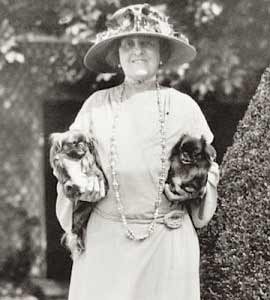
Edith Wharton and self-doubt aren’t two concepts you’d expect to read in the same phrase. Yet this storied American author (1862 – 1937) struggled to feel worthy of her right to write, let alone to achieve any sort of success at this calling.
Despite her wealthy background and privileged upbringing, Wharton (born Edith Newbold Jones) was no haughty heiress. On the contrary, she felt inferior to those she aspired to become peers —published authors she admired. Read More→
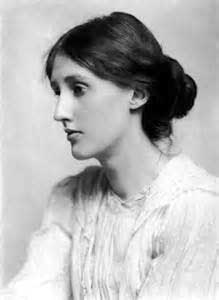
Despite (or because of) her brilliance, Virginia Woolf was continually beset with self-doubt when it came to her writing endeavors.
In The Marriage of Heaven and Hell: Manic Depression and the Life of Virginia Woolf, author and psychiatrist Peter Dally discerned a pattern by which Woolf appeared excited yet stable when starting a new book; then, when shaping and revising, her mood gave way to exhaustion and depression.
It’s now widely believed that she suffered from bipolar disorder. There were scant options for treatment at this time, and so, during particularly bad bouts of mania or depression, she withdrew, unable to participate in her active social life, and found it difficult to focus on writing.
Read More→
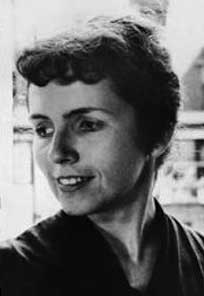
Grace Paley (December 11, 1922 – August 22, 2007), best known for her short stories depicting the dailiness of women’s lives, was also a poet, teacher, and political activist.
The daughter of Jewish Ukrainian immigrants (who Americanized their surname, Gutseit, to Goodside), she was born and raised in the Bronx.
It’s somewhat ironic that Paley, who dropped in and out of various schools (including Hunter College and The New School for Social Research) and never received a degree, did a lot of teaching in her career. Read More→
“Darcy is Still the Ultimate Sex Symbol” is the title of an article by Katy Brand in The Telegraph. The article features a photograph of Colin Firth and his famous wet shirt from the 1995 A&E/BBC Pride and Prejudice series.
But now that I have your attention, I want to ask for your help in identifying what it is that makes Mr. Darcy so attractive — in the novel. Early in the story, he happens to accompany Mr. Bingley to the first assembly.
Within a few lines he becomes a “sex symbol,” with his “fine, tall person, handsome features, noble mien; and the report which was in general circulation within five minutes after his entrance of his having ten thousand a year.” Read More→
Given how many fans of L.M. Montgomery visit “Green Gables” in Cavendish, Prince Edward Island (Canada) each year, it’s fascinating to read about Montgomery’s own literary pilgrimage to Louisa May Alcott‘s family home, Orchard House, in Concord, Massachusetts.
There she made a side trip from Boston while on a visit to her publisher, L.C. Page, in November of 1910.
“Concord is the only place I saw when I was away where I would like to live,” she wrote. “It is a most charming spot and I shall never forget the delightful drive we had around it.” Read More→
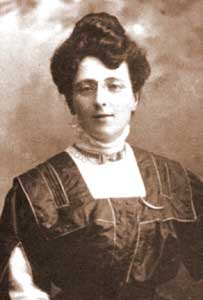
Amy Lowell (February 9, 1874 – May 12, 1925) was an American poet known for a form of poetry called Imagism. The product of a wealthy Brookline, Massachusetts family, she was educated privately and spent part of her youth traveling abroad.
She started life as a pampered debutante, but her accomplishments and dedication to her craft eclipse her privileged beginnings. In addition, she’s now celebrated as a rediscovered lesbian poet.
Most of all, she’s remembered as an Imagist poet, which, according to her was defined as the “concentration is of the very essence of poetry” and aimed to “produce poetry that is hard and clear, never blurred nor indefinite.”
Read More→