There’s something quite intimate in seeing the handwriting of revered authors whose works we’re accustomed to seeing in print. Here’s a sampling of letters, notes, manuscript fragments, and diary entries of classic women authors we know and love.
Read More→
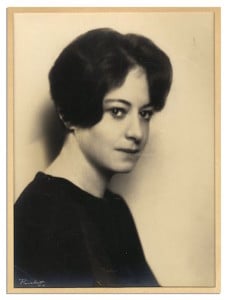
Here’s a sampling of Dorothy Parker‘s cynical verses on life and love. In her heyday from the late 1920s through the 50s, she was known for her sharp wit, and was one of the founding members of the Algonquin Roundtable, an exclusive group of eminent New York City writers.
Behind her famous acid wit was a life often filled with struggle and sadness. Following a difficult childhood, she lived fairly recklessly, drinking excessively, going from one bad relationship to another, and often contemplating suicide. ‘What fresh hell is this?’ she wondered in one famous poem. Read More→
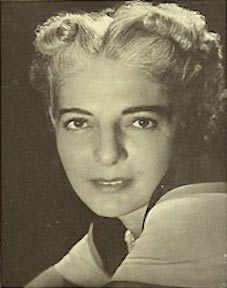
Laura Z. Hobson (June 19, 1900 – February 28, 1986) was an American fiction writer best known for Gentleman’s Agreement and the subsequent award-winning film of the same name.
Born Laura Kean Zametkin in New York City, she and her twin sister Alice grew up on Long Island. Their parents were highly educated refugees from czarist Russia. Her father was the first editor of the Jewish Daily Forward; her mother did social work.
Before she became a full-time novelist with the 1947 publication of Gentleman’s Agreement, she had been a successful writer of advertising and promotional copy on the staff of Luce publications, where she wrote for Time, Life, and Fortune. Read More→
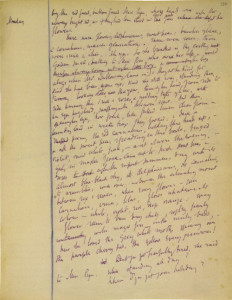
Christina Georgina Rossetti (December 5, 1830 – December 29, 1894) is one of the most enduring and beloved of Victorian poets. Born in London, she was the youngest of four artistic and literary siblings.
She is known for her long poem “Goblin Market,” her love poem “Remember,” and the lyrics to the popular Christmas carol “In the Bleak Midwinter.”
Algernon Charles Swinburne and Lord Tennyson praised her work and she was hailed as the natural successor to Elizabeth Barrett Browning. Christina’s poetry and prose reflected her pensive, passionate, devotional, and, at times, playful personality. Read More→
Dear Literary Ladies,
I just got a taste of sweet success—all my work and efforts seem to be coming to some fruition. I don’t want to boast or brag, but I admit I want to shout my news from the rooftops! I won’t, of course; but how should a writer savor success once it arrives? Read More→
Mary Mapes Dodge (January 26, 1831 – August 21, 1905) was an American writer and editor of children’s books and stories. She is best known for the children’s novel, Hans Brinker.
Born Mary Elizabeth Mapes in New York City, she was he daughter of a well-to-do family and enjoyed a privileged education by private tutors that included languages, literature, music, and art.
In 1851, at age twenty, she married William Dodge, a lawyer with whom her father had business dealings. In short order, the couple had two sons. Just a few years into the marriage, Mr. Dodge was beset by financial difficulties and abandoned the family. He was found dead a month later from an apparent drowning. Read More→
Dear Literary Ladies,
I’m having trouble juggling parenting and writing. I can’t live without writing, but every day brings a thousand interruptions, and I’m just not getting anything done. How can I make this a more positive experience, and feel less frustrated? Did any of you manage to raise a few kids and create a body of work simultaneously, and if so, how did you do it?
Perhaps the most useful thing about being a writer of fiction is that nothing is ever wasted; all experience is good for something; you tend to see everything as a potential structure of words. One of my daughters made this abruptly clear to me when she came not long ago into the kitchen where I was trying to get the door of our terrible old refrigerator open; it always stuck when the weather was wet, and one of the delights of a cold rainy day was opening the refrigerator door. Read More→
Dear Literary Ladies,
I work so hard at my writing, putting in an inordinate amount time and effort. For all that, the rewards are so meager. Adding up the hours I put into my work (which I’m not even sure is more than mediocre), I would be making much less than minimum wage! My family thinks I should pack it in. What can you advise to help me persevere in a pursuit that’s so poorly compensated?
How can we know if we work hard now and develop ourselves we will be more than mediocre? Isn’t this the world’s revenge on us for sticking our neck out? We can never know until we’ve worked, written . . . Weren’t the mothers and businessmen right after all? Shouldn’t we have avoided these disquieting questions and taken steady jobs and secured a good future for the kiddies?
Not unless we want to be bitter all our lives. Not unless we want to feel wistfully: What a writer I might have been, if only. If only I’d had the guts to try and work and shoulder the insecurity all that trial and work implied. Read More→