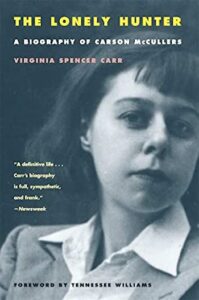
Carson McCullers (February 19, 1917– September 29, 1967) was an American author of novels and short stories. The Heart is a Lonely Hunter (published when she was just twenty-three) is arguably her best-known work. Many of her short stories have retained a prominent place in the American canon.
Born Lula Carson Smith in Columbus, Georgia, her parents, Lamar Smith, a jeweler, and Marguerite Waters Smith, provided her and her two siblings with a comfortable middle-class life.
Lula Carson was their first-born child. Her parents considered her an artistic genius and encouraged her interests, especially music. Lynne Greeley, writing in Theatre History Studies, refers to Carson McCullers as “the preferred child” in her family. Read More→
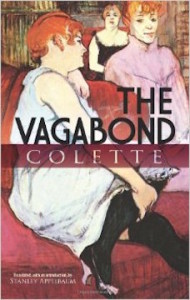
The Vagabond (Translated from the original French, La Vagabonde) by prolific French author Colette (Sidonie-Gabrielle Colette), is a 1910 novel telling the story of Renée Néré.
Taking place at the turn of the twentieth century, thirty-three-year old Renée becomes a music hall dancer in Paris after divorcing a cruel and faithless husband.
Not surprisingly, this narrative is based on Colette’s years as a music hall performer and actual experiences with her first husband. The nefarious Willy famously compelled her to crank out the Claudine stories, and then took credit for them. Read More→
Dear Literary Ladies,
My first novel is finally coming out, and I’m thrilled! But I’m also concerned about how to handle reviews from critics as well as readers. It’s hard to ignore reviews these days, with everything on the web and in one’s face 24/7. Any words of wisdom before my book hits the shelves?
If one has sought the publicity of print, and sold one’s wares in the open market, one has sold to the purchasers the right to think what they choose about one’s books; and the novelist’s best safeguard is to put out of his mind the quality of praise or blame bestowed on [her] by reviewers and readers, and to write only for that dispassionate and ironic critic who dwells within the breast.
— Edith Wharton, A Backward Glance, 1934
Read More→
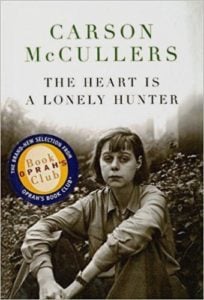
Carson McCullers was just twenty-three when The Heart is a Lonely Hunter, her first novel, was published in 1940, but her insights into human nature demonstrated wisdom beyond her years. The book was acclaimed as the work of a prodigy by critics and fellow writers.
Through its unforgettable characters, the story delves into their struggle to build bridges between their separate islands of loneliness. The central characters all, in some odd way or another, seek answers to their confused desires from Singer, a deaf mute.
Read More→
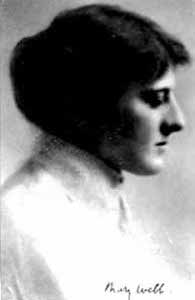
Mary Webb (March 25, 1881 – October 8, 1927), born Mary Gladys Meredith in Leighton near Shrewsbury, was an English novelist and poet best known for the novel Precious Bane. She had strong ties to the countryside and people of her native Shropshire.
As a girl, she wrote plays and stories to entertain her five younger sisters and brothers. She matured into an essayist, poet and novelist who drew on her pantheistic view of nature, fascination with folklore, innate sense of mysticism, consideration of the female experience, and empathy with the most vulnerable and stigmatized of earth’s creatures. Read More→
Gertrude Stein (1874 – 1946), American author of experimental prose and poetry, had a way with words —many, many words. Many were beautiful and wise; and just as many were delightfully perplexing. Following are a few favorites among a vast selection of slightly absurd quotes by Gertrude Stein.
Born into a well-to-do family Jewish family in Pennsylvania, Stein went to college at Radcliffe and then studied medicine for four years at Johns Hopkins University. She lived most of her adult life in Paris, where she moved in 1903.
Stein and her brother Leo Stein amassed an important art collection; the two lived together in Paris for some years, but after she met her life partner, Alice B. Toklas, she and her brother became estranged. Read More→
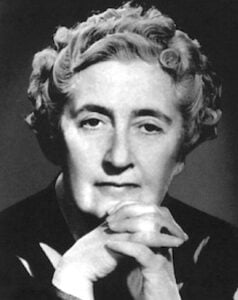
Agatha Christie (September 15, 1890 – January 12, 1976), the renowned British author, borrowed from her observations of the world and people surrounding her to become the Queen of Mystery, and sometimes, the Queen of Crime.
Born Agatha Mary Clarissa Miller in Torquay, U.K, a fashionable seaside resort, she was the youngest of three children. Her childhood was a conventional and happy one, according to her own accounts, and she was educated at home. (photo at right courtesy of Wikimedia commons)
Her first novel, The Mysterious Affair at Styles (1920), was written as a dare from her sister. Though it took a few years to go to press, Christie was the clear winner of the bet. This was the book that introduced the iconic detective character, Hercule Poirot. Read More→
Emily Brontë (July 30, 1818 – December 19, 1848), British author known for Wuthering Heights, was the sister of Charlotte and Anne Brontë. She has also been recognized as a brilliant poet.
The fifth child born to Maria Branwell Brontë and Reverend Patrick Brontë, Emily Jane was, like her sisters, born in the West Yorkshire village of Thornton in England.
The family moved to the quiet Haworth setting where the sisters grew up, along with their brother Branwell. Their mother died while the children were still young. The two oldest sisters, Elizabeth and Maria, both died before adolescence.
Read More→