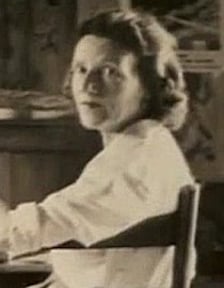
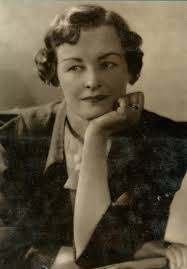
Mary O’Hara (July 10, 1885 – October 14, 1980; born Mary O’Hara Alsop) was an American author, screenwriter, and composer, best known for the horse story for all ages, My Friend Flicka.
Born in Cape May, New Jersey, she was raised in the Brooklyn Heights, New York, mainly by her father. Her mother died when she was a child.
Against her father’s wishes, in 1905 she married a distant cousin, Kent Kane Parrot. Sadly, their daughter died of skin cancer when in her early teens. The couple, who also had a son, divorced around 1920, after which, Mary began working as a screenwriter in Hollywood. Read More→
Dear Literary Ladies,
Sometimes I get so frustrated with my writing that I want to give up. It’s as often a pain as it is a pleasure, and it’s getting so hard to be published these days. Can you give me a reason to persist in this often thankless pursuit?
Who wants to become a writer? And why? Because it’s the answer to everything. To why am I here? To uselessness. It’s the streaming reason for living. Read More→
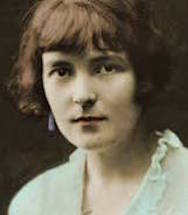
Katherine Mansfield (1888 – 1923) was a complex, brilliant writer of short stories who lived with tuberculosis for several years that overlapped with her most productive time as a writer. The following selection of gutsy and inspiring quotes by Katherine Mansfield demonstrate her desire to live life to the fullest, even at its most difficult.
New Zealand-born Mansfield adopted the bohemian life in London in 1908, and it was then that she began writing short stories.
Her first collection was published in 1911 and reflected a certain disillusionment with her native country. Titled In a German Pension, it received favorable reviews and was praised for “acute insight” and “unquenchable humour.” Read More→
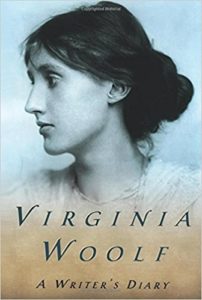
Presented here is a selection of passages from the diaries and journals of several iconic women authors — Louisa May Alcott, L.M. Montgomery, Enid Bagnold, Virginia Woolf, Anaïs Nin, and Sylvia Plath. Also introduced is Anne Lister, AKA “Gentleman Jack,” who is considered a prolific secret diarist moreso than an author.
For many well-known authors, a personal diary or journal was a constant companion and confidant. Into it they poured their dreams, goals and desires, as well as their fears and insecurities.
What’s striking about these entries is that they reveal a great deal of self-doubt. It goes to show that in many cases, confidence is less important to success than perseverance. Confidence as a writer is something gained over time.
Read More→
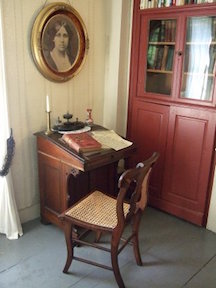
Orchard House, best known as the home in which Louisa May Alcott wrote Little Women, is a literary site that’s a must-do for devotees of this classic American author.
Located in Concord, Massachusetts (within an hour of Boston) the house opened its doors to the public in 1911, some twenty-three years after the deaths of Louisa May and her father, the noted philosopher and educator Amos Bronson Alcott.
The interior rooms of Orchard House can be seen via a docent-led tour lasting about an hour. The Alcott family comes to life through the tour guide’s narrative, and questions are cheerfully answered along the way.
Read More→
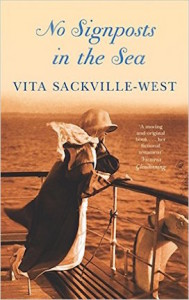
From the 1961 Doubleday edition of No Signposts in the Sea by Vita Sackville-West: In this brilliantly fashioned short novel by Vita Sackville-West, one of the most distinguished of British writers, a famous journalist accompanies an attractive widow on a leisurely voyage and discovers the raptures and torments of an apparently unrequited love.
His passion mounts even as he must face the fact that his beloved is unattainable; for, as the reader gradually learns, it is not just a matter of his humble origins, nor of her reticence and seeming preference for a likable — and highly eligible — fellow passenger. It is that he himself has only a brief time to live. Read More→
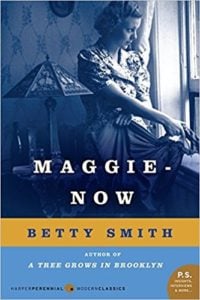
Betty Smith followed the blockbuster success of her first novel, the 1943 autobiographical A Tree Grows in Brooklyn with three more novels that drew upon her life experiences growing up and coming of age in immigrant communities. Maggie-Now (1958) was her third novel.
Another story of an Irish immigrant family in Brooklyn in the early 1900s. Maggie-Now, her parents, and her husband are central to this story of of making a living and raising a family, with all the joys and challenges along the way.
The description from the 2012 edition’s publisher, Harper Perennial Modern Classics: Read More→
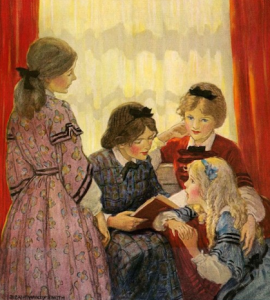
Jessie Willcox Smith (September 6, 1863 – May 3, 1935) was a prolific American illustrator who thrived during what was called the Golden Age of illustration. She was among a handful of respected women illustrators called The Red Rose Girls, who lived and worked together.
Her art embellished more than sixty books and scores of magazine stories and articles from the late 19th and early 20th centuries. Among the books she so beautifully illustrated was the 1915 edition of Little Women by Louisa May Alcott. Here are a few of them.
Read More→