Maggie-Now by Betty Smith (1958)
By Taylor Jasmine | On April 10, 2016 | Updated January 10, 2026 | Comments (0)
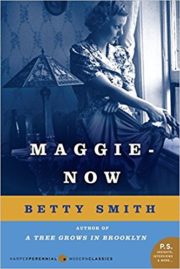
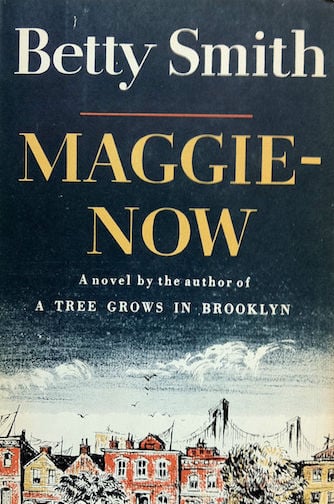
Betty Smith followed the blockbuster success of her first novel, the 1943 autobiographical A Tree Grows in Brooklyn with three more novels that drew upon her life experiences growing up and coming of age in immigrant communities. Maggie-Now (1958) was her third novel.
Another story of an Irish immigrant family in Brooklyn in the early 1900s. Maggie-Now, her parents, and her husband are central to this story of of making a living and raising a family, with all the joys and challenges along the way.
The description from the 2012 edition’s publisher, Harper Perennial Modern Classics:
“In Brooklyn’s unforgiving urban jungle, Maggie Moore is torn between answering her own needs and catering to the desirous men who dominate her life. Confronted by her quarrelsome Irish immigrant father, the feckless lover who may become her husband, and others, Maggie must learn to navigate a cycle of loss, separation, and hope as she forges her own path toward happiness.
With characteristic warmth, compelling insight, and easy, conversational prose, Maggie-Now poignantly illuminates one woman’s struggles and successes as she grapples with timeless questions of desire, duty, self-sacrifice, and the quest for fulfillment. Maggie-Now is an unforgettable masterpiece from one of the twentieth century’s greatest talents.”
. . . . . . . . . . .
. . . . . . . . . . .
A 1958 review of Maggie-Now
Adapted from the original review of Maggie-Now in Saturday Review, April, 1958. It is some years since A Tree Grows in Brooklyn by Betty Smith scored its dazzling hit and a few less since the appearance of its less impressive successor, Tomorrow Will Be Better.
Maggie-Now is the story of an Irish immigrant family in Brooklyn in the early part of the 20th century, when the stream of immigration, from the Old Countries was at its flood. Though Maggie is Irish, the book turns its eye also on the other immigrant stocks as they converted Brooklyn into a churning microcosm of the American melting pot.
However, the author does not make the mistake of diffusing her attention over too large a field. Maggie-Now, her parents, her itinerant husband and her family are the group on whom the spotlight is turned.
Not as gripping as A Tree Grows in Brooklyn
Why then does the story fail to grip as “A Tree” once did? Chiefly, I imagine, because it is cast in a mold that has become overfamiliar — a picture of the old folks in the Old Country; the coming of the hero or heroine to America; the discovery of neighbors, friends and a new way of life; marriage, children and Americanization; the problems of making a living and raising a family; and sundry domestic crises leading up to a final triumphant sentimental and affirmative curtain.
This is the standard pattern, and Miss Smith hews to it meticulously. In its broad outlines the story is completely predictable and hence lacking in excitement.
In fairness to the author, it should be said that she recounts the story of Maggie-Now (The provenance of this peculiar name is given part way into the story) with a wealth of accurate detail, and that her characters are breathing, believable people.
Maggie herself, her peripatetic husband, Claude, the wise parish priest, the kindly cop and the rest of them are all very much like characters we have previously met in fiction. The world into which Miss Smith takes us is one we have come to know all too well.
. . . . . . . . . .
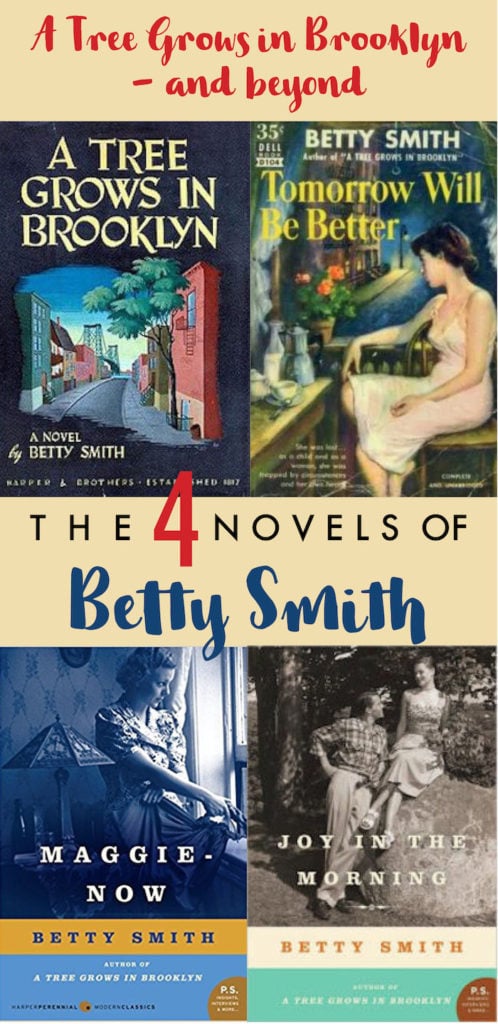
Books by Betty Smith: A Tree Grows in Brooklyn and More
. . . . . . . . . . .
Quotes from Magge-Now by Betty Smith
“Now my wandering days are over. It will be bliss to settle down. Bliss. There’s a word, now. Bliss to love and to be loved.”
. . . . . . . . . . .
“She called him her ‘eye apple.’ She did not ask that he work and support her. She worked for him. All she asked was that he be. All she wanted was to have him with her for always-to look her fill at him and to cater for his creature comforts.”
. . . . . . . . . . .
“They came together, they loved and they married. In innocence, and never dreaming how courageous they were, they started a new life together and a new generation of their own.”
. . . . . . . . . . .
“The Jews and Italians were called foreigners by the Irish and Germans, presumably because they werc not Nordic. There were some Dutch families left over from the time when Brooklyn hail been called Breuckelen. They were classified with the Germans. Because there were some similarities in the languages, Germans were called Dutchmen.”
. . . . . . . . . . .
“Sometimes understanding is nearly as good as love because understanding makes forgiveness a more or less routine matter. Love makes forgiveness a great, tearing emotional thing.”
. . . . . . . . . . .
Leave a Reply