Gems from Classic Women Authors’ Diaries & Journals
By Nava Atlas | On April 20, 2016 | Updated March 22, 2026 | Comments (0)
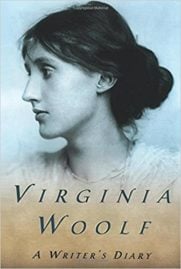
Presented here is a selection of passages from the diaries and journals of several iconic women authors — Louisa May Alcott, L.M. Montgomery, Enid Bagnold, Virginia Woolf, Anaïs Nin, and Sylvia Plath. Also introduced is Anne Lister, AKA “Gentleman Jack,” who is considered a prolific secret diarist moreso than an author.
For many well-known authors, a personal diary or journal was a constant companion and confidant. Into it they poured their dreams, goals and desires, as well as their fears and insecurities.
What’s striking about these entries is that they reveal a great deal of self-doubt. It goes to show that in many cases, confidence is less important to success than perseverance. Confidence as a writer is something gained over time.
. . . . . . . . . .
Anne Lister:
Also Known as “Gentleman Jack”
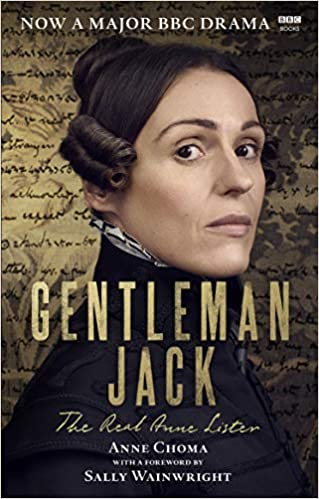
The fascinating Englishwoman Anne Lister (1791 – 1840) of Shibden Hall in Yorkshire wasn’t a writer of published books, but was a committed diarist with a lot to write about. Known in her local environs as “Gentleman Jack,” Lister’s enormous journals, only recently published, run to twenty-six volumes and four million words. Her life was dramatized in a BBC series, Gentleman Jack: The Real Anne Lister .
Lister’s diaries, once decoded, are perfectly unambiguous, at least today. She didn’t take any care to hide her long-term lesbian relationship with fellow landowning Yorkshire woman Ann Walker; quite the opposite. They were the first women to have a same-sex wedding ceremony, in York in 1834, even though it was not legally recognized. This is an early entry, dated 1816:
Ann & I lay awake last night till 4 in the morning. I let her into my penchant for the ladies. Expatiated on the nature of my feelings towards her & hers towards me. Told her that she ought not deceive herself as to the nature of my sentiments & the strictness of my intentions towards her.
I could feel the same in at least two more instances & named her sister, Eliza, as one, saying that I did not dislike her in my heart but rather admired her as a pretty girl. I asked Ann if she liked me the less for my candour, etc., etc. She said no, kissed me & proved by her manner she did not.
Read the full article, Glimpses into the Secret Diaries of Anne Lister, by Literary Ladies Guide contributor Francis Booth.
. . . . . . . . . .
Louisa May Alcott:
Beginning “Little Women” reluctantly
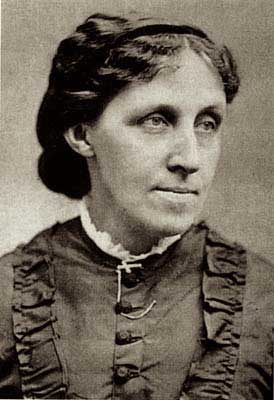
Louisa May Alcott’s Advice to Aspiring Writers
In 1868, Louisa May Alcott’s publisher casually suggested that she try writing a “girls’ story” for their list. Thinking little of the request, she cranked it out in two and a half months, though her heart wasn’t in it.
Neither she nor her publisher thought it was in any way remarkable. Still, it was fast-tracked, and the proof of the entire book was ready in a month or so after she turned in the manuscript. These excerpts, dated 1868, are from The Journals of Louisa May Alcott.
May — Mr. N. wants a girl’s story, and I begin “Little Women.” Marmee, Anna, and May all approve my plan. So I plod away, though I don’t enjoy this sort of thing. Never liked girls or knew many, except my sisters; but our queer plays and experiences may prove interesting, though I doubt it.
June — Sent twelve chapters of “L.W.” to Mr. N. He thought it dull, and so do I. But work away and mean to try the experiment; for lively, simple books are very much needed for girls, and perhaps I can supply the need.
August — Roberts Bros. made an offer for the story, but at the same time advised me to keep the copyright; so I shall. Proof of whole book came. It reads better than I expected.
Not a bit sensational, but simple and true, for we really lived most of it; and if it succeeds that will be the reason of it. Mr. N. likes it better now and says some girls who have read the manuscript say it is “splendid”! As it is for them, they are the best critics, so I should be satisfied.
Late August — First edition gone and more called for. Expects to sell three or four thousand before the new year. Mr. N. wants a second volume for spring. Pleasant notices and letters arrive, and much interest in my little women, who seem to find friends by their truth to life, as I hoped.
Here’s more about How Louisa May Alcott Came to Write Little Women.
. . . . . . . . . .
L.M. Montgomery:
Seeking a publisher for a first book

How L.M. Montgomery Found a Home for Anne of Green Gables
Like many authors battered by continual rejection of a manuscript, L.M. (Lucy Maud) Montgomery gave up and placed the worn Anne of Green Gables manuscript in a hatbox and gave up. After it languished in a freezing attic for nearly a year, Maud, as she was known to her familiars, decided to give it one more shot, sending it to Boston publisher L.C. Page.
The first the first two excerpts from her journal are from when Anne was finally accepted, and the last two from when it was published. Her extensive journals are collected in a multi-volume set titled The Journals of L.M. Montgomery, which isn’t difficult to access through libraries.
I don’t know what kind of publisher I’ve got. I know absolutely nothing of the Page Co. They have given me a royalty of ten percent of the wholesale price, which is not generous even for a new writer, and they have bound me to give them all my books on the same terms for five years.
I didn’t altogether like this but I was afraid to protest, lest they might not take the book, and I am so anxious to get it before the public. It will be a start, even if it is no great success.
Well, I’ve written my book. The dream dreamed years ago in that old brown desk in school has come true after years of toil and struggle. And the realization is sweet—almost as sweet as the dream! (Journals, 1907)
To-day has been, as Anne herself would say, ‘an epoch in my life.’ My book came to-day … from the publishers. I candidly confess that it was to me a proud and wonderful and thrilling moment.
There, in my hand, lay the material realization of all the dreams and hopes and ambitions and struggles of my whole conscious existence—my first book. Not a great book, but mine, mine, mine, something which I have created. (Journals, 1908)
And indeed, Anne of Green Gables was published in 1908. Read more in Publishing Anne of Green Gables: How L.M. Montgomery Persevered.
. . . . . . . . . . . .
Enid Bagnold:
A Diary Without Dates
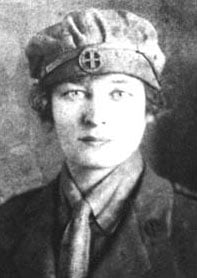
During World War I, Enid Bagnold was a member of the British Women’s Services. She served for about a year and a half in the V.A.D. (Voluntary Aid Detachment), as a nurse’s aide. Her duties were to attend to the non-medical needs of wounded British soldiers recovering from wounds in the Royal Herbert Hospital, just a few miles southeast of London. Some of the injuries she witnessed were absolutely horrific.
A Diary Without Dates (1917) was written almost as a dreamlike prose-poem, portraying the suffering of soldiers, many of whom faced mutilation, wrenching pain, and death. Thus, it became a timeless commentary on the traumas of war.
Upon the book’s publication, however, Bagnold’s negative commentary on the doctors and nurses she worked with led to her dismissal. She also depicted visitors as voyeurs whose charitable acts served to bolster themselves rather than soothe the suffering troops. In 1935, Bagnold, who had been writing for some time, became much better known with the huge success of National Velvet, even though she had been writing for some time.
Here’s more about A Diary Without Dates. This excerpt is from Chapter 1: Outside the Glass Doors:
I like discipline. I like to be part of an institution. It gives one more liberty than is possible among three or four observant friends.
It is always cool and wonderful after the monotone of the dim hospital, its half-lit corridors stretching as far as one can see, to come out into the dazzling starlight and climb the hill, up into the trees and shrubberies here.
The wind was terrible to-night. I had to battle up, and the leaves were driven down the hill so fast that once I thought it was a motor-bicycle.
Madeleine’s garden next door is all deserted now: they have gone up to London. The green asphalt tennis-court is shining with rain, the blue pond brown with slime; the little statues and bowls are lying on their sides to keep the wind from putting them forcibly there; and all over the house are white draperies and ghost chairs.
When I walk in the garden I feel like a ghost left over from the summer too.
I became aware to-night of one face detaching itself from the rest. It is not a more pleasing face than the others, but it is becoming conspicuous to me.
. . . . . . . . . .
Anaïs Nin:
“I write in a scattering fashion”
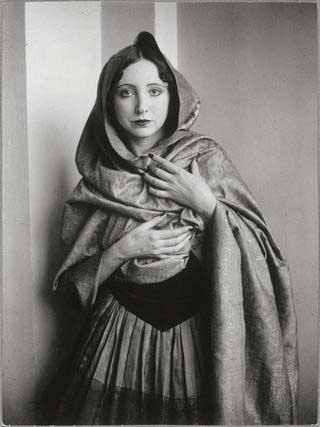
Anaïs Nin’s Diaries: From the Personal to the Universal
For Anaïs Nin, writing was essential as breathing. This need inspired her iconic multi-volume Diary series, which started as a voyage of self-discovery and eventually transcended the personal into the universal.
Her Diary series became a touchstones for a generation of women (and Nin herself became a feminist icon), not merely one woman’s private quest for identity and meaning. Before the Diaries that made her famous were her early diaries, when her desire to write outstripped her self-perceived ability. The following selection is from The Early Diaries of Anaïs Nin, 1921, and if I’m doing the math correctly, she would have been eighteen:
When I look down upon my work, it shrinks to almost nothing. One day I write poems and essays, and the next I tear and burn them, to begin again, and in the same manner I have done this for years. Nothing satisfies me.
The reading I do serves only to impress me with my inferiority of style and character. I writing in a scattering fashion, always with a purpose in mind and yet never capable of reaching it.
My work lacks “roundness,” concentration and clearness. I drift into vague visions and abstract forms and above all into superfluities. Although it is not so, it appears very much as if my mind wandered; when I most want to appear fixed upon my subject, I deviate and I miss my point. and above all what I cannot forgive myself is the unreliableness of my judgment because of my enthusiasm.
Against all these handicaps, I have only a few remedies. I know that I have application, a hard-headed kind of persistence. Where will all this lead me? Roundness, concentration and clearness can be acquired. Directness and the eloquent virtue of reserve equally so. I maintain they are the infirmities of my age, and I will not always be eighteen.
Probably in a year or so I will have exhausted these powers and a period of quiet will follow, a period of settled judgment, of moderate opinions, a more judicious reasoning, and instead of jumping to conclusions, I will arrive at them . . . Nevertheless, I am resolved to write, write, and write. Nothing can turn me away from a path I have definitely set myself to follow.
. . . . . . . . . .
Virginia Woolf:
The agony and ecstasy of writing
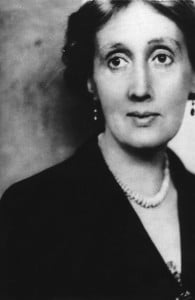
Virginia Woolf: The Most Self-Critical Author of All Time?
Virginia Woolf‘s A Writer’s Diary is quite revealing of this singular writer’s process. In it, she details the agonies suffered while in the throes of writing, and the joy she felt when readers and critics praised her works. Here are a few passages:
I wonder if anyone has ever suffered so much from a book as I have from The Years. Once out I will never look at it again. It’s like a long childbirth. Think of that summer, every morning a headache, and forcing myself into that room in my nightgown; and lying down after a page: and always with the certainty of failure.
Now that certainty is mercifully removed to some extent. But now I feel I don’t care what anyone says so long as I’m rid of it. And for some reason I feel I’m respected and liked. But this is only the haze dance of illusion, always changing.
Never write a long book again. Yet I feel I shall write more fiction—scenes will form. But I am tired this morning: too much strain and racing yesterday. (A Writer’s Diary, Nov. 9, 1936)
Did I say … that H. Brace wrote and said they were happy to find that The Years is the best-selling novel in America? This was confirmed by my place at the head of the list in the Herald Tribune. They have sold 25,000—my record, easily. Now I am dreaming of Three Guineas. (A Writer’s Diary, June 14, 1937)
. . . . . . . . . .
Sylvia Plath:
The loneliness of the soul
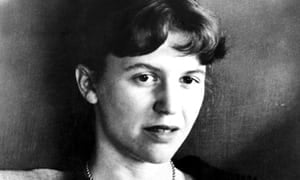
As a young woman, Sylvia Plath (1932 – 1963) seemed to have what it would take to succeed. She was attractive, smart, and talented. As a college student at Smith, she was well liked and showed immense academic promise.
But her diaries from that time revealed a different story. Filled with self-doubt and revealing deep insecurity, she was evidently beginning to struggle with mental illness. Here is a small selection from The Unabridged Journals of Sylvia Plath (2000):
God, but life is loneliness, despite all the opiates, despite the shrill tinsel gaiety of ‘parties’ with no purpose, despite the false grinning faces we all wear. And when at last you find someone to whom you can pour out your soul, you stop in shock at the words you utter — they are so rusty, so ugly, so meaningless and feeble from being kept inside the small, cramped dark inside you so long.
Yes, there is joy, fulfillment and companionship — but the loneliness of the soul in its appalling self-consciousness is horrible and overpowering.
I can never read all the books I want; I can never be all the people I want and live all the lives I want. I can never train myself in all the skills I want. And why do I want? I want to live and feel all the shades, tones and variations of mental and physical experience possible in my life. And I am horribly limited.
I am still so naïve; I know pretty much what I like and dislike; but please, don’t ask me who I am. A passionate, fragmentary girl, maybe?
You may also be interested in reading more about The Bell Jar, Plath’s semi-autobiographical novel, first published in Britain under a pseudonym in 1963.
Leave a Reply