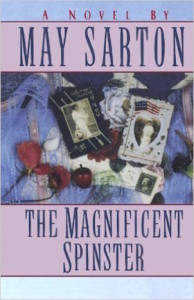
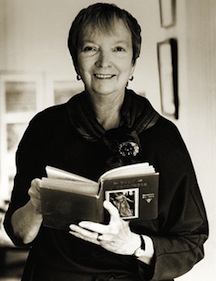
From the 1985 W.W. Norton edition: In May Sarton‘s novel, The Magnificent Spinster, she explores the realities and reverberations of a fifty-year friendship between two remarkable women that ended with the death of Jane Reid.
It is relived because Cam, in her seventies, felt compelled to celebrate “the magnificent spinster” in a novel. The story becomes a complex “double fiction” through which we experience both Cam’s struggles and triumphs and the dominant story of Jane Reid.
Jane was born a Boston Brahmin, grand-daughter of a legendary man of letters. Tall, beautiful, wealthy, she was pursued by men but was the intimate of women. Read More→
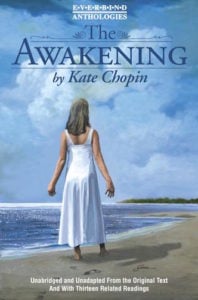
The Awakening is a short novel by Kate Chopin, published in 1899. It’s the story of Edna Pontellier, a young wife and mother who struggles with these roles in the rigid social milieu of late-19th-century New Orleans.
Kate Chopin’s untimely death just a few years after The Awakening‘s publication hastened the silencing of this exquisite work along with most of the rest of this talented author’s life and work.
The Awakening was rediscovered and republished in the late 1960s and now holds a secure place as a classic in American literature and a staple of feminist studies.
More about The Awakening on this site:
Following is the text in its entirety. The Awakening is in the public domain.
Read More→
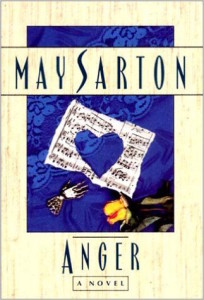
From the 1982 W.W. Norton edition: In Anger by May Sarton, the author turns once more to the exploration of the inner landscape of marriage.
Here she is concerned with the differing attitudes of men and women toward expressed emotion, the exploring in talk of hidden attitudes and fears as they are seen through the clash of two opposing temperaments.
Her protagonists are Ned Fraser, a Bostonian banker, and Anna Lindstrom, a half-Italian, half-Swedish singer on the brink of fame. Ned has been brought up to believe that allowing anger out should not be permitted and is unable to express love except to his dog, Fonzi. Read More→
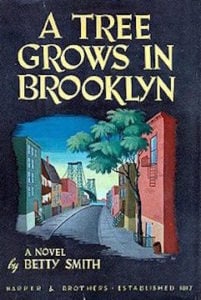
A Tree Grows in Brooklyn by Betty Smith, published in 1943, is the best kind of classic — a book that can be revisited at various stages in life. Each time, it can be seen from a different perspective.
The overarching theme of this coming-of-age story is the power of family bonds.
In a second read-through you might catch some strong feminist themes, and in another, you might focus on what it means to live in poverty in a land of plenty. Read More→
Dear Literary Ladies,
I want to go in a new direction with my writing. But I’m afraid I’ll fail and feel foolish. Can you give me any encouragement that will help me take some risks with my work and get out of my comfort zone?
Risk is essential. It’s scary. Every time I sit down and start the first page of a novel I am risking failure. We are encouraged in this world not to fail. College students are often encouraged to take the courses they are going to get A’s in so that they can get that nice grant to graduate school. And they are discouraged from taking the courses they may not get a good grade in but which fascinates them nevertheless. I think that is a bad thing that the world has done to us. Read More→
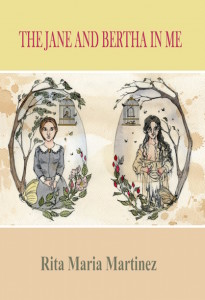
Jean Rhys (August 24, 1890 – May 14, 1979) was born Ella Gwendolyn Rees Williams in Roseau, Dominica. She is best known for her last novel, Wide Sargasso Sea, considered a prequel and post-colonial response to Charlotte Brontë’s Jane Eyre.
Published when Rhys was 76 and shaped by her Dominican heritage and reoccurring themes of exile, loss, alienation, sexual inequality, and enslavement, it imagines the descent into madness of Rochester’s white-Creole wife Antoinette (Bertha, “the madwoman in the attic”). It won the W.H. Smith Literary Award in 1967.
Rhys described her childhood as one spent “alone except for books” and with voices “that had nothing to do” with her. Read More→
Throughout the bicentennial year of Charlotte Brontë’s birth in 2016, celebrations and activities abounded in the UK. Faithful pilgrims flocked to Haworth to view the exhibition “Charlotte Great and Small” at the Brontë Parsonage Museum.
In the U.S., Brontë fans eagerly awaited the release of Claire Harmon’s biography Charlotte Brontë: A Fiery Heart. With Brontë on the brain, I found myself revisiting the author’s most popular novel, Jane Eyre, which took the literary world by storm in 1847.
Ever since, it has remained in the public’s collective consciousness through reviews, published letters, graphic novels, countless film and stage adaptations, fan fiction, artwork, music, and a slew of reissues. Read More→
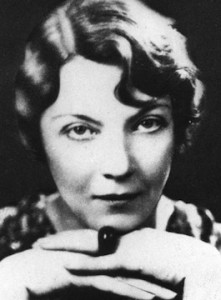
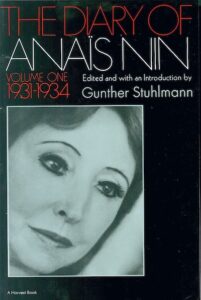
Anaïs Nin (1903-1977) embodied the practice of writing as a grand passion and a path to delving deeply into the self. In this sense she foreshadowed the immediacy of today’s world of self-revelatory memoir and blogging.
Best known for her multi-volume Diary of Anaïs Nin, which became a touchstone of feminist thought, she also broke ground as a writer of female erotica, and was a splendid essayist as well. For Nin, writing was as necessary as breathing.
Of course, as her famous Diary series progressed, she became aware that she was writing not only for an audience, but for posterity. Still, her raw, honest diaries resonated with millions of women who felt she had awakened something in them. Here are some of the responses she got from readers: Read More→