Poets House is a must-visit destination for poetry lovers visiting (or living in) New York City. While not at all hard to find, this literary haven far enough off the beaten to make it unlikely that you’d stumble upon it. When you arrive, you’ll be delighted not only by this treasure of a space, but also by its location.
The organization describes itself as “a place for poetry — Poets House is a national poetry library and literary center that invites poets and the public to step into the living tradition of poetry.”
Their mission is to be “a comfortable, accessible place for poetry — a library and meeting place which invites poets and the public to step into the living tradition of poetry. Poets House seeks to document the wealth and diversity of modern poetry, to stimulate dialogue on issues of poetry in culture, and to cultivate a wider audience for poetry.” Read More→
Dame Rebecca West (1892 – 1983) was one of the most respected and prolific intellectual minds of the twentieth century. At her death in 1983, William Shawn, then the editor of The New Yorker said of her:
“Rebecca West was one of the giants and will have a lasting place in English literature. No one in this century wrote more dazzling prose, or had more wit, or looked at the intricacies of human character and the ways of the world more intelligently.”
A prolific author of essays, novels, and weighty books of nonfiction, she was a force to be reckoned with and shouldn’t be forgotten. Here are some thought-provoking quotes by Rebecca West: Read More→
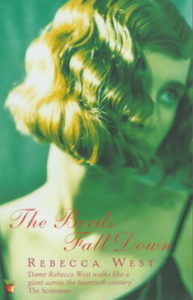
When The Birds Fall Down by Dame Rebecca West was first published in 1966, it was hailed as a novel of great ambition that rose above the genre of spy fiction. The story was inspired by a true story she heard in her youth, told by fellow author Ford Maddox Ford, whose sister married a Russian refugee.
From the first pages, intrigue sets the tone, as West’s skillful prose urges the reader to turn the pages of this ponderous novel set against a backdrop of the Russian Revolution. Read More→
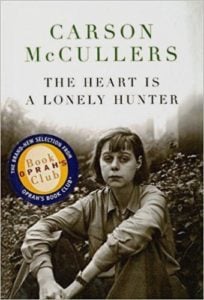
Carson McCullers (1917 – 1967) won numerous literary accolades for her 1940 novel The Heart is a Lonely Hunter. Following is a selection of quotes from The Heart is a Lonely Hunter, a twentieth-century classic.
Published when McCullers was only twenty-three, she described herself as “much too young to understand what happened to me or the responsibility it entailed.” Still, it was an epic achievement and a marvel that one so young had such a grasp of human nature.
The Heart is a Lonely Hunter is concerned with the struggle of human beings to build bridges of communication between their separate islands of loneliness. A 1940 review stated: Read More→
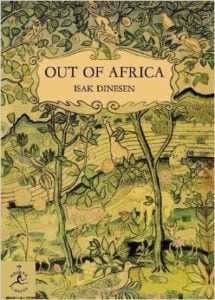
Out of Africa by Isak Dinesen (1885 – 1962) is the Danish-born author’s 1937 memoir of her years in Africa from 1914 to 1931. There she owned a 4,000-acre coffee plantation in the hills outside of Nairobi, Kenya.
Born Karen Dinesen, she had come to Kenya from Denmark with her husband, Baron Bror Fredrik von Blixen-Finecke. When they separated, she stayed on to manage the farm herself.
During those years she was frequently visited by her lover, the big game hunter Denys Finch Hatton. For his amusement, she would make up stories “like Scheherazade.” Read More→
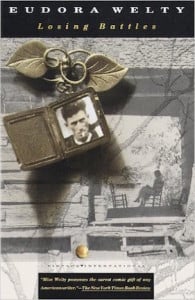
From the 1970 Random House edition of Losing Battles by Eudora Welty: Losing Battles by Eudora Welty is a story of rural Mississippi in the 1930s that will immediately be recognized as a classic in the seriocomic tradition in American fiction.
On the hot, dry first Sunday of August, three generations of Granny Vaughn’s descendants gather at her home in celebration of her ninetieth birthday.
The action covers two days, but since many members of this enormous family are great tale-tellers, the reader experiences much of the past as well. Dialogue and action are often marvelously funny, wildly so at times, but underneath are serious, even somber tones. Read More→
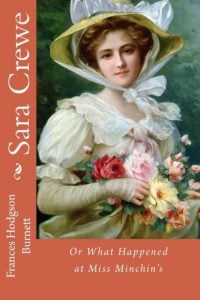
At one of the library sales I frequent in my quest for classics by women authors, I came upon Sara Crewe: or, What Happened at Miss Minchin’s by Frances Hodgson Burnett. This confused me; wasn’t this the story always known as A Little Princess?
It turns out that Sara Crewe is an earlier version of what became the classic. It was serialized in St. Nicholas magazine in 1887, then collected into a novella, published in 1888 by Charles Scribner’s Sons.
In 1905, the expanded story was published for all time as we best know it, titled A Little Princess. And since then, the story has been performed on stage, filmed in several versions, and is consistently named one of the top novels for children of all time.
Read More→
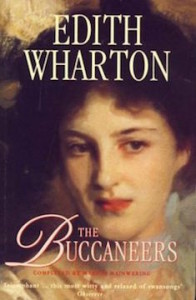
From the 1993 Viking edition of The Buccaneers by Edith Wharton: “Brave, lively, engaging,” said The New York Times Book Review of Edith Wharton’s classic novel The Buccaneers, left uncompleted at her death (finished by Marion Mainwaring).
Nan and Virginia St. George have the great good luck to be born beautiful and wealthy — the two qualities prized above all others in 1870s New York — but the insurmountably bad luck to come from “new money.”
Shunned by the snobbish guardians of Manhattan society, the lively girls still attract many admirers, but no offers of marriage from eligible men — the grail pursued discreetly but with single-minded intensity by all young women of polite birth (and their mothers). Read More→