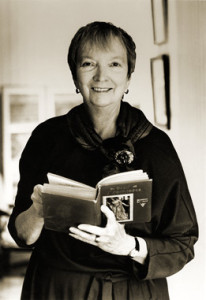
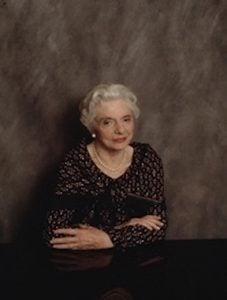
Madeleine L’Engle (1918 – 2007) was an author of fantasy fiction for children and young adults, best known for A Wrinkle in Time and the series of books that followed. She had trouble finding a publisher for what became her most famous book; editors were concerned that it was “too dark for children.”
Her career began after graduating college when she wrote plays that were published followed by her books and honorary degrees.
L’Engle wrote much about her life as a writer, and as a working mother. She mused on the challenges of the writing life and juggling her career with the raising of her children. Here is a selection of quotes by Madeleine L’Engle that speak to her thoughtfulness and honesty. Read More→
Patricia Highsmith wrote novels and short stories that had elements of crime in the genre of psychological thrillers, many starring sociopaths like Ripley.
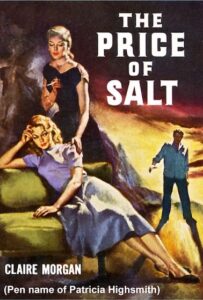
Early in her career, she briefly departed from what would become this favored genre to produce a novel about two women falling in love. The Price of Salt (1952) would become the basis of the film adaptation, Carol, several decades later (2015), starring Cate Blanchett in the title role, with Rooney Mara as her younger love interest.
The Price of Salt was also unique in that it was a novel about same-sex love that made it past the rule laid down by the era’s censors: No happy endings were allowed.
Until her first novel, Strangers on a Train was published in 1950, Highsmith worked as a freelance scriptwriter. The following year it was made into the famous Hitchcock film of the same name.
Highsmith had a dim view of humanity and was often described as a misanthrope, but the following romantic quotes from The Price of Salt reveal that Highsmith had a softer side. Read More→
Fannie Hurst was an author of Jewish heritage who grew up in Missouri and moved to NYC after graduating from Washington University. Her writing contained political and personal matters that gave her a conscious public voice.
Hurst’s most popular work, Imitation of Life, was adapted into film twice, and she earned her the position of highest paid female author of the 1920s and 1930s.
Though her work has been largely forgotten, her thoughts, captured in these conscious quotes on writing and striving still feel fresh and relevant. Read More→
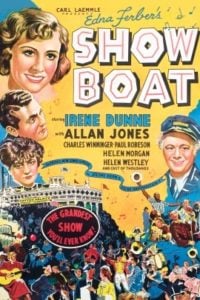
Show Boat (1936) began in 1927 as a revolutionary stage musical, with music by Jerome Kern and book and lyrics by Oscar Hammerstein II.
Based on Edna Ferber’s best-selling novel of the same name, the musical follows the lives of the performers, stagehands, and dockworkers on the Cotton Blossom, a showboat on the Mississippi River, beginning in the late nineteenth century.
With themes including racial prejudice and enduring love, the musical contributed such classics as “Ol’ Man River,” “Make Believe,” and “Can’t Help Lovin’ Dat Man” to the American songbook. Read More→
Laura Z. Hobson grew up on Long Island raised by parents who fled czarist Russia. She started her career writing for Time, Life and Fortune magazines until she became a full-time novelist with the publication of Gentlemen’s Agreement, the classic novel of “polite” antisemitism in post-World War II America.
Hobson studied at Cornell University, was a single mother of two sons, and wrote novels based on her life experiences and observations. Here’s a selection of quotes by Laura Z. Hobson, displaying her wisdom on humanity in general and her writing life in particular. Read More→
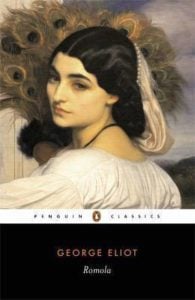
Romola (1862– 63) is today perhaps the least known, and thus, the least read of George Eliot‘s novels. Yet in her lifetime it enjoyed much critical acclaim, though it was not a favorite of readers even back then.
Its dense language has tested the patience of readers from the time of its publication. But the author herself said of it, “I swear by every sentence as having been written with my best blood.”
The title character is the daughter of a scholar, and herself well educated, which was unusual for a women in the late 1400s and early 1500s, when the story takes place. Read More→
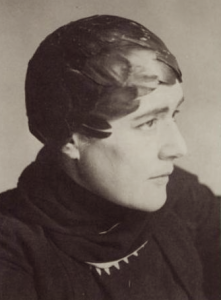
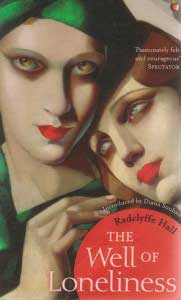
Radclyffe Hall (1880 – 1943) was born in Hampshire, England and self-identified as a “congenital invert.” In the early 20th century this was her best (and perhaps only) option for describing what she described as a man’s soul born into a woman’s body, and vice versa.
She wrote about elements that were present in her life; for example, wealthy upper-class lifestyle, English culture and her attraction to women. Hall frequently dressed in masculine garb and called herself John.
Hall’s most famous work,The Well of Loneliness (1928) draws on her own life, as it features a lesbian from an upper class family in England. The main character, Stephen Gordon, lives with her partner, Mary Llewellyn. Read More→
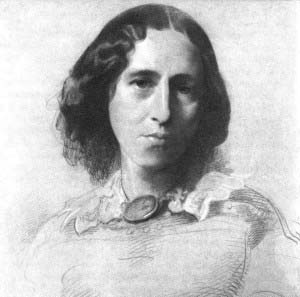
George Eliot (1819 –1880) was the masculine pen name of Mary Ann Evans, the esteemed British author of Victorian-era novels. Her writing was political and creative, inspired by art, psychology, and current events.
Her novels were critically acclaimed and sold well upon publication. From Adam Bede (1859) through Daniel Deronda (1876), George Eliot was at her most productive.
These books, along with The Mill on the Floss, Silas Marner, Romola, and Middlemarch are considered some of the most significant literary works in British literature. Read More→