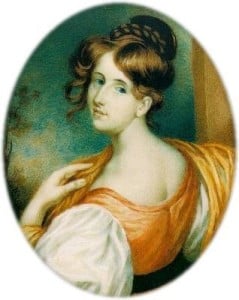
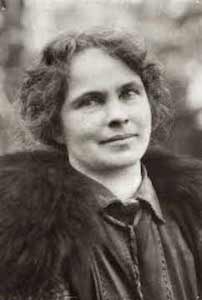
Elizabeth Gaskell (1810 – 1865) incorporated three major social themes for her time including the upheaval of class boundaries, the industrialization of England, and women’s issues in the Victorian era. Following is a selection of quotes from Elizabeth Gaskell’s highly-regarded novels, with special emphasis on North and South.
Mrs. Gaskell, as she was known in the literary world, grew up in England with her aunt who encouraged her reading and writing interests. Her work was first published in Household Words and Blackwood’s magazine, among others once she began to make literary connections with other well-known authors.
North and South, Cranford, Wives and Daughters, and Mary Barton still rank among the finest novels in English literature, even though Mrs. Gaskell doesn’t receive as much attention as do some of her British contemporaries to this day.
Read More→
Audre Lorde (1934 – 1992), a self-identified “black lesbian, mother, warrior, poet,” used her many talents as a writer to express ideas about intersecting oppressions, especially those faced by women.
As society moved toward the anti-war, feminist, and civil rights movements, especially in the 1970s, she explored more political themes in her poetry and essays. There are many reasons to love Audre Lorde and keep her legacy alive. Here are just a few: Read More→
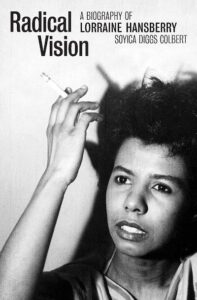
Lorraine Hansberry was best known for A Raisin in the Sun (1959), the first play written by a Black woman to be staged on Broadway. The following quotes by Lorraine Hansberry demonstrate her exceptional talent.
Hansberry won the New York Drama Critics’ Circle Award and numerous other honors for this play, which has been made twice into feature films and continues to be staged around the world.
Among her other well-known works were To Be Young, Gifted and Black (both a stage play and a book) and Les Blancs. She also wrote political essays for magazines and journals, and was active in the pursuit of race and gender equality. She died prematurely of cancer at age 34, leaving a lasting legacy in the theatrical world.
Read More→
Betty MacDonald (March 26, 1907 – February 7, 1958) was an American author of humorous memoirs and children’s books, born Anne Elizabeth Campbell Bard in Boulder, Colorado.
Her father was a mining engineer who moved the family around frequently before finally settling in Seattle, Washington in 1916.
At age twenty, Betty married Robert Eugene Heskett. It was 1927, and the couple made their home on a chicken farm in Chimacum Valley, part of Washington State’s Olympic Peninsula. The marriage ended just three years later when Betty left her husband and returned to Seattle in 1931. Read More→
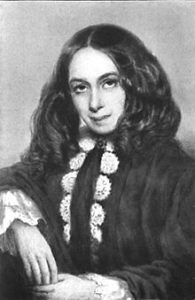
Elizabeth Barrett Browning is perhaps best known for Sonnet 43. It opens with the infamously sappy line: “How do I love thee? Let me count the ways.” Spoiler alert: there are ten ways.
Browning enjoyed much popular and critical success in her life, which continued for some time after her death in 1861, at age fifty five. Her popularity declined over much of the twentieth century, until interest in it was revived by new biographies and scholarly editions of her works.
Though celebrated for ‘Sonnet 43’, which cold-hearted cynics like myself see as trite and kitschy, the poem “A Dead Rose” (see below) is perhaps more indicative of the talent that made her famous. Read More→
Dorothy Canfield Fisher (1879 – 1958) was a teacher, novelist, nonfiction writer, social activist, and traveler. Coming from a cosmopolitan background of professors, she was able to obtain a college education that was enviable for a woman of her time. Here is presented selection of timeless quotes by Dorothy Canfield Fisher on life and love.
Fisher’s best-known work is Understood Betsy (1917), a children’s book; she was also known in her time for The Bed-Quilt and other short stories and novels that had a quietly subversive edge to them.
She earned her doctorate in Romance Languages at the Sorbonne. Upon the outbreak of World War I, Fisher and her husband and children left their farm in Vermont to help in the French war effort. Read More→
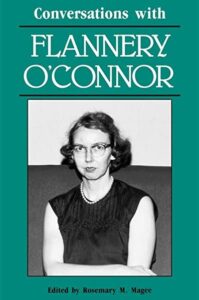
Flannery O’Connor’s fiction has frequently been described as “grotesque,” and the author herself considered whether her work fit the description. In fiction of the grotesque, the focus is on the strange and ugly, often as an aspect of the physical body. It can also encompass themes of horror, death, and violence, with abhorrent characters.
At the end of the day, O’Connor preferred her work be considered realism, rather than grotesque or gothic.
Some of those who have analyzed the stories in her classic short story collection, A Good Man is Hard to Find, have begged to differ, but we’ll let the author herself have the last word. Excerpted from her essay “The Grotesque in Southern Fiction”: Read More→
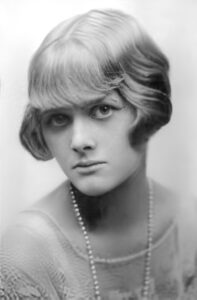
Daphne du Maurier was a British novelist, playwright, and short story writer. She grew up in a creative family, which inspired her to write from a young age. Here you’ll find a selection of words of wisdom and quotes by Daphne du Maurier, the author who brought us these and other mid-twentieth century classics.
Photo above right courtesy of Wikimedia Commons.
After publishing her first novel, The Loving Spirit, at age 22 she went on to write among other classic works Rebecca, My Cousin Rachel, Jamaica Inn, and the haunting story that became a terrifying Hitchcock film, The Birds.
Read More→