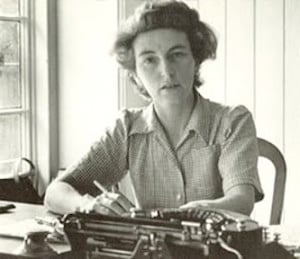
Rumer Godden (1907 – 1998) grew up in colonial India and was educated in England. This selection of quotes by Rumer Godden illustrate her continual quest for meaning.
As a young woman, Godden settled in Calcutta to teach dance and write.
Her first novel, Black Narcissus, was published in 1939 to immediate acclaim and became a bestseller. This was followed by a succession of novels drawing upon her life in exotic settings. Read More→
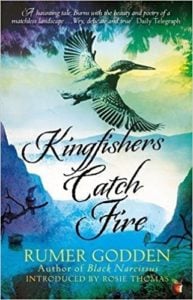
From the 1953 Viking Press edition of Kingfishers Catch Fire by Rumer Godden: returning to the scene of her best love books, Rumer Godden now brings us another moving story of India.
Kingfishers Catch Fire has all the color, tenderness, and humor, and the feeling for the local inhabitants’ ways, that marked The River as a book and a film.
It also has the kind of the emotion that Miss Godden’s peculiar gift — the emotion of an individual threatened by mysterious alien forces. Read More→
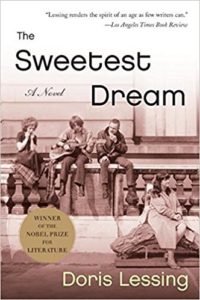
From the 1991 HarperPerennial edition of The Sweetest Dream by Doris Lessing: This story of a family, spanning most of the twentieth century, has its fulcrum in the sixties, that embattled decade about which argument becomes louder each day.
The use of that time, bursting the old bonds and demanding freedoms, were seen by some of their elders in a manner not at all as they saw themselves, as romantic idealists, but as deeply damaged people.
Old Julia, the clan’s matriarch, knows why. “You can’t have two dreadful wars and then say ‘that’s it, and now everything will go back to normal.’ They’re screwed up, our children, they are children of war.” Read More→
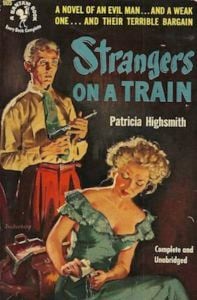
Strangers on a Train by Patricia Highsmith (1950) was her first novel, and has remained, along with the Ripley series, among her best-known works. It has been adapted for film and television several times, the most iconic being the 1951 adaptation directed by Alfred Hitchcock.
This psychological thriller involves two men who meet, not surprisingly, on a train. One of them proposes that they “swap murders.”
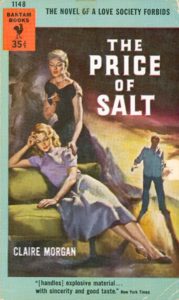
This twisty novel marked the start of Patricia Highsmith’s prolific career as a crime novelist, the genre that made her reputation (with one exception being The Price of Salt, the lesbian love story published under the pseudonym Claire Morgan in 1952). Read More→
When The Price of Salt by Patricia Highsmith was published in 1952, it was a rarity in lesbian literature. Lesbian pulp novels were quite a thing around that time, but in order to pass censors, one of the two protagonists had to either come to a bad end or realize that she was straight, after all.
The Price of Salt, however, was a rare lesbian novel with a relatively happy ending (the couple stays together, but Carol must relinquish custody of her child). Read More→
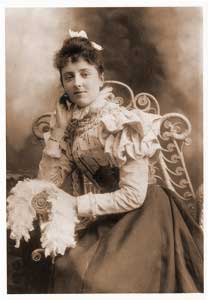
From her sunny characters, notably Anne Shirley (of Anne of Green Gables) and happy plots, you’d think that L.M. Montgomery (1874 – 1942) was reflecting on an idyllic life. But writing was something that served as a pleasurable escape, especially as she grew older.
Montgomery, known to her familiars as Maud, wove her personal experiences with marriage and motherhood into her work. She struggled with severe bouts of depression, and was the primary caregiver to her husband, whose mental illnesses eventually incapacitated him. Read More→
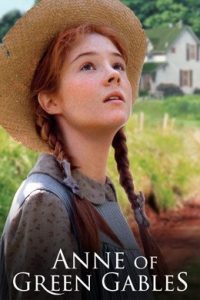
L.M. Montgomery (1874 – 1942) is best remembered for Anne of Green Gables and its sequels, beloved by generations of readers. Following is a selection of witty and wise quotes from the Anne of Green Gables novels, featuring the imaginative, irripressible Anne Shirley.
While struggling with lifelong bouts of depression and other personal struggles, Maud Montgomery desired above all to bring joy to those who read her novels, filling them with gentle wisdom and wit.
Maud drew inspiration from beautiful Prince Edward Island, Canada, where she was born and raised, for the adventures of Anne and her friends. One of the sunniest (though not simple) characters in children’s literature, Anne was an intensely social and curious being who appreciated the beauty of the world around her, and the people she loved. Read More→
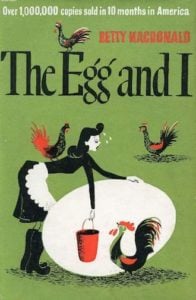
The Egg and I by Betty MacDonald (1946) is the book that put this author of humorous fiction and nonfiction on the map.
Not only did the book become a world-wide bestseller, the film version starring Claudette Colbert and Fred MacMurray was hugely popular as well.
While many contemporary readers still adore the book, others are deeply disturbed by its blatant racism against Native Americans as well as its classism and snobbery toward those the author describes as Neighbors with a purposeful capital. Read More→