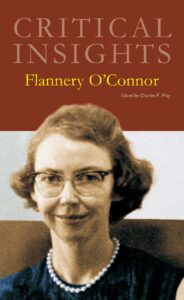
Flannery O’Connor (1925 – 1964) was an American writer best known for her short stories. Though she lived a somewhat sheltered life, O’Connor’s work explored human nature, sometimes its darkest side, and others with razor wit.
Today, her work is still much discussed thanks to its unique detail, symbolism, and imagery. Her work is categorized as “Southern Gothic,” and relies heavily on regional themes.
O’Connor famously said: “Anything that comes out of the South is going to be called grotesque by the northern reader, unless it is grotesque, in which case it is going to be called realistic.” Though her themes were often serious and dark, her writing was imbued with wit. Read More→
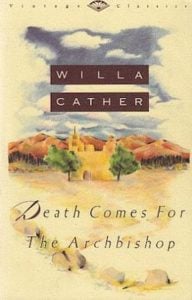
Death Comes for the Archbishop (1927) is often considered one of Willa Cather’s best novels, if not her masterpiece. It’s a fixture on numerous listings of best American literature of the twentieth century. It tells an almost mythic tale of a life simply lived in the American southwest.
Father Jean Marie Latour, the novel’s main character, arrives in New Mexico in 1851 to serve as the Apostolic Vicar. He has traveled there from Sandusky, Ohio, with his friend, Joseph Vaillant, a vicar.
The novel is historically based, drawing from the life of Jean-Baptiste Lamy (1814 – 1888). The plot is inspired by the capture of the Southwest by the U.S. in the Mexican–American War, which took place from 1846 to 1848. Read More→
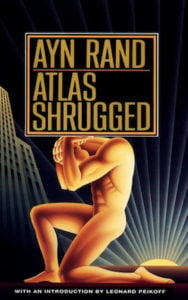
Atlas Shrugged, a 1957 novel by Ayn Rand (1905 – 1982), was this controversial authors last and longest work of fiction, though she went on to publish many other works of nonfiction rooted in her Objectivist philosophy.
Rand used this novel to share her ideas on free enterprise, capitalism, individualism, and love (or more accurately, lust).
Though it garnered many negative and rather sarcastic reviews upon its initial publication, it also earned lasting popularity with the reading public. Like all of Rand’s works, it’s a revered work of writing among those who identify as Libertarians. Read More→
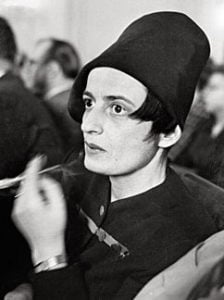
Ayn Rand (1905 – 1982) was a Russian-born American author of fiction and nonfiction known for having developed Objectivism, a philosophy that embraces laissez-faire capitalism and the pursuit of rational self-interest. This selection of quotes by Ayn Rand speak to her philosophical tenets.
Rand certainly has had (and still has) her share of both admirers and detractors, but no one denies her ability to stir controversy as a writer and thinker.
Rand’s nonfiction and her novels, especially Atlas Shrugged (1957), weaves aspects of the Objectivist philosophy into their ponderous plots. Read More→
Laura Ingalls Wilder (1867 – 1957) is best known for her Little House series of books for young readers, semi-autobiographical stories about growing up as an American pioneer. Following is a selection of comforting quotes by Laura Ingalls Wilder, reflective of the mood of her classic works.
Born in a log cabin on the edge of an area called “Big Woods” in Pepin, Wisconsin, the life she lived was eventually the basis for her classic books.
While growing up, the Ingalls family traveled by covered wagon through Kansas and Minnesota with all they owned, until finally settling in De Smet, Dakota Territory. There, they thrived on the open spaces of the prairie, farming and raising animals. Read More→
Elizabeth von Arnim went by various pen names throughout her career, perhaps explaining why her reputation wasn’t quite as cemented in her lifetime as was that of some of her contemporaries.
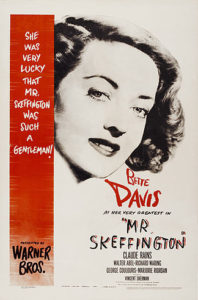
An incicive and witty writer, two of her novels became well-known films. The first was Mr. Skeffington (1940). Much later, The Enchanted April (1922) was adapted into the charming 1991 film Enchanted April.
Here is a review of the Americanized and significantly altered 1944 film version of Mr. Skeffington starring Bette Davis and Claude Rains. Read More→
Mary McCarthy (1912 – 1989) was an American novelist and political activist. She began her writing career as a critic, gaining respect for her observations on culture and politics.
The Group (1954) was arguably her most popular novel — it sat on the New York Times bestseller list for two years and was made into a popular film.
McCarthy’s novels and stories are part autobiography and part fiction, as she draws on her own experiences, traumas, and successes. That, along with her writing style, made her a respected talent in the writing community. It’s an honest and critical eye that inform this selection of Mary McCarthy’s quotes. Read More→
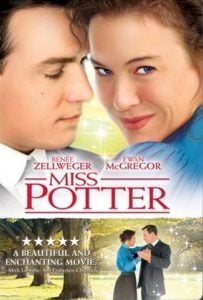
Lots of films have been made from novels by the classic women authors on this site, as you’ll see by linking to this site’s Filmography. But there are also a number of biographical films about women authors themselves, the lives they led, and the stories they told.
What is it, do you supposed, that’s so fascinating about the life of a woman who writes? The films don’t focus on the act of writing for the most part — wouldn’t that be a yawner! Rather, they pay homage to the literary legacy they left behind in the form of their wonderful stories.
Some of these films take more literary license than others when it comes to the true facts of their subjects’ lives, but many, if not all, can at least be an introduction to the author, her life, and work.
Read More→