By Skyler Gomez | On March 28, 2019 | Updated May 1, 2025 | Comments (0)
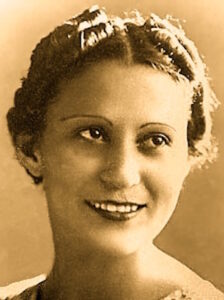
Julia de Burgos, born Julia Constanza Burgos Garcia (February 17, 1914 – July 6, 1953), was a Puerto Rican poet and civil rights activist for women and African/Afro-Caribbean writers.
She was also an advocate for Puerto Rican independence and served as Secretary General of the Daughters of Freedom, the women’s branch of the Puerto Rican Nationalist Party.
Julia was born and raised in Santa Cruz, a poor area of Carolina, Puerto Rico where her father owned a farm in addition to working as a member of the Puerto Rican National Guard. Read More→
By Nava Atlas | On March 27, 2019 | Updated September 8, 2022 | Comments (2)
Though Jane Eyre was Charlotte Brontë‘s first published novel, The Professor was actually the first novel she completed. It wasn’t published until 1857, two years after her death, with her literary reputation secured.
The resounding failure of a book of poems she produced with sisters Emily and Anne in 1846 didn’t stop Charlotte from spearheading an effort to find a publisher for the novels that they had been working on.
They continued to use the assumed quasi-masculine names that appeared on their book of poetry, styling themselves Currer (Charlotte), Ellis (Emily), and Acton (Anne), all surnamed Bell.
Read More→
By Nava Atlas | On March 26, 2019 | Updated September 22, 2026 | Comments (0)
Anne Brontë (January 17, 1820 – May 28, 1849) was a British author born in Thornton, West Yorkshire, the daughter of Patrick Brontë, a clergyman, and Maria Branwell.
She followed in her older sisters’ (Charlotte and Emily Brontë) paths by delving into the literary world as a novelist and poet.
Along with her sisters and brother Branwell, Anne grew up in Haworth, an isolated town on the moors of Yorkshire. She was one of six siblings raised by her father after the death of their mother. Read More→
By Nava Atlas | On March 24, 2019 | Updated February 21, 2025 | Comments (0)
Dorothy Thompson (1893 – 1961) used her charm, wit, sense of adventure, and strong work ethic to create an incredibly illustrious career in journalism. Born in Lancaster, Pennsylvania, she studied politics and economics at Syracuse University.
After completing a college degree in 1914, a rarity for a woman in her time, she felt an obligation to contribute to the public good. Her cause of choice was the women’s women’s suffrage movement. After women won the right to vote in 1920, she moved to Europe to pursue journalism and became one of America’s first foreign correspondents.
In her heyday, she reported from across the European continent and at the same time enjoyed a fabulous social life. Her circle of friends included many writers and artists as well as some of the most notable journalists in the field. Read More→
By Nava Atlas | On March 22, 2019 | Updated September 17, 2026 | Comments (6)
Though Emily Brontë (1818 – 1848) only lived to the age of thirty, she produced Wuthering Heights, one of the most iconic novels in the English literary canon. For an avowed introvert such as Emily was, her dog, Keeper, became one of the few and most faithful companions of her adult life.
The sister of Charlotte and Anne Brontë, Emily didn’t care for company outside of her immediate family, and any time she ventured from her beloved Yorkshire moors, she became sick with longing to return. Read More→
By Nava Atlas | On March 21, 2019 | Updated September 25, 2026 | Comments (0)
The Age of Innocence (1920) by Edith Wharton (1862 – 1937) is considered one of this classic American author’s finest works. Following is a selection of quotes from The Age of Innocence that capture its style and substance.
In 1921, it earned Wharton the distinction as the first woman to win the Pulitzer Prize for fiction. In a 2019 essay in The New York Times, “The Age of The Age of Innocence,” Elif Batuman argued that in some ways, this classic novel feels more current than ever.
The story is set in the 1870s and centers on Newland Archer, an upper-class New Yorker. Archer’s conflicted desires between duty to his staid but loving wife and his passion for scandal-plagued divorcée Countess Ellen Olenska are central to the narrative. Read More→
By Nava Atlas | On March 20, 2019 | Updated March 5, 2026 | Comments (0)
Mary Wollstonecraft (April 27, 1759 – September 10, 1797) was a British author of fiction and nonfiction, philosopher, and women’s rights advocate.
Though her body of work was fairly substantial, including many essays, a history of the French Revolution, and some fiction, she’s now primarily known for A Vindication of the Rights of Woman.
She was the mother of Mary Wollstonecraft Godwin (later known as Mary Shelley), the author of Frankenstein; tragically, she died a few days after giving birth to her namesake. Read More→
By Nava Atlas | On March 18, 2019 | Updated September 12, 2025 | Comments (6)
Before my first visit to Iceland in the summer of 2018, when I spent the entire month of August at a writer/artist residency, I knew very little about the country generally and even less about its capital — especially that I’d find so many lovely bookstores and libraries in Reykjavik.
Of course, I had seen photos of the otherworldly landscapes, but I would have only the shortest time in which to explore them; my stay was mainly within the confines of Reykjavik. And that turned out to be absolutely beyond fine. In fact, for a nerd and bookworm like myself, it was blissful.
Since then I’ve been back to Reykjavik four times. One stay lasted five weeks and I can say with a confidence that it was the best trip of my life. So go ahead … visit Iceland for the glaciers, waterfalls, and other gorgeous scenery, but if you’re the indoorsy type like me you’ll be equally happy in the vast array of bookstores, libraries, and museums in Reykjavik (and beyond). There’s an amazing vegan scene, too.
Read More→