By Nava Atlas | On May 22, 2019 | Updated November 16, 2024 | Comments (0)
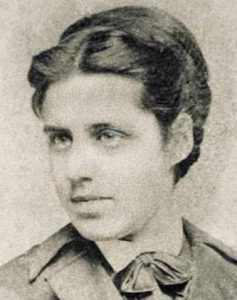
Emma Lazarus (July 22, 1849 – November 17, 1887), American poet, translator, and immigrant advocate. She’s best known for the poem “The New Colossus” (1883), whose lines beginning with “Give me your tired, your poor …” are inscribed at the base of the Statue of Liberty.
As touching and world-famous as this poem has remained, it’s but a tiny portion of her body of work. The life of Emma Lazarus, brief as it would be, was filled with accomplishment, not only as a writer, but as an advocate for immigrants (especially Jewish immigrants) and refugees.
Read More→
By Nava Atlas | On May 17, 2019 | Updated September 8, 2022 | Comments (0)
How to select quotes from Mrs. Dalloway by Virginia Woolf, when almost every sentence in the book is quotable? It’s a tough choice, indeed.
The 1925 novel whose narrative is built on the inner consciousness of its characters, particularly Clarissa Dalloway, was groundbreaking in its time. Often called “a novel of one day,” it was almost universally praised for its innovative format. One 1925 review stated:
“Mrs. Woolf makes one aware of one’s own mental experiences in a way no other contemporary writer has ever achieved. Her characters appear upon the scenic screen of Clarissa Dalloway’s consciousness in proportion to her personal reaction to them; and then appear again in a swift soul-probing analysis as they really are. Read More→
By Nava Atlas | On May 15, 2019 | Updated June 25, 2026 | Comments (0)
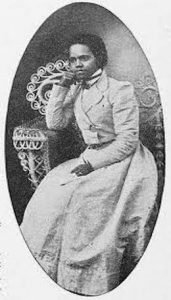
Born in the rural mountain community of Chloe Creek in Pike County, Kentucky, Effie Waller Smith (1879–1960) was the daughter of Sibbie Ratliff and Frank Waller, both of whom were formerly enslaved.
Effie’s parents ensured that their children would be well educated, and to that end, she attended Kentucky Normal School for Colored Persons, and from 1900 to 1902 where she trained as a teacher. Afterwards, she taught for some years.
Effie’s verse appeared in local papers, and she published her first collection, Songs of the Months, in 1904. That same year she entered a marriage that didn’t last long, and she divorced her husband. Read More→
By Nava Atlas | On May 12, 2019 | Updated September 8, 2022 | Comments (0)
The Autobiography of Alice B. Toklas by Gertrude Stein (1933) is actually Stein’s autobiography, written as if in her longtime companion’s voice.
Considered one of the most accessible of Stein’s experimental, often ponderous works, it was a commercial and critical success. It is indeed narrated as if Alice is doing the writing, and this comes through in a fresh and vibrant manner.
Some of Gertrude’s colleagues didn’t much care for the book. Some thought it too commercial, as indeed, the author admitted that she cranked it out in six weeks as a way to make money. Ernest Hemingway, to whom Gertrude was a mentor, called it “a damned pitiful book,” and her brother, Leo Stein, who disliked Alice, called it “a farrago of lies.” Read More→
By Marcie McCauley | On May 10, 2019 | Updated September 25, 2026 | Comments (0)
“What in the world has happened to Beth Ellen?” Harriet wonders, just a few pages from the end of Louise Fitzhugh’s classic 1964 novel, Harriet the Spy. Beth Ellen comes into her own as a character in the 1965 novel, The Long Secret.
Harriet is still eleven years old and she sometimes still calls her friend Beth Ellen ‘Mouse.’
The Toronto Public Library has eighty-two copies of Harriet the Spy (1964) but only six copies of what was billed as the “Further Adventures of Harriet the Spy” — The Long Secret by Louise Fitzhugh, which was published the following year, and only two copies of Sport (1979). Read More→
By Marcie McCauley | On May 9, 2019 | Updated February 7, 2026 | Comments (5)
Marcie McCauley reflects on revisiting Harriet the Spy, the 1964 classic by Louise Fitzhugh, and how the story continues to resonate and inspire her as a working writer.
See, first you take off your coat and hang it on the back of a library chair, use it to mark a comfortable seat as your place to return to with a stack of books. Then you fetch the ones you remember most fondly. You can’t have too many at one time or the librarians are annoyed. I usually have ten.* Read More→
By Skyler Gomez | On May 3, 2019 | Updated March 25, 2024 | Comments (0)
Gloria Evangelina Anzaldúa (September 26, 1942 – May 15, 2004) was a queer Chicana poet, feminist theorist, and writer. Going by the name Gloria E. Anzaldúa as an author, her writing and poetry discuss the anger that stems from social and cultural marginalization.
She herself experienced this kind of marginalization growing up in the Mexican-Texas border as the daughter of a Spanish American and Native American. (Photo above right courtesy of Wikimedia Commons.)
Anzaldúa was born in Jesús María Ranch in the Rio Grande Valley of South Texas as the oldest of four siblings. Throughout her childhood, her parents, Urbano Anzaldúa and Amalia Anzaldúa García, moved their family to various ranches working as migrant farmers.
Read More→
By Larrisa Pope | On May 2, 2019 | Updated August 5, 2023 | Comments (0)
Lorraine Hansberry (1930 – 1965) was an American playwright and author. Presented here is a sampling of quotes from A Raisin in the Sun, Hansberry’s most famous work.
Her best-known work, A Raisin in the Sun (1959), was the first play by an African-American woman to be staged on Broadway. And at the age of twenty-nine, Hansberry became the youngest American and the first Black playwright to win the New York Drama Critics’ Circle Award for Best Play.
The play details the life of the Youngers, an African-American family living on the South Side of Chicago in the 1950s. It follows their struggles to overcome prejudice while staying strong as a family unit. Read More→