By Taylor Jasmine | On August 9, 2017 | Updated November 14, 2022 | Comments (0)
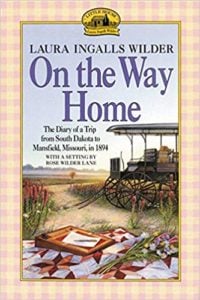
On the Way Home: The Diary of a Trip from South Dakota to Missouri in 1894 by Laura Ingalls Wilder is based on a diary found after the author’s death, detailing her journey with her husband Almanzo from South Dakota to Missouri.
In 1894, The couple and their seven-year-old daughter, Rose, made the trek from their drought-stricken farm in De Smet to a new farm in Mansfield, Missouri, where they settled permanently.
Laura chronicled the journey in these diary entries, which were undiscovered until after her death and remained unpublished until collected in this 1962 book. Read More→
By Taylor Jasmine | On August 8, 2017 | Updated January 29, 2026 | Comments (0)
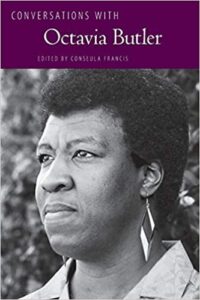
Octavia Estelle Butler (1947 – 2006) broke ground in the white male-dominated genre of science fiction as a Black woman. This selection of quotes by Octavia E. Butler reflects her wise and prescient thoughts on writing and human nature.
The New York Times described her as a writer “whose evocative, often troubling novels explore far-reaching issues of race, sex, power, and ultimately, what it meant to be human.”
After publishing some short stories, Butler’s first novel was Patternmaster (1976). It was the first in what would become a four-volume series. Central to these novels are Patternists, people with telepathic powers. But it was Kindred (1979) that put Octavia Butler on the literary map. Read More→
By Nava Atlas | On August 8, 2017 | Updated September 17, 2026 | Comments (1)
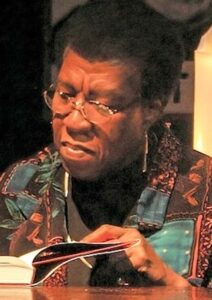
Octavia E. Butler (June 22, 1947 – February 24, 2006) was an American author of science fiction as well as dystopian and speculative novels. This visionary Black woman writer blazed a trail in the white male-dominated genre of science fiction.
In her New York Times obituary, she was described as “an internationally acclaimed science fiction writer whose evocative, often troubling novels explore far-reaching issues of race, sex, power, and ultimately, what it meant to be human.” (photo above right courtesy of Wikimedia Commons)
Born in Pasadena, CA, Octavia Estelle Butler’s father died when she was an infant. Raised by her single mother, Butler was a painfully shy child, and always exceedingly tall for her age. She also struggled with dyslexia, which made schoolwork a torture. She began to believe that she was, as she put it, “ugly and stupid, clumsy, and socially hopeless.” Read More→
By Nava Atlas | On August 7, 2017 | Updated September 18, 2023 | Comments (0)
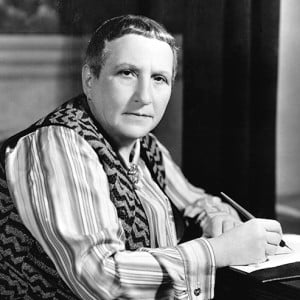
Gertrude Stein (1874 – 1946) had a unique place in twentieth century literature. Following is a selection of Gertrude Stein quotes, offering a window into her mind — some perplex, others delight, and some are a marriage of both.
Though some consider her writing incoherent, others view it as a singular voice, that had never been seen before or since.
In addition to poetry and novels, Stein also wrote plays, operas, and gave many lectures. Her experiments in prose, which may have originated with automatic writings, were highly influential. Some critics considered them “cubism in literature.” Read More→
By Taylor Jasmine | On August 6, 2017 | Updated November 14, 2022 | Comments (0)
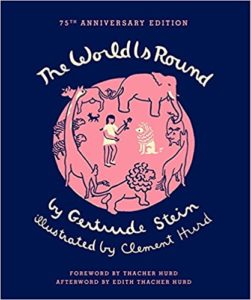
From the 1988 North Point Press edition of The World is Round (1939): Gertrude Stein’s only children’s book tells the story of Rose, a little girl determined to find her place in a “World that was round and you could go on it around and around.”
Rose’s search for identity leads her to friendships with dogs, rabbits, lions, and other children, to carve ‘Rose is a Rose is a Rose’ around the trunk of a tree, and finally on a quest (accompanied only by a blue garden chair) to the top of a mountain, where “everywhere she should see everywhere and she would sit on the chair, yes there.” Read More→
By Taylor Jasmine | On August 5, 2017 | Updated October 1, 2026 | Comments (2)
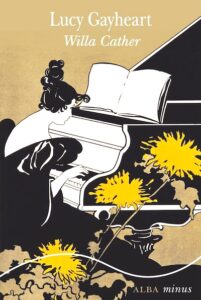
Published in 1935, Lucy Gayheart is American author Willa Cather’s eleventh novel. The story of a young woman from a small prairie town who travels to Chicago to pursue a life in music, it is written in Cather’s inimitable clear, fresh prose style.
A synopsis of Lucy Gayheart from a contemporary reprint
From the 1996 Vintage edition: “In this haunting 1935 novel, the Pulitzer Prize–winning author of My Ántonia performs crystalline variations on the themes that preoccupy her greatest fiction: the impermanence of innocence, the opposition between prairie and city, provincial American values and world culture, and the grandeur, elation, and heartache that await a gifted young woman who leaves her small Nebraska town to pursue a life in art. Read More→
By Nava Atlas | On August 4, 2017 | Updated November 14, 2022 | Comments (0)
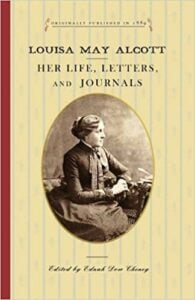
This autobiographical Sketch of Childhood by Louisa May Alcott (1832 – 1888) is filled with memories and observations by the beloved American author.
Best known as the author of Little Women and its sequels (including Jo’s Boys and Little Men), the scope of her work went beyond domestic tales into essays, poems, and pseudonymous thrillers.
It was first printed in Louisa May Alcott: Life, Letters, and Journals, compiled and edited by Ednah D. Cheney (1899). Here are Louisa May Alcott’s first-person recollections of her early life: Read More→
By Nava Atlas | On August 3, 2017 | Updated June 28, 2025 | Comments (0)
Willa Cather’s love/hate relationship with fame and the press was fierce. She courted fame in her youth, but expressed discomfort with it once it arrived.
Yet Cather left a wealth of public pronouncements, derived mainly from interviews she granted and speeches she made. She also wrote many autobiographical sketches, press releases, and even furtive semi-reviews in the third person as a way to promote her work.
Still, the more known she became, the more irritable she grew with loss of privacy.
For someone as ambivalent about publicity as Cather claimed to be, she granted tons of interviews. Judging by the vigor of her responses, she seemed to relish holding forth on the subject dearest to her heart—her writings. Read More→