By Nava Atlas | On August 18, 2017 | Updated September 13, 2026 | Comments (0)
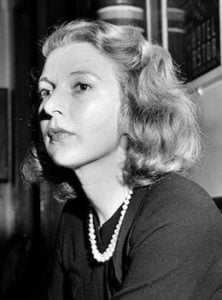
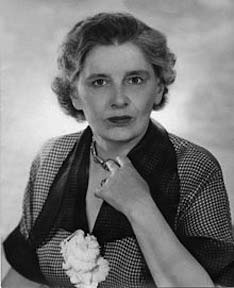
Martha Gellhorn (November 8, 1908 – February 15, 1998) was best known as an American war correspondent, though she was a prolific writer of fiction and memoir as well. She was the third wife of iconic American author Ernest Hemingway.
Gellhorn is ranked among the top war journalists of the twentieth century — and didn’t wish to be remembered as one of the four wives of “Papa” Hemingway. Famously, she lamented, “Why should I be a footnote to somebody else’s life?”
Indeed, she was more than accomplished in her own right. having covered nearly every global conflict from the Spanish Civil War to Vietnam. She reported on virtually every major world conflict that took place during her sixty-year career. Read More→
By Nava Atlas | On August 17, 2017 | Updated November 18, 2022 | Comments (4)
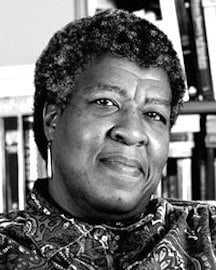
Gwendolyn Brooks (1917 – 2000), a highly honored poet, broke new ground speaking to the black and female experience in America. Born in 1917 and raised in Chicago, there is much to celebrate about Gwendolyn Brooks, a truly iconic poet.
In 1945, she broke into book publishing with the well-received A Street in Bronzeville, referring to an area in the Chicago’s South Side. This collection led to numerous prestigious awards and a life in poetry.
Here are five things to love about Gwendolyn Brooks, a great American poet — and there are lots of other things to admire, so learn more about her and better yet, read her work! Read More→
By Nava Atlas | On August 17, 2017 | Updated November 18, 2022 | Comments (0)
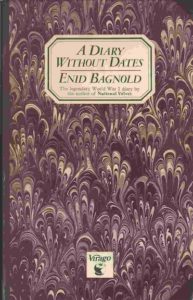
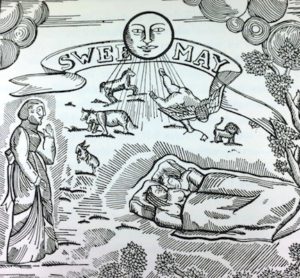
During World War I, Enid Bagnold was a member of the British Women’s Services. She served for about a year and a half in the V.A.D. (Voluntary Aid Detachment), as a nurse’s aide.
Her duties were to attend to the non-medical needs of wounded British soldiers recovering from wounds in the Royal Herbert Hospital, just a few miles southeast of London. Some of the injuries she witnessed were absolutely horrific.
A Diary Without Dates was written almost as a dreamlike prose-poem, portraying the suffering of soldiers, many of whom faced mutilation, wrenching pain, and death. Thus, it became a timeless commentary on the traumas of war. Read More→
By Nava Atlas | On August 16, 2017 | Updated March 14, 2023 | Comments (0)
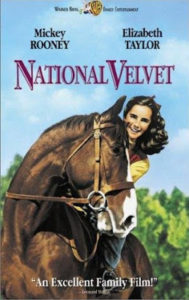
National Velvet is the story of a horse-crazy fourteen-year-old girl, Velvet Brown, who rides her horse, Pi, to win Britain’s Grand National steeplechase.
The 1935 novel of the same name by Enid Bagnold (1889 – 1991) was successfully adapted to film in 1944 and featured the young Elizabeth Taylor in her first leading role.
Assisted by Mi, her father’s hired hand, Velvet plots to get the horse ready for what’s considered “the greatest race in the world,” praying to become “the best rider in England,” not for the money but for the glory of the horse she loves so dearly. Read More→
By Taylor Jasmine | On August 15, 2017 | Updated October 8, 2022 | Comments (1)
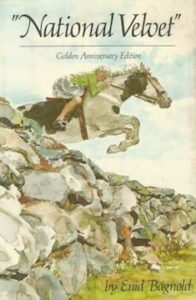
National Velvet by Enid Bagnold is a classic 1935 novel telling the story of fourteen-year-old Velvet Brown, the daughter of a working-class family in England.
Velvet is so horse-crazy that she indulges in both fervent and pedestrian fantasies — going on horseback journeys, leading horses to pastures, and simply grooming them.
“Oh, God, give me horses, give me horses!” Velvet prays early on in the book, “Let me be the best rider in England!” Read More→
By Nava Atlas | On August 13, 2017 | Updated September 25, 2026 | Comments (0)
Memory plays a central role in fiction — as it does in life. Think of those who lose their memory; the very essence of the self is stolen. “Nothing is ever really lost to us as long as we remember it,” wrote L.M. Montgomery in The Story Girl.
Here, Virginia Woolf, Daphne Du Maurier, Eudora Welty, Rebecca West, and Mary McCarthy offer up lovely thoughts on memory that come from both works of fiction and memoir. Read More→
By Nava Atlas | On August 12, 2017 | Updated March 16, 2025 | Comments (0)
Dear Literary Ladies,
What’s your best advice for beginning writers, or really, anyone who’s trying to write regularly?
I have advice in just a few words. The first, of course, is to read. It’s surprising how many people think they want to be writers but they don’t really like to read books.
And the second is to write every day, whether you like it or not. Screw inspiration. Read More→
By Nava Atlas | On August 10, 2017 | Updated October 27, 2022 | Comments (0)
Of her first published collection, The Book of Repulsive Women (1915), Djuna Barnes said: “My first book of poems is a disgusting little item.” The five early poems by Djuna Barnes presented here illustrate the dark, morbid voice that became a hallmark of her writing style.
When, much later (1952) a publisher asked to reprint some of her early work, Barnes responded: “I feel it is a grave disservice to letters to reissue merely because one may have a name for later work — or for that unfortunately praised earlier work, or for the purpose of nostalgia or ‘history’ which might more happily be left interred.”
Read More→