By Nava Atlas | On August 1, 2017 | Updated March 27, 2023 | Comments (0)
Dear Literary Ladies,
How much do you want your stories and novels to be analyzed, rather than enjoyed for their own sake? Sometimes the over-analysis that students have to do destroys the pleasure of reading.
On the other hand, delving into deeper meanings and insights can expand the experience of reading. Where does a reader find the balance?
Last fall I received a letter from a student who said she would be “graciously appreciative” if would tell her “just what enlightenment” I expected her to get from each of my stories. I suspect she had a paper to write. Read More→
By Nava Atlas | On July 31, 2017 | Updated July 13, 2025 | Comments (0)
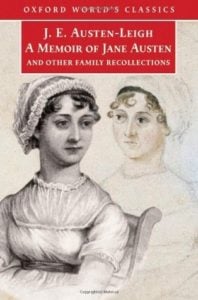
The biggest myth about Jane Austen’s writing life that she was ashamed of her work and hid her manuscripts as she worked on them. This is patently untrue, which we’ll see in the evidence to the contrary.
Can we ever have enough of Jane Austen? From the search for the modern Mr. Darcy (think Mark Darcy in Bridget Jones’s Diary) to the appropriation of her iconic narratives (Sense and Sensibility and Sea Monsters) to fan-fiction sequels (Mr. Darcy Takes a Wife), to using the books themselves as a device for telling a contemporary story (The Jane Austen Book Club), there seems to be no such thing as Too Much Jane.
Although it must be said, other than Bridget Jones’s Diary, these other titles were fairly slammed by readers. And that’s just considering books — counting all the film and TV adaptations of her novels is a topic in and of itself. Read More→
By Nava Atlas | On July 30, 2017 | Updated September 8, 2026 | Comments (2)
Before attempting to publish novels, Charlotte Brontë undertook the task of finding a home for a collaborative book of poems by herself and her sisters, Anne and Emily Brontë.
Charlotte and Anne are considered fine poets, but Emily Brontë’s poems are considered the most moving and beautiful among the poetic work of the three sisters.
The trio took masculine-ish noms de plume (Charlotte, Emily, and Anne were Currer, Ellis, and Acton, respectively, and shared the surname Bell) when Charlotte undertook the mission of finding a publisher for a collected book of their poems.
Read More→
By Emma Ward | On July 30, 2017 | Updated November 14, 2022 | Comments (0)
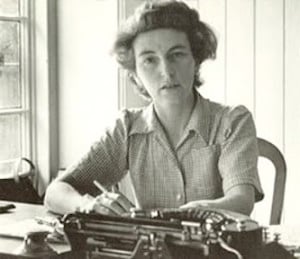
Rumer Godden (1907 – 1998) grew up in colonial India and was educated in England. This selection of quotes by Rumer Godden illustrate her continual quest for meaning.
As a young woman, Godden settled in Calcutta to teach dance and write.
Her first novel, Black Narcissus, was published in 1939 to immediate acclaim and became a bestseller. This was followed by a succession of novels drawing upon her life in exotic settings. Read More→
By Nava Atlas | On July 29, 2017 | Updated November 14, 2022 | Comments (0)
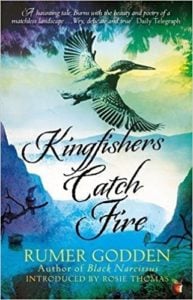
From the 1953 Viking Press edition of Kingfishers Catch Fire by Rumer Godden: returning to the scene of her best love books, Rumer Godden now brings us another moving story of India.
Kingfishers Catch Fire has all the color, tenderness, and humor, and the feeling for the local inhabitants’ ways, that marked The River as a book and a film.
It also has the kind of the emotion that Miss Godden’s peculiar gift — the emotion of an individual threatened by mysterious alien forces. Read More→
By Nava Atlas | On July 27, 2017 | Updated November 14, 2022 | Comments (0)
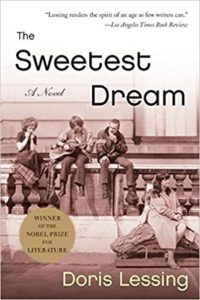
From the 1991 HarperPerennial edition of The Sweetest Dream by Doris Lessing: This story of a family, spanning most of the twentieth century, has its fulcrum in the sixties, that embattled decade about which argument becomes louder each day.
The use of that time, bursting the old bonds and demanding freedoms, were seen by some of their elders in a manner not at all as they saw themselves, as romantic idealists, but as deeply damaged people.
Old Julia, the clan’s matriarch, knows why. “You can’t have two dreadful wars and then say ‘that’s it, and now everything will go back to normal.’ They’re screwed up, our children, they are children of war.” Read More→
By Taylor Jasmine | On July 25, 2017 | Updated January 17, 2026 | Comments (0)
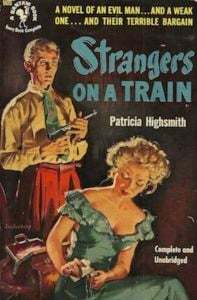
Strangers on a Train by Patricia Highsmith (1950) was her first novel, and has remained, along with the Ripley series, among her best-known works. It has been adapted for film and television several times, the most iconic being the 1951 adaptation directed by Alfred Hitchcock.
This psychological thriller involves two men who meet, not surprisingly, on a train. One of them proposes that they “swap murders.”
This twisty novel marked the start of Patricia Highsmith’s prolific career as a crime novelist, the genre that made her reputation (with one exception being The Price of Salt, the lesbian love story published under the pseudonym Claire Morgan in 1952). Read More→
By Nava Atlas | On July 25, 2017 | Updated February 12, 2026 | Comments (0)
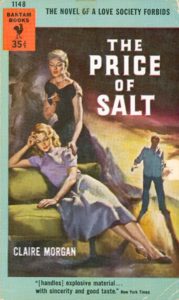
When The Price of Salt by Patricia Highsmith was published in 1952, it was a rarity in lesbian literature. Lesbian pulp novels were quite a thing around that time, but in order to pass censors, one of the two protagonists had to either come to a bad end or realize that she was straight, after all.
The Price of Salt, however, was a rare lesbian novel with a relatively happy ending (the couple stays together, but Carol must relinquish custody of her child). Read More→