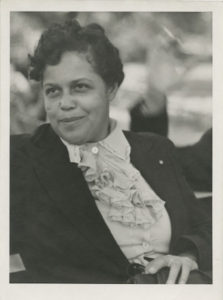
Gwendolyn B. Bennett (July 8, 1902 – May 30, 1981) was an American poet, writer, artist, columnist, and arts administrator associated with the Harlem Renaissance. Born in Giddings, Texas, she spent her early childhood on a Paiute Indian Reservation in Nevada, where her parents were teachers.
When she was four, her parents moved to Washington, D.C. so that her father could study law at Howard University, while her mother trained as a beautician.
But all wasn’t well with this upwardly mobile couple; when Gwendolyn was seven, her parents divorced. After her mother gained custody, she was kidnapped by her father, who, along with his new wife, moved her around the northeast for several years.
Read More→
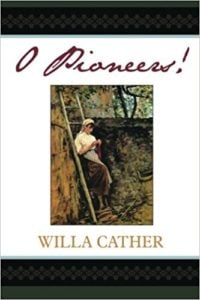
The 1913 novel O Pioneers! by Willa Cather is written in the spare yet lyrical prose that came to define her style. One of her earliest novels, and one of the most successful on many levels, it explores themes of fate, love, perseverance, family ties, and community.
The novel’s central character, Alexandra Bergson, is the daughter of Swedish immigrants who pioneer the harsh, unforgiving land of the Nebraska prairie.
In an unusual move, Alexandra’s father tasks her, in his dying wish, with taking the lead on managing the family farm. He tells his sons to honor the decisions of their sister. Of course, a novel doesn’t move along without conflict, but Cather delivers it without the sentimentality and overwrought prose characteristic of novels of that era. Read More→
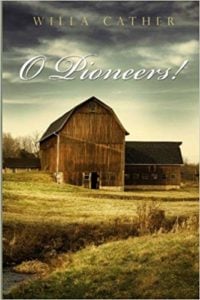
O Pioneers! by Willa Cather is one of this esteemed American author’s most iconic novels. One of her earliest full-length works, it was published in 1913.
Written in the kind of spare, lyric prose that would come to define her work, the story explores themes of destiny, chance, love, and perseverance.
It explores the ideas of community, family ties, and the dignity of work. Never sentimental or verbose, Cather delivers her plots with gentle forward motion. Her characters may be flawed, but they’re rarely weak. Read More→
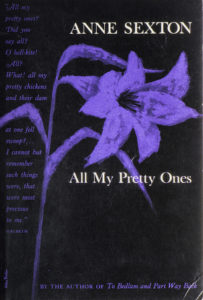
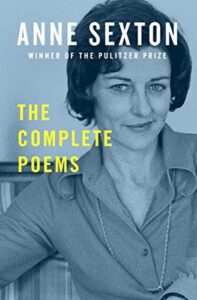
Anne Sexton (1928 – 1974) was an American poet considered one of the pioneers of modern confessional poetry, though her artistry reached far beyond that genre. Her first collection, To Bedlam and Part Way Back, was published in 1960 to critical and public praise. It was followed by All My Pretty Ones in 1962.
During this period, Anne was receiving not only critical praise but prestigious awards as well. These included the Frost Fellowship, the Shelley Memorial Prize, a Ford Foundation grant, and many others.
Sexton struggled mightily with mental illness during this fertile time in her creative life. By the time she won the Pulitzer Prize for poetry in 1966, she had been hospitalized and attempted suicide several times. Read More→
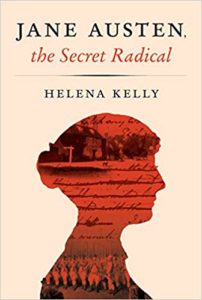
In Jane Austen, the Secret Radical, author Helena Kelly looks past the grand houses, drawing room dramas, and witty dialogue that have long been the hallmarks of Jane Austen‘s work to bring to light the serious, ambitious, subversive concerns of this beloved writer.
Kelly illuminates the radical views — on such subjects as slavery, poverty, feminism, marriage, and the church — that Austen deftly and carefully explored in her six novels, at a time when open criticism was considered treason.
Kelly shows us that Austen was fully aware of what was going on in the world during the turbulent times she lived in, and sure of what she thought of it. Read More→
Anne Sexton (November 9, 1928 – October 4, 1974), born Anne Gray Harvey, was an American poet. Though she was considered one of the pioneers of modern confessional poetry, her artistry reached far beyond that genre.
Born in Newton, MA, she grew up in a middle-class home in Weston, MA. Her dysfunctional family life set the stage for her lifelong struggles with mental illness.
Her father was an alcoholic, and her mother, a housewife with frustrated literary aspirations. Anne’s later writings reflect an upbringing of abuse and hostility. Read More→
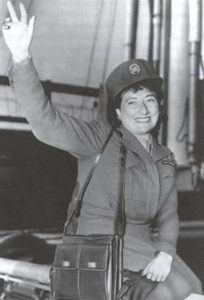
Ruth Gruber (September 30, 1911 – November 17, 2016) led a life that was so incredible, it could have been a movie. And in fact, just some of the many courageous episodes in her 105-year life were made into films — one in the form of a dramatized biopic, the other a documentary.
Ruth’s multi-faceted career as a journalist and documentary photographer isn’t as well known as it should be, and like other women who were ahead of their time, she deserves to be revisited and celebrated.
The daughter of Russian-Jewish immigrants, Ruth was born and raised in Brooklyn, New York. She was a brilliant student with a passion for Jewish culture, and always loved to write. Read More→
Why should you consider attending women’s writing conferences and retreats (including, of course, women-identified writers)? Pretty much the same reason a lot of us enjoy women-only reading groups.
Dudes just bring a different energy to the room, and sometimes we just need to be in a setting where our voices are sure to be heard, where we feel supported and valued.
There are lots of benefits to attending writer’s conferences, not the least of which is networking. You’ll meet writers in all stages of their careers; learn to pitch yourself and your work efficiently, hone your skills, get constructive critiques, and more. It’s a rare attendee that doesn’t leave a conference feeling energized and inspired. Read More→