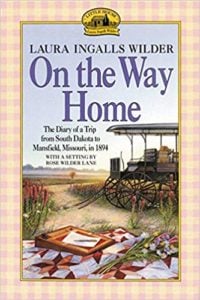
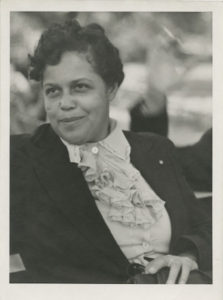
Laura Ingalls Wilder (1867 – 1957) has a permanent place in the American imagination for her Little House series of books for young readers. Born in a log cabin on the edge of an area called “Big Woods” in Pepin, Wisconsin, her life was the inspiration for her semi-autobiographical novels.
Laura’s publishing career began at the ripe age of sixty-five and consisted of the 8-volume set of Little House books (9, if you count Farmer Boy) and a small number of autobiographical volumes. The first installment, Little House in the Big Woods, was published in 1931; the best known of the series, Little House on the Prairie, was published soon after. Read More→
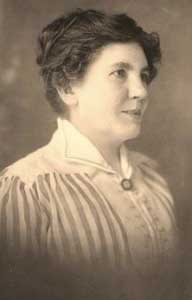
Laura Ingalls Wilder (February 7, 1867 – February 10, 1957) gained renown for her autobiographical writings reflecting her life as an American pioneer. Her Little House series of books have been beloved by generations of young readers.
Born in a log cabin on the edge of an area called “Big Woods” in Pepin, Wisconsin, her life was the inspiration for her novels and richly informed her memoirs.
The Ingalls family traveled by covered wagon through Kansas and Minnesota with all that they owned, until finally settling in De Smet, Dakota Territory. The family loved the open spaces of the prairie, where they farmed and raised animals. Read More→
“The Two Offers” by Frances Watkins Harper (1825 – 1922; also known as Frances E.W. Harper and Frances Ellen Watkins Harper) is believed to be the first published short story by an African American writer.
It first appeared in the June and July 1859 issues of the Anglo-African Magazine, a publication based in New York that featured the writings of black authors.
Written in the sentimental, somewhat stilted style of the era, the story is an example of “reform literature,” steeped in the values of Christianity, morality, and domesticity. It’s set in an era in which women of any class or race were basically the property of their fathers and husbands, were they not owned in the bonds of slavery. Read More→
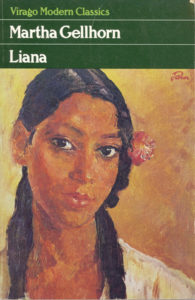
Martha Gellhorn was married to Ernest Hemingway when Liana, her fifth novel, was published in 1944. She had already made quite a name for herself as a war correspondent by that point and it rankled her to be described as “Mrs. Ernest Hemingway” in reviews of her books.
Though her fiction varied in its quality and critical acclaim, her book of linked stories titled The Trouble I’ve Seen (1936), based on her actual observations as a journalist during the Depression, earned her a great deal of respect.
Her brief marriage to Hemingway was already in jeopardy the year that Liana appeared. In her capacity as a war correspondent, Gellhorn wanted to cover the action, wherever it happened to be. Read More→
Given the circumstances of the 19th century, both before and after emancipation, Black women writers who took up the pen to write full books or other substantial bodies of work were rare indeed.
It’s worth noting that before the Civil War, it was illegal to teach African Americans to read in many states, not just in the South. So to write a novel or autobiography was a radical act for a Black woman of that era, whether she had been enslaved or free born.
Not surprisingly, many of the books, essays, and poetry produced by Black women writers dealt with slavery. Most of the autobiographies and thinly veiled novels discussed here were in the genre of slave narrative. Read More→
Alice Dunbar-Nelson (1875 – 1935; also known as Alice Moore Dunbar-Nelson) was a multitalented writer, poet, journalist, and educator. Following is a selection of her later poems, post-dating her early collection Violets and Other Tales (1895).
In her writings, Dunbar-Nelson advocated for women, African Americans, and those of mixed heritage, as she was. Perhaps even more than for her well-regarded poetry, Dunbar-Nelson was known for her short stories and searingly honest essays, in which she expressed the challenges of growing up mixed race in Louisiana. Read More→
Whether you call it a Boekenstad, Village du Livres, Bokby, or Bókabæirnir, from Canada to Korea, and from Iceland to Australia, a movement to create book towns is growing. By visiting these towns you’re not only helping to save the printed book; you’re helping to keep communities alive.
In hamlets, villages and towns around the world, like-minded booksellers, calligraphers, bookbinders, curators, publishers, and architects are coming together to ensure a future for the printed book, defying the e-book onslaught, and providing a new future for fading communities.
Excerpted and adapted from Book Towns: Forty-Five Paradises of the Printed Word by Alex Johnson. It’s the first book to bring all of these towns together, offering a unique history of each one, and encouraging readers to seek them out. Frances Lincoln Books/Quarto Publishing, plc, ©2018, reprinted by permission. Read More→
Gwendolyn B. Bennett (1902 – 1981) was a multitalented American poet, artist, columnist, educator, and arts administrator associated with the Harlem Renaissance movement of the 1920s. Following is a selection of poems by Gwendolyn B. Bennett, a true Renaissance woman.
Equally dedicated to visual and literary arts, her first published poem, “Heritage,” was published in the NAACP’s journal, The Crisis, in 1923.
Bennett’s most productive period as a poet was from 1926 and 1927, producing poems that explored themes of racial pride and reflected African motifs. “Fantasy” spoke to the aspirations of African-American women. “Dark Girl” bestowed the nobility African queens upon Black females. Some poems were splendidly romantic, others a celebration of self.
Read More→