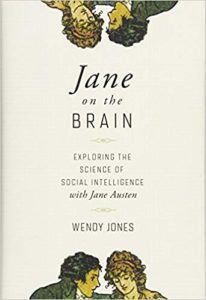
Jane on the Brain: Exploring the Science of Social Intelligence with Jane Austen by Wendy Jones is an exploration of how Jane Austen was able to capture human psychology via relatable characters in compelling stories.
Following is an excerpt from the book introducing the role of empathy in Austen’s novels, but first, a few words from the publisher:
“Why is Jane Austen so phenomenally popular? Why do we read Pride and Prejudice again and again? Why do we delight in Emma’s mischievous schemes? Why do we care about the suffering of Anne Elliot in Persuasion? Read More→
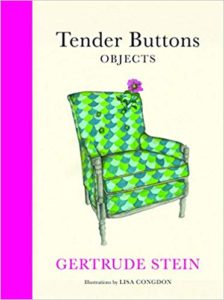
One of Gertrude Stein’s earliest published works, Tender Buttons (1914) is this delightfully perplexing author’s attempt to “create a relationship between the word and the things seen.”
Especially in the first years since its publication, critics have been divided between praising Tender Buttons as a masterwork of of experimental cubist literature, or trashing it as pure nonsense.
Contemporary interpretations tend to find it praiseworthy. Whatever camp you find yourself in, it’s hard to dismiss the fact that this slim volume of prose poetry is entertaining, if more than occasionally head-scratching. You can read two original reviews from the time of its 1914 publication here. Read More→
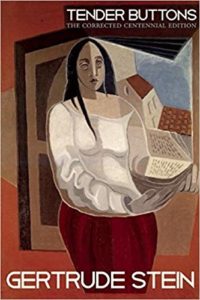
Tender Buttons by Gertrude Stein (1874 – 1946) is this gloriously perplexing author’s absurdist collection of prose-poems — if you want to call them that. Critics have long been divided as to whether this 1914 book is a brilliant compilation of cubist literature or Stein’s intentional prank on the reading public.
One of Stein’s earliest published works, Tender Buttons is an experiment in language, her attempt to “create a word relationship between the word and the things seen.” Since Stein was so much the self-proclaimed genius, it’s doubtful she would have created this slim volume purely as a joke. Read More→
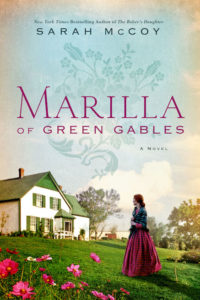
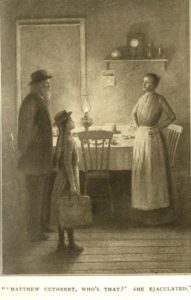
Marilla of Green Gables, a novel by Sarah McCoy (2018), is a historical journey that imagines the life of Marilla Cuthbert long before she and her brother Matthew adopt Anne Shirley, better known to readers as Anne of Green Gables.
In the publisher’s words: “For anyone who loves the original Anne of Green Gables by L.M. Montgomery and longs for more stories from Prince Edward Island, Marilla of Green Gables, a new novel by New York Times Bestselling author Sarah McCoy (William Morrow, October 23, 2018) will be an incredibly rewarding rewarding return to the beloved stories. Read More→
Sarah McCoy, author of Marilla of Green Gables (2018) explores the formidable yet loving Marilla Cuthbert (who raises the irrepressible orphan Anne Shirley, better known as Anne of Green Gables) in this meditation on family, community, and character:
It’s clear from the first chapter of Lucy Maud Montgomery’s acclaimed Anne of Green Gables who is in charge: Marilla Cuthbert. My mother first read this novel to me, and I didn’t bat an eyelash at the clear delineation of matriarchal power. Read More→
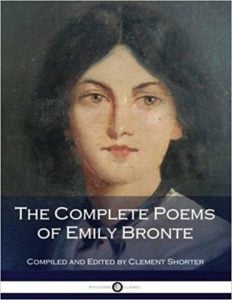
On a visit to The Morgan Library and Museum in New York City, I spotted a tiny autograph manuscript of the poem “The Night of Storms has Passed” by Emily Brontë, dated June 10, 1837.
Written shortly before her nineteenth birthday, its tiny, barely legible script on a card perhaps 3 by 4 inches wasn’t easy to read.
Remaining unpublished in her lifetime, it has since been included in collected poems by Emily, perhaps the most inscrutable of the Brontë sisters. The text accompanying the poem read as follows: Read More→
Here are more than a dozen women poets of the Harlem Renaissance, some of whom have been somewhat or largely forgotten, but whose words and lives deserve to be rediscovered and read.
The Harlem Renaissance of the 1920s was a fertile decade for Black creators of all kinds — writers, musicians, playwrights, and artists. Like many creative movements, it was male-dominated, but many women rose to prominence. Read More→