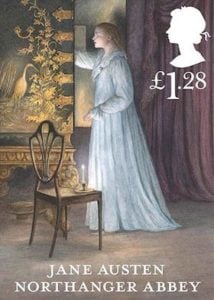
Northanger Abbey was actually the first novel that Jane Austen completed with the hopes of publication, in 1803.The following quotes from Northanger Abbey reflect the fun Jane Austen had with her characters, though as always, it’s not just frivolous. She manages to imbue insightful commentary into every delightful line of text and dialog.
This early novel was first titled Susan. Jane’s family sold the copyright to a London publisher for a pittance. The publisher held on to it for years without printing it. It was tied up until 1816 when Jane’s brother Henry managed to buy it back.
Jane spent some time revising the original, renaming her heroine Catherine, but by the time it was published in 1817, she had died. That year, another of her novels, Persuasion, was published as well. Northanger Abbey is considered a coming-of-age novel in which Catherine Morland, the young and rather naïve heroine, learns the ways of the world. Read More→
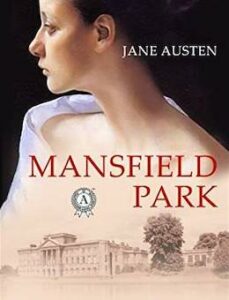
Mansfield Park by Jane Austen (1814) is the third published novel by the esteemed British author. Here we’ll explore a selection of quotes from Mansfield Park, her third published novel.
Fanny Price, the novel’s main character, is sent by her impoverished family to be raised in the household of a wealthy aunt and uncle. The narrative follows her into adulthood and comments on class, family ties, marriage, the status of women, and even British colonialism.
The novel went through two editions before Austen’s death in 1817, but didn’t receive any public reviews until 1821. Critical reception for this novel, from that time forward, has been the most mixed among Austen’s works, and it’s considered her most controversial. Read More→
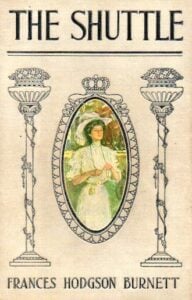
When The Shuttle by Frances Hodgson Burnett was published in 1907, she was already the successful author of Little Lord Fauntleroy, The Making of a Marchioness, A Little Princess, and some two dozen other books for children and adults.
In the course of her career, she produced more than forty novels. Of these, few but the children’s classics just mentioned, plus A Secret Garden, published in 1911, are still widely read.
In 2007 Persephone books republished The Shuttle, an entertaining story of American heiresses who marry English aristocrats. From the Persephone catalog: Read More→
Jane Austen (1775 – 1817), the beloved British author, was deeply invested in her craft as a writer. Following is a selection of memorable Jane Austen quotes from her six published books and surviving letters.
Jane Austen was ambitious to see her work in print, regardless of whether or not it would gain her fame or fortune — but getting it published was important to her, contrary to the myth about her extreme modesty.
Her talent was recognized early on and valued by her family, who supported her endeavors and made sure that her work would find a readership. Read More→
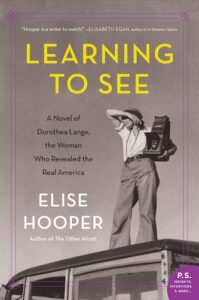
Dorothea Lange‘s influential photography has been collected and displayed in museums and institutions everywhere, yet few know the story of how Dorothea Nutzhorn became Dorothea Lange, social justice activist and pioneering photojournalist. In Elise Hooper’s much anticipated second novel, Learning to See, Dorothea Lange’s legacy is reimagined in a riveting new light.
In 1918, a fearless 22-year-old arrives in San Francisco with nothing but a friend, her camera, and determination to make her own way as an independent woman. In no time, Dorothea goes from camera shop assistant to celebrated owner of the city’s most prestigious and stylish portrait studio. Read More→
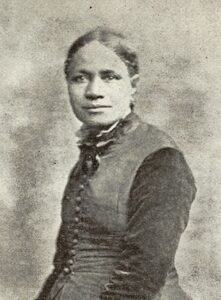
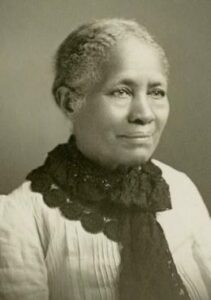
Frances Ellen Watkins ( 1825 – 1911), also known as Frances Watkins Harper or Frances E.W. Harper, built her reputation on her various talents, including fiction, essays, poetry, and public speaking. Following, we’ll explore the activist wisdom in portions of the speeches of Frances Watkins Harper.
One of America’s first and most successful African-American authors, she was also an active abolitionist, feminist, and conductor on the Underground Railroad.
She launched her writing career in the late 1830s by publishing essays in antislavery journals. At age twenty, her first collection of poems, Autumn Leaves, was published in 1845. She was the first black author to have a short story published (“The Two Offers”) and one of the first to publish a novel (Iola Leroy, 1892). Read More→
Frances Ellen Watkins Harper (September 24, 1825 – February 22, 1911), also known as Frances Watkins Harper and Frances E.W. Harper, combined her talents as a writer, poet, and public speaker with a deep commitment to abolition and social reform.
She sustained a long and prolific publishing career at a time when it was rare for women, particularly women of color, to have a voice. She used that voice in powerful ways, and as a result, she has been referred to as “the mother of African American journalism.”
Poems on Miscellaneous Subjects (1854), her first collection, was possibly her most successful, having gone through many editions. “The Two Offers” was the first published short story by a BlackAmerican woman. And Iola Leroy (1892) was one of the first novels by a Black woman to be published in the U.S.
Read More→
Frances Watkins Harper (1825 – 1911, also known as Frances E.W. Harper or Frances Ellen Watkins Harper) was an ardent suffragist, social reformer, and abolitionist in addition to her renown as a poet and author. Here, presenting a taste of her deeply thoughtful and moving work, is a selection of poems by Frances Watkins Harper.
She wrote prolifically from the time she published her first collection of poetry in 1845, at the age of twenty. A freeborn African-American from Baltimore, Maryland, she dedicated her life to social causes, including abolition, women’s suffrage, and the quest for equality.
The dynamic Frances Harper became involved in anti-slavery societies in the early 1850s and was a conductor on the Underground Railroad. Read More→