Here is a tribute to the women who won the Nobel Prize in Literature in chronological order, starting from the most recent. Note, we need to update this list to include recent recipients: Annie Emaux (2022), Louise Glück (2020), and Olga Nawoja Tokarczuk-Fingas (2018).
The Nobel Prize in Literature has arguably become the most prestigious literary prize, awarded annually since 1901. It is given to an author from any country who, in the words of Swedish industrialist Alfred Nobel, created “in the field of literature the most outstanding work in an ideal direction.”
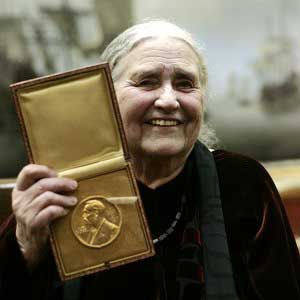
The Nobel Prize has been awarded to some 894 men (as of 2023), and around 60 women in all fields combined since its inception in 1895. Seventeen of the women achieved this honor in literature. Above right, Doris Lessing receiving her award in 2007. Read More→
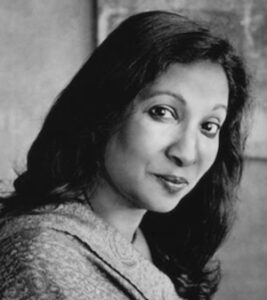
There are times when you take more interest in a poet or an author after you read her obituary. This is what happened with Meena Alexander, whom I had read in passing but devoured in great detail, especially after I heard that she had succumbed to cancer on November 21, 2018 in New York.
Meena could be termed an international poet as she was of Indian origins, born in Allahabad in 1951 and raised in Kerala, India before the family moved to Sudan.
Meena finally made the U.S. and New York City her home, where she was a professor of English and Women’s Studies at City University of New York and Hunter College. Read More→
Do you enjoy literary pilgrimages (actual or virtual)? Be prepared for a visit to Harper Lee’s Monroeville, Alabama. This small Southern town (population around 6,000) was the inspiration for Maycomb, where To Kill a Mockingbird is set.
To Kill a Mockingbird (1960) by Harper Lee continues to be one of the most frequently taught novels in American high schools and is beloved by readers of all persuasions. The Pulitzer Prize-winning book has sold more than forty million copies and has been translated into some forty languages.
After a gap of fifty-six years, the 2016 publication of Go Set a Watchman set off a fervor of renewed interest in the famously private (though not, as myth would have it, reclusive) author. Read More→
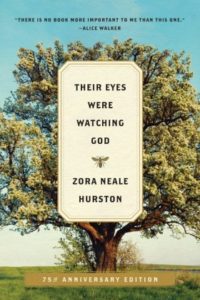
Most often, book clubs (aka book groups) choose recent publications for discussion, many straight off the current bestseller list. And this is understandable, given all the great books coming out. It’s hard enough to keep up with all the new publications, but can we make the case for discussions of classic literature by women authors?
Some suggestions in this post are by authors of the past that are still well known, while others have fallen under the literary radar. Either way, these novels make for fantastic reading and stimulating discussion. Books remain classics for a reason, after all.
With universal themes of what it means to be a woman — and what it means to be human — these great stories are timeless. Read More→
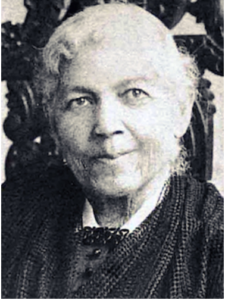
Harriet Ann Jacobs (February 11, 1813 – March 7, 1897) chronicled her life under enslavement in North Carolina and the constant sexual harassment by a prominent doctor.
She is alternately referred to as Harriet A. Jacobs (or simply Harriet Jacobs) and is today best known as the author of Incidents in the Life of a Slave Girl, an autobiographical narrative published privately in 1861. Read More→
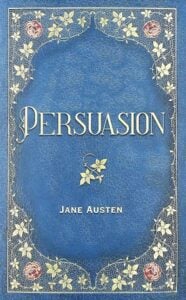
Persuasion (1817) is the last novel that beloved British author Jane Austen completed; it was published six months after her death. Following is a sampling of quotes from Persuasion, a touching and engaging novel.
Persuasion may well be Austen’s most romantic story, and yet, as with her other works, it’s far from frivolous, exploring themes of lost love, missed opportunity, heartbreak, and becoming one’s own person.
Anne Elliot is twenty-seven when the story begins (an older heroine than is usual for this time and place). She’s a member of a family who suffers the indignity of having to lower their status as a way to get out of debt. At her age, a woman would have been considered well past the bloom of youth and on the road to spinsterhood.
Read More→
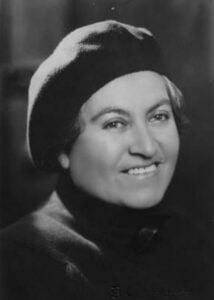
Gabriela Mistral, born Lucila Godoy Alcayaga (April 7, 1889 – January 10, 1957), was a Chilean poet, educator, diplomat, and feminist best known for being the first Latin American to receive the Nobel Prize in Literature.
She was awarded the prize “for her lyric poetry which, inspired by powerful emotions, has made her name a symbol of the idealistic aspirations of the entire Latin American world.”
In the introduction to A Queer Mother for the Nation: The State and Gabriela Mistral (2002), Licia Fiol-Matta encapsulates the writer’s unique persona: Read More→
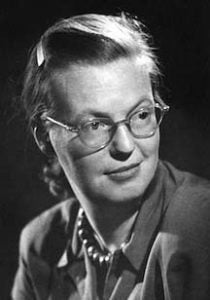
Shirley Jackson (December 14, 1916 – August 8, 1965) was an American author of fiction and nonfiction whose works influenced a generation of writers in the psychological terror genre who came after her.
She was recognized for wryly humorous accounts of family life, and more significantly, sharply told stories and novels of psychological terror. Her stories and novels have disturbed and fascinated readers and critics with their clever unveiling of the dark side of human nature.
While Jackson is arguably best remembered for “The Lottery,” the widely anthologized, controversial 1948 short story that put her on the literary map, she produced an array of notable novels, memoirs, and scores of other short stories as well.
Read More→