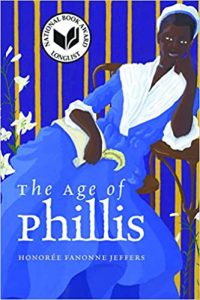
The Age of Phillis by Honorée Fanonne Jeffers illuminates the life and significance of Phillis Wheatley Peters, the enslaved African American whose 1773 book of poetry, Poems on Various Subjects, Religious and Moral, challenged prevailing assumptions about the intellectual and moral abilities of Africans and women.
In The Age of Phillis (Wesleyan University Press, 2020), which won the 2021 NAACP Image Award for “Outstanding Literary Work—Poetry” and was long-listed for the National Book Award, Jeffers portrays the life of the poet both before she was taken from her home in West Africa and throughout her lifetime in the United States, first enslaved and later free.
I became aware of the book by attending a virtual reading and can attest that Jeffers’s reading style is dynamic and worth searching out in audio and video recordings on the internet. Read More→
A poet has the ability to bring to the light our most inexpressible fears and doubts. When the subject is aging – the subject most of us try to avoid – it is the poets we turn to find the comfort and the clarity we need. Grace Paley is one of the poets who can instruct the heart and mind on living with death, as evidenced by this selection of her poems on aging.
For the last ten years of her life, Grace wrote poetry on the complexities of living with death as we grow older. “Nature takes its course,” is how we have been instructed to perceive our passing, but what about our other contradictory emotions and realities. Read More→
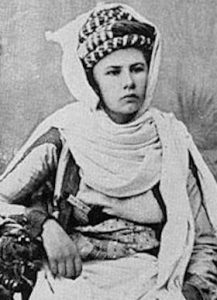
Isabelle Eberhardt (February 17, 1877 – October 21, 1904) was a Swiss-born traveler and writer. From an early age she dreamed of escaping to North Africa, a dream that was nourished by the exotic fantasies of desert life that were popular at the time.
In her early twenties, she left Europe to make Algeria her home. Her exploration of the deserts and cities of the Mahgreb, usually disguised as a man, has become legendary.
She was a prolific writer, but much of her work — including travelogues, diaries, and short stories — was only published after her death at age twenty-seven in a freak accident. Read More→
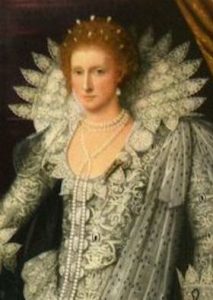
The extraordinary Mary Sidney, Countess of Pembroke (1561 – 1621), was an almost exact contemporary of Shakespeare and has been one of the candidates in various conspiracy theories for the actual author of Shakespeare’s works, in particular his sonnets.
Even though this is nonsense, Mary Sidney, sister of the more famous Philip, was arguably Shakespeare’s – and almost everyone else’s – equal as a poet.
This introduction to Mary Sidney’s life and work is excerpted from Killing the Angel: Early Transgressive British Woman Writers by Francis Booth ©2021, reprinted by permission.
Read More→
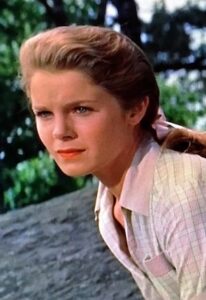
This look at the coming of age of Allison MacKenzie, a central character in Peyton Place, the controversial 1956 novel by Grace Metalious, is excerpted from Girls in Bloom: Coming of Age in the Mid-20th Century Woman’s Novel by Francis Booth, reprinted by permission.
At right, Diane Varsi as Allison MacKenzie in the 1957 film adaptation of Peyton Place.
Peyton Place is set in a small New England town where everyone knows everyone’s business. The story actually takes place in the late 1930s, contrary to popular belief that it’s set in the 1950s. The book’s themes were more than the censors and many critics were prepared to accept. Read More→
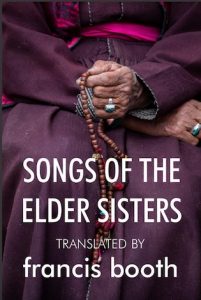
Songs of the Elder Sisters were composed during the Buddha’s lifetime, about 2,500 years ago. These women renounced home life and society, and joined the group of nuns founded by the Buddha. This selection of 14 poems from the Buddhist text known as the Therīgāthā were translated from Pāli by Francis Booth. See more of this translation of Songs of the Elder Sisters on Issuu.
These poignant songs are about loss of beauty, wealth and family, balanced by the greater gains of peace and wisdom through enlightenment in old age. All the songs are ascribed to particular women, whose names we know. They speak as individuals, not as wives, mothers and daughters. Read More→
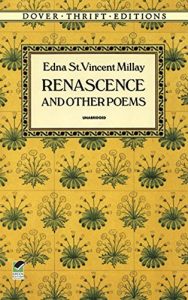
Renascence and Other Poems by Edna St. Vincent Millay (1917) was the first published collection by this eminent American poet. The book’s title reflects Millay’s 1912 poem of the same name, published when she was just nineteen, and still considered one of her finest. Here you’ll find the full text of this work.
From Dover, a recent publisher of this work that’s now in the public domain:
The poems of Edna St. Vincent Millay (1892–1950) have been long admired for the lyric beauty that is especially characteristic of her early works. “Renascence,” the first of her poems to bring her public acclaim, was written when she was nineteen. Now one of the best-known American poems, it is a fervent and moving account of spiritual rebirth. Read More→
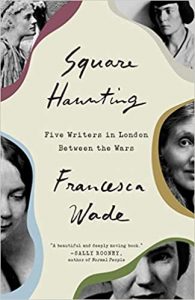
Square Haunting: Five Writers in London Between the Wars by Francesca Wade (2020) sheds new light on fascinating female literary figures of twentieth century and their sojourns in the Bloomsbury district of London the interwar years. First, a brief description from the publisher:
“In the pivotal era between the two world wars, the lives of five remarkable women intertwined at this one address: modernist poet H. D., detective novelist Dorothy L. Sayers, classicist Jane Harrison, economic historian Eileen Power, and author and publisher Virginia Woolf. In an era when women’s freedoms were fast expanding, they each sought a space where they could live, love, and—above all—work independently.
With sparkling insight and a novelistic style, Francesca Wade sheds new light on a group of artists and thinkers whose pioneering work would enrich the possibilities of women’s lives for generations to come.” Read More→