Dear Literary Ladies,
With a full-time job and a thousand other things on my plate, my writing time is catch as catch can. Is it important to have regular writing times, so that writing becomes a habit?
I’m a full-time believer in writing habits, pedestrian as it all may sound. You may be able to do without them if you have genius but most of us only have talent and this is simply something that has to be assisted all the time by physical and mental habits or it dries up and blows away. I see it happen all the time. Read More→
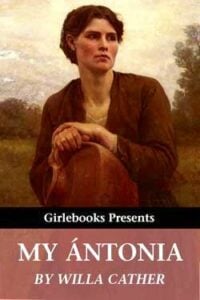
My Ántonia is considered one of the masterpieces of fiction by Willa Cather (1873 –1947). Published in 1918, it’s the last of her “prairie trilogy” of novels, preceded by O Pioneers! and The Song of the Lark.
Set in 19th-century Nebraska, the novel follows the life of Jim Burden, an orphan boy from Virginia, and Ántonia Shimerda, the eldest daughter in an immigrant family from Bohemia (once part of Czechoslovakia).
The first year in the prairie leaves a potent impression on Ántonia and Jim, a theme that’s developed through the narrative. Cather created a book of singular beauty and simplicity, in which the theme of community is united with her talent for creating character development. Read More→
Tales of literary rejection are the war stories of writers. Nearly everyone experiences it, even (or especially) writers who eventually became famous and successful, but that doesn’t make it any more fun.
Rejection, we’ve been told, is part of the path to publication. We’re advised to grow a tough hide and accept that most rejections are nothing personal.
Even so, any kind of rejection can stings—even the bland “not looking at this time.” That’s because it’s difficult to separate the rejection of one’s work from the rejection of one’s self. Read More→
Dear Literary Ladies,
Perhaps because I haven’t learned to trust my own voice, I sometimes find after I’ve written something, that it’s almost an homage to a writer I admire, and not very well done at that. Judging from my writers’ group, I know I’m not alone in this unconscious copying, but will I ever stop?
When you begin to write, you are usually in the throes of admiration for some writer, and whether you will or no, you cannot help copying their style. Often it is not a style that suits you, and so you write badly. But as time goes on you are less influenced by admiration. Read More→
In A Room of One’s Own, Virginia Woolf ponders: “Why did men drink wine and women water? Why was one sex so prosperous and the other so poor? What effect does poverty have on fiction? What conditions are necessary for the creation of works of art?”
Indeed, what are the challenges pertaining to writing and money, especially in the case of women authors? Here, several classic authors illuminate the challenges, in their own words. These questions linger, and raise others—not the least of which is, have women in the arts progressed as much as it seems we should have since the time of Virginia Woolf, or indeed, the time of George Sand or Louisa May Alcott? Read More→
Though Laura Z. Hobson (1900 – 1986) is no longer a well-known name among today’s readers, her blockbuster 1947 novel, Gentleman’s Agreement, and its award-winning film adaptation are both classics.
The storyline tackles “polite” antisemitism in post-World War II New York City and environs. Not as autobiographical as some of her other novels, it drew upon her skills as a keen observer of social issues.
Hobson traveled in professional circles of publishing and advertising in midcentury New York, and as a Jewish woman, she was sensitive to signs of subtle and overt bias. Restrictions against Jews in housing, jobs, schools, and hotels was all too common. Read More→
Dear Literary Ladies,
Sometimes I wonder if I really have what it takes to be a successful writer. The desire is definitely there, but I’m not sure I have the talent. For those of us who don’t feel particularly “gifted,” what hope is there?
I didn’t have any particular gift in my twenties. I didn’t have any exceptional qualities. It was the persistence and the great love of my craft which finally became a discipline, which finally made me a craftsman and a writer.
The only reason I finally was able to say exactly what I felt was because, like a pianist practicing, I wrote every day. There was no more than that. There was no studying of writing, there was no literary discipline, there was only the reading and receiving of experience . . . Read More→
Here are 5 great writing tips from Edna Ferber, timeless pieces of advice for would-be and experienced writers. Edna Ferber (1885-1968) is a name perhaps less known today than some of the others in this group, but she was considered one of the most successful authors of her era—primarily the 1920s through the early 50s.
With their strong female characters, imaginative plots, and colorful locales, most of her novels became not only best sellers but Academy Award-winning movies and Broadway shows. Perhaps her name has been somewhat forgotten, but the sprawling stories she told in Giant, Showboat, Saratoga Trunk, and many others live on.
Read More→