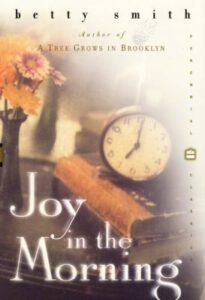
Of Betty Smith’s (1896 – 1972), four novels, it’s for her first, A Tree Grows in Brooklyn (1943) that she’s best remembered. Joy in the Morning, her second novel (1947) has many autobiographical elements, much like her first.
It weaves its narrative around the challenges of New York’s Irish immigrant families, their struggles with poverty, and one young woman’s coming of age.
Though it’s populated with different characters, Joy in the Morning picks up where A Tree Grows in Brooklyn left off. Here, instead of Francie Nolan, we have Annie McGairy as the novel’s heroine. It begins in 1927 in Brooklyn, when Annie meets and falls in love with Carl Brown. Read More→
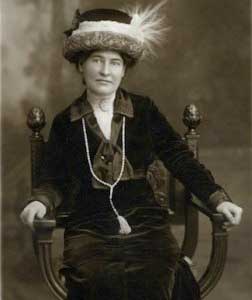
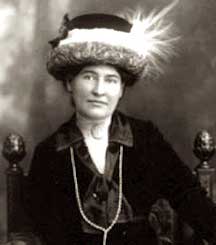
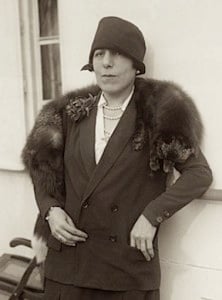
Willa Cather (1873-1947) was the consummate craftswoman of the written word. Her novels are known for their stark beauty and spare language, reflect her philosophy that writing is a craft to be honed and polished.
Her considerable wisdom has been fully preserved, especially in the numerous interviews she granted despite her professed disdain for the press and with fame in general.
Who better than Willa Cather to offer advice on the art of writing fiction? Here’s an essay from 1920, with the kind of wisdom you’d expect to get from a master of the art: Read More→
Dear Literary Ladies,
Which is better—to write purely to please yourself, or to write with an audience in mind?
No, you don’t write for yourself or for others. You write out of a deep inner necessity. If you are a writer, you have to write, just as you have to breathe, or if you’re a singer you have to sing. But you’re not aware of doing it for someone. Read More→
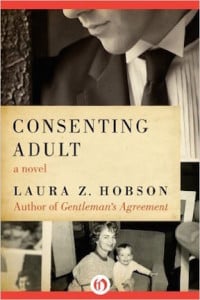
Consenting Adult by Laura Z. Hobson is a 1975 novel that, surprising as it may seem now, was a much ahead-of-its time novel about a teenage boy coming out as gay to his parents.
So much so, that the term “coming out” wasn’t yet a common term; “gay” was on the radar already, but the more common term was simply homosexual.
The story begins in 1960 and is seem mostly through the lens of Tessa Lynn, the mother of seventeen-year-old Jeff. Though still unusual for its time as a sensitive (and, as it turned out, somewhat autobiographical) portrayal of a gay youth coming to terms (and coming of age) with his identity, reviewers found much to admire in the novel. Read More→
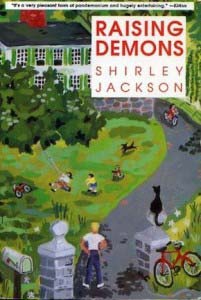
Novelist and short story writer Shirley Jackson (1916-1965) rose to fame with her haunting classic short story The Lottery in 1948. Her output (six novels, four children’s books, and dozens of short stories) continued apace during the years of childrearing.
She also mined family adventures and misadventures for wry, cheery observations in her memoirs, Life Among the Savages and Raising Demons. These family stories may well have inspired the genre that Laura Shapiro called “the literature of domestic chaos” later perfected by Erma Bombeck and Jean Kerr. Echoes of this form reverberate into today’s abundance of “momoirs” and motherhood blogs. Read More→
Dear Literary Ladies,
What is the worst mistake aspiring writers make when first starting to send their work out into the world? There’s often either no feedback or mixed messages, so what’s the most important lesson to keep in mind?
When I left the University of Nebraska after graduating and went to New York City, I wanted to write after the best style of Henry James —the foremost mind that ever applied itself to literature in America. I was dazzled. I was trying to work in a sophisticated medium and write about highly developed people whom I knew only superficially. Read More→
Failure is no picnic, nor the fear of it, but the prospect of success can be just as scary. Actually, in some ways success can be scarier. It shakes up the status quo; failure is more likely to maintain it— you can continue to dance with the devil you know.
Like Edna Ferber, it’s possible to view success and failure as parts of an intertwined process rather than as opposites. If you fail occasionally, it means you’re stretching beyond your comfort zone. Your view of success won’t always match with the world’s.
Read More→
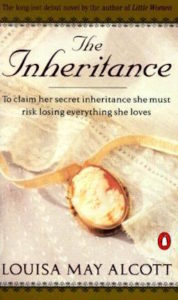
From the 1997 Dutton Books edition of The Inheritance by Louisa May Alcott: Here at last is the book “Jo wrote.” Generations of fans have long to plumb that first romance, hinted at so captivatingly on the pages of Little Women, Alcott’s semi-autobiographical classic.
After nearly 150 years spent among archived family documents, Louisa May Alcott’s debut novel, written when she was only seventeen or so, finally reached its eager public.
Set in an English country manor, the story follows the turbulent fortunes of Edith Adelon, an impoverished Italian orphan whose loyalty and beauty win her the patronage of wealthy friends until a jealous rival contrives to rob her of her position. Read More→