My Brilliant Career (1901) was Miles Franklin‘s first novel. Stella Maria Sarah Miles Franklin (1879 – 1954) went on to become one of the most prominent Australian authors of her era.
Franklin wrote this novel while still in her teens, and it was published in her twenty-first year.
It’s the story of tomboyish Sybilla Melvyn, a high-strung, imaginative girl from the Australian countryside. When her parents fall on hard times, they send her to live with her grandmother in another part of the country. Read More→
Beatrix Potter (July 28, 1866 – December 22, 1943) was a British author and illustrator of beloved children’s books populated by animals. Some of the best known are Peter Rabbit, Squirrel Nutkin, and Jemima Puddleduck.
Her inspiration came from the natural world that surrounded her as a child, from which sprang an imagination that delights young readers to this day.
Beatrix was the daughter of conservative upper class parents, raised in a fine South Kensington home. As was typical for girls of her class, was educated at home by governesses. One of her only companions was her brother, Bertram, who was six years younger than she. Read More→
The following is an excerpt from Without the Veil Between: Anne Brontë: A Fine and Subtle Spirit — a novel by DM Denton:
When I set out, well over two years ago, to write a fiction about Anne Brontë, youngest sister of Charlotte and Emily, I doubted I would find enough material to produce something longer than a novella. Before the first part was finished, I was convinced there was more than enough for a novel.
My objective didn’t change as pages filled and multiplied. I wanted to present Anne as a vital person and writer in her own right, as crucial to the Brontë story and literary legacy as her more famous and — in her brother Branwell’s case — infamous siblings were. Read More→
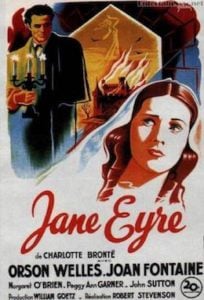
How can Charlotte Brontë’s masterwork be crammed into a time frame of just over an hour and a half? This feat of compression was accomplished by Hollywood for the 1943 film Jane Eyre.
The film was released at the end of 1943 in Great Britain, and had its American premier in February, 1944.
Nearly a quarter of the film covers young Jane’s torturous experience at the Lowood School, based on the actual place that Charlotte and her sisters attended in Yorkshire. The experience proved fatal for one of the Brontë sisters, Maria, who became gravely ill and died. Read More→
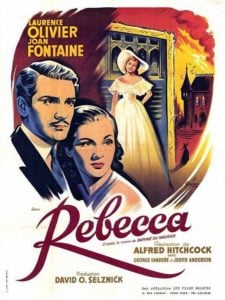
The 1940 film version of Rebecca, based on Daphne du Maurier’s 1938 novel of the same name, is a psychological thriller with a nod to the literary gothic tradition. The black-and-white film, which captured the moody, mysterious feel of the book, was the first American film by director Alfred Hitchcock.
Joan Fontaine starred in the role of the naïve young woman who marries the brooding widower Maxim de Winter, portrayed by Laurence Olivier.
Rebecca, the deceased first wife of Maxim de Winter, is never seen in the film. Yet she casts a powerful shadow over the inhabitants of Manderlay castle. The suspense builds until we learn just why she continues to have such a grip on the living. Read More→
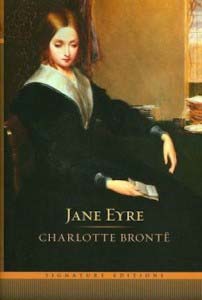
Jane Eyre is considered a classic of English literature and the masterwork of Charlotte Brontë. The selected quotes from Jane Eyre that follow speak to the author’s sensibilities and strong opinions about the lot of women in an unforgiving world.
Jane Eyre was published in October, 1847 under Charlotte’s pen name, Currer Bell. The novel was unusual for its time, as an exploration of the inner world of a female narrator.
The story touches on several themes — Jane’s desire for a sense of belonging after having grown up orphaned; romantic love (in her case for the inscrutable Mr. Rochester, who employed her as a governess for his ward); and the quest for independence and personal identity. Read More→
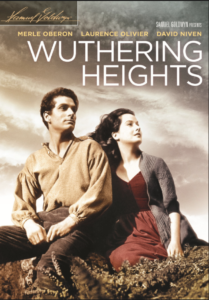
The 1939 film adaptation of Wuthering Heights, based on the classic novel by Emily Brontë, is considered an American movie classic.
Produced by Samuel Goldwyn and directed by William Wyler, the screenplay took quite a few liberties with the original stories to streamline it into a film whose run time is less than two hours.
It covers barely half of the novel’s 34 chapters, cutting out the second generation of characters. Despite the liberties taken with the story, the film retained the dark, brooding mood of the book. It was generally praised by critics, particularly for the performances of Laurence Olivier as Heathcliff and Merle Oberon as Cathy.
Read More→
The heart of any compelling story or novel is its characters. Without memorable characters, a story will fall flat and the reader won’t care. Here we’ll explore how three classic authors approached the question of developing characters in fiction, followed by some contemporary resources.
Characters don’t need to be good or even sympathetic, but they do need to be driven by their beliefs and motivations to create a strong narrative arc, and to create and resolve conflict. Read More→