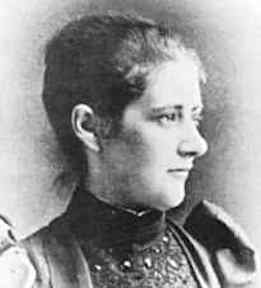
Twenty-something Beatrix Potter (1866 – 1943) was conflicted. She had two consuming interests at the time: art and the study of fungi.
With the exception of letter writing and a journal which she started in 1881—in elaborate code, by the way—becoming a woman of letters was nowhere in sight. What happened to set and redirect the course of her life’s work?
Helen Beatrix Potter was born to wealth, so she didn’t need to earn a living. Her ambitions were more personal, bubbling up from some inner pool. Born in London to a posh South Kensington address, she and her younger brother, Bertram, were raised in the usual way for children of that social class—by a series of minders starting with nurses, then nannies, and finally governesses. Read More→
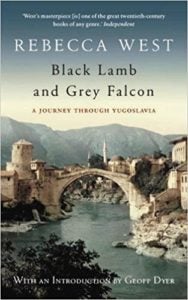
Black Lamb and Grey Falcon: A Journey Through Yugoslavia by English author Dame Rebecca West (1892 – 1983) was published in 1941 as a two-volume set of more than 1,100 pages and half a million words.
Published both in the United Kingdom and the US., the book presents an exhaustive history of the land and people of the Balkans. Publication coincided with the Nazi invasion of Yugoslavia, and West’s intention was to “show the past side by side with the present it created.”
West researched the book during a six-week journey she made there in 1937 with her then-husband, traveling over much of the terrain of the old borders, including Croatia, Bosnia, Herzegovina, Serbia, and more. Read More→
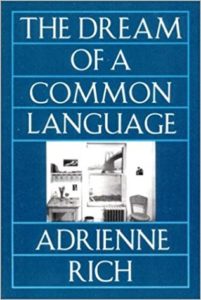
The Dream of a Common Language: Poems 1974 – 1977 (1978) appeared early on in Adrienne Rich’s (1929 – 2012) long career and solidified her position as a leader who articulated the central ideas of the second wave U.S. feminist movement.
These poems, about and for women, envision an alternative to a patriarchal system in which men control the avenues of power and the definitions of female existence. In this analysis, we’ll discuss how this collection of poems continued to establish the primary concerns of Rich’s life’s work. These included the promotion of: Read More→
I frequently hear busy parents bemoan a lack of time, patience, or both, to read for pleasure. Others wonder how to inspire their children to develop a greater love for books. Here we’ll explore four ways to combine family time with reading time, including family reading night, reading at the table, family book clubs, and reading outdoors.
Any of these will make family reading time a ritual to look forward to, equally pleasurable for parents and kids. Reading aloud with or to your kids is a whole topic unto itself, which we’ll explore in Reading Aloud to Children: Creating Lifelong Book Lovers. Read More→
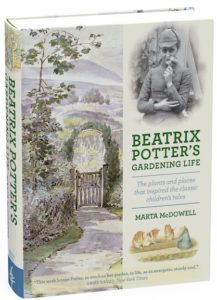
From the 2013 Timber Press edition of Beatrix Potter’s Gardening Life by Marta McDowell: If you’re one of the millions of readers who grew up on Beatrix Potter’s tales, then you know that her illustrations are filled with carefully observed flowers and gardens.
Yet this aspect of her life — one of the richest and most enduring sources of inspiration for her work — has received little attention until now.
In this engagingly written and delightfully illustrated book, Marta McDowell takes you on a personal journey, tracing the development and eventual blossoming of Beatrix Potter’s life as a gardener, from her childhood interest in plants, through her development as an artist to her final years as an estate farmer and naturalist. Read More→
The Harlem Renaissance movement in 1920s New York City ushered in an era of immense cultural and creative achievement. Highlight here are fourteen Black women writers of the Harlem Renaissance movement.
Black women in the creative arts who had long faced the dual struggle of race and gender found a more welcoming oasis for their talents than ever before in this creative movement.
A substantial number of Black women made a name for themselves as writers, playwrights, poets, editors, artists, and journalists. Using their talent to create and perform, they also worked as educators, editors, librarians, musicians, and more. Read More→
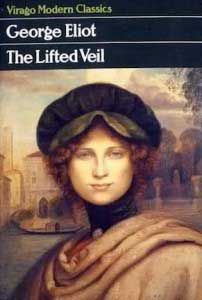
“I long for life, and there is no help. I thirsted for the unknown; the thirst is gone. O God, let me stay with the known, and be weary of it: I am content.” The Lifted Veil by George Eliot is an 1859 novella that departs sharply from the usual realism of the esteemed British author’s fiction. She interrupted her work on The Mill on the Floss to work on this novella.
The Lifted Veil first appeared in Blackwood Magazine in 1859, the same year that her highly regarded novel Adam Bede was published.
It wasn’t published in book format until 1878 as part of a single volume with Silas Marner and Brother Jacob. The Lifted Veil wasn’t published as a stand-alone volume until 1924, more than forty years after the author’s death. Read More→
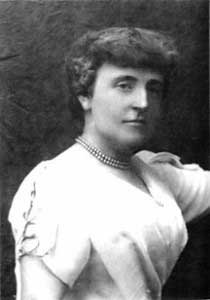
Frances Hodgson Burnett (November 24, 1849 – October 29, 1924) was born in Cheetham, England. She emigrated to the U.S. with her mother and siblings when she was in her teens, and started publishing stories in magazines to help support her family.
Burnett is best remembered as the author of The Secret Garden, A Little Princess, and Little Lord Fauntleroy, though her prolific output went far beyond these now-classic works.
Victorian literature often had a rags-to-riches theme, or vice versa. Frances Hodgson Burnett’s own life reflected that theme. When she was born in England in 1840, she was one of five children in a household headed by a prosperous tradesman. He died when she was three, and the family’s fortunes plummeted.
Read More→